Author: Ste Magazine

  • Mastering The Future Continuous Tense: Rules, Examples, and Practice Questions

    Mastering The Future Continuous Tense: Rules, Examples, and Practice Questions

    The Future Continuous Tense

    The Future Continuous Tense is an essential aspect of English grammar that allows speakers to describe actions that will be ongoing at a specific point in the future. This tense is particularly useful for expressing future activities that are planned or expected to occur over a duration of time.

    Definition

    The Future Continuous Tense describes actions that will be happening at a particular moment in the future. It emphasizes the duration or continuity of an activity that will be in progress at a future time.

    Uses

    The Future Continuous Tense is used in various contexts, including:

    1. Actions in Progress at a Specific Future Time

     This tense indicates that an action will be ongoing at a particular future moment.

    Examples:

    • This time next week, I will be traveling to Japan. (The action of traveling will be happening at a specific future time.)
    • At 10 PM tonight, she will be working on her project. (The action of working will be happening at 10 PM.)
    • By tomorrow morning, they will be flying to New York. (The action of flying will be ongoing tomorrow morning.)
    1. Planned Future Activities

    It expresses activities that are already planned or arranged to happen in the future.

    Examples:

    • She will be meeting with the clients tomorrow afternoon. (The meeting is a scheduled activity that will take place in the future.)
    • We will be attending the conference next week. (Attending the conference is a planned activity for next week.)
    • He will be hosting a dinner party on Friday. (Hosting the dinner party is a pre-arranged event for Friday.)
    1. Predicting the Present

    Sometimes, it is used to speculate about what is currently happening, based on future knowledge.

    Examples:

    • They will be arriving at the airport right now. (Based on future plans, the speaker predicts the current activity.)
    • She will be having lunch at this moment. (The speaker assumes that she is currently having lunch based on her usual schedule.)
    • He will be studying for his exams now. (The speaker predicts that he is studying at the present moment, considering his upcoming exams.)

    Pattern

    The grammatical pattern of the Future Continuous Tense involves the following structure:

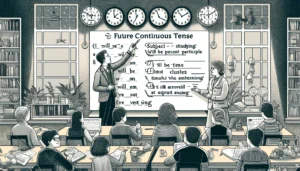
    Subject + will be + present participle (verb+ing)

    For example:

    • Affirmative: “I will be studying at 8 PM.”
    • Negative: “She will not be coming to the party.”
    • Interrogative: “Will they be joining us for dinner?”

    Time Signals

    Common time signals used with the Future Continuous Tense include:

    • At this time next week
    • Tomorrow at [specific time]
    • In the future
    • Next [day/week/month/year]

    Common Mistakes and How to Avoid Them

    Learners often make mistakes with the Future Continuous Tense. Here are some common errors and tips to avoid them:

    1. Incorrect Auxiliary Verb Usage
      • Mistake: “I am will be studying.”
      • Correction: Use “will be” correctly: “I will be studying.”
      • Tip: Remember that “will” is always followed by “be” and then the present participle.
    2. Misplacing Time Signals
      • Mistake: “I will be at this time next week studying.”
      • Correction: Correctly place the time signal: “At this time next week, I will be studying.”
      • Tip: Place time signals at the beginning or end of the sentence for clarity.
    3. Forgetting the Present Participle Form
      • Mistake: “She will be to cook dinner.”
      • Correction: Use the present participle form: “She will be cooking dinner.”
      • Tip: Always use the -ing form of the verb after “will be.”

    Conclusion

    The Future Continuous Tense is a versatile and useful tense for describing actions that will be ongoing at a specific future time, planned future activities, and speculating about the present based on future knowledge. By understanding its structure, uses, and common time signals, learners can effectively use this tense to communicate their future plans and predictions. Avoiding common mistakes ensures clarity and accuracy in usage.

    Test your understanding of the Future Continuous Tense with this 10-question multiple-choice quiz. Choose the correct answer for each question.

    1. Which sentence correctly uses the Future Continuous Tense?

    2. Choose the sentence with the correct time signal:

    3. Identify the correct use of Future Continuous Tense for a scheduled event:

    4. Choose the sentence that predicts a current action:

    5. Which of these is not a time signal for the Future Continuous Tense?

    6. Correct the mistake: "She will be sings in the choir."

    7. Which of the following sentences correctly uses the Future Continuous Tense to indicate an action in progress at a specific future time?

    8. How do you express a planned future activity using the Future Continuous Tense?

    9. Which sentence is predicting a current action based on future knowledge?

    10. Choose the sentence that correctly uses the Future Continuous Tense for a planned activity:

  • Mastering The Future Perfect Tense: Rules, Examples, and Practice Questions

    Mastering The Future Perfect Tense: Rules, Examples, and Practice Questions

    Mastering The Future Perfect Tense: Rules, Examples, and Practice Questions

    The Future Perfect Tense is a grammatical tense used to describe actions that will be completed at a specific point in the future. Understanding this tense can enhance your ability to communicate future events with clarity and precision.

    Definition

    The Future Perfect Tense is used to express actions that will be finished before a certain time or event in the future. It emphasizes the completion of an activity rather than its duration or occurrence.

    Uses

    1. Indicating Completion Before a Future Time

    Examples:

    • By next year, she will have completed her degree. (This sentence indicates that her degree will be finished before next year.)
    • By 10 PM, I will have finished my homework. (This indicates that homework will be done before 10 PM.)
    • By the time you arrive, we will have eaten dinner. (This shows that dinner will be eaten before your arrival.)
    1. Predicting Results of Future Actions

    Examples:

    • He will have saved enough money to buy a car by the end of the month. (This predicts that his savings will be sufficient for a car purchase by month’s end.)
    • They will have learned all the necessary skills by the time they graduate. (This predicts that all necessary skills will be acquired before graduation.)
    • The project will have reached completion before the deadline. (This predicts that the project will be completed before the deadline.)
    1. Expressing Expectations

    Examples:

    • They will have arrived home before the storm hits. (This sentence expresses the expectation that they will be home before the storm.)
    • By tomorrow morning, she will have slept for eight hours. (This expects that she will complete eight hours of sleep by tomorrow morning.)
    • We will have finished the preparations by the time the guests arrive. (This expects that all preparations will be done before the guests’ arrival.)

    Pattern

    The grammatical pattern of the Future Perfect Tense is: Subject + will have + past participle

    Examples:

    • I will have finished the project.
    • They will have gone to bed.

    Time Signals

    Common time signals used with the Future Perfect Tense include:

    • By tomorrow
    • By next week/month/year
    • Before
    • By the time
    • In [time period] (e.g., in two hours)

    Common Mistakes and How to Avoid Them

    1. Using the Wrong Auxiliary Verb
      • Mistake: She will has completed the task.
      • Correction: She will have completed the task.
      • Tip: Always use “will have” followed by the past participle.
    2. Confusing with Future Simple Tense
      • Mistake: By 5 PM, he will finish his work.
      • Correction: By 5 PM, he will have finished his work.
      • Tip: Remember that the Future Perfect Tense emphasizes the completion of an action by a certain future time.
    3. Forgetting the Past Participle Form
      • Mistake: They will have go to the party.
      • Correction: They will have gone to the party.
      • Tip: Use the past participle form of the verb, not the base or present form.

    Conclusion

    The Future Perfect Tense is a useful tool for indicating that an action will be completed before a certain time in the future. By mastering its use, you can describe future events more precisely and avoid common grammatical errors.

    Test your understanding of the Future Perfect Tense with this 10-question multiple-choice quiz. Choose the correct answer for each question.

    1. By this time next year, I ___ my book.

    2. She ___ the report before the meeting starts.

    3. They ___ the construction by next month.

    4. By 8 PM, he ___ dinner.

    5. You ___ all the chapters by the time of the exam.

    6. The team ___ the project before the deadline.

    7. By the time he arrives, we ___.

    8. She ___ her homework before her friends arrive.

    9. By the end of the year, we ___ 100 products.

    10. He ___ the test by 3 PM.

  • Teaching English with Three-Step Interviews in Senior High Schools

    Teaching English with Three-Step Interviews in Senior High Schools

    Teaching English with Three-Step Interviews in Senior High Schools

    Three-Step Interviews is an engaging and interactive instructional strategy that can significantly enhance the teaching and learning experience in senior high school English classrooms. By promoting communication, collaboration, and critical thinking, this method helps students improve their language skills in a dynamic and enjoyable way. This article explores the benefits of Three-Step Interviews, provides a step-by-step guide to implementing it, and shares some practical examples.

    Introduction to Three-Step Interviews

    The Three-Step Interview is a cooperative learning technique designed to foster active engagement and deep understanding through structured interaction. It involves three main steps:

    1. Partner A interviews Partner B.
    2. Partner B interviews Partner A.
    3. Partners share their findings with another pair or the whole class.

    This method not only helps students practice their speaking and listening skills but also encourages them to think critically and reflect on the content.

    Benefits of Three-Step Interviews

    1. Enhanced Communication Skills:
      • By participating in interviews, students practice both asking questions and articulating responses, improving their speaking and listening skills.
    2. Active Engagement:
      • The interactive nature of Three-Step Interviews keeps students actively involved in their learning process.
    3. Critical Thinking:
      • Students must think critically about the questions they ask and the answers they give, which promotes deeper understanding.
    4. Collaboration:
      • This technique encourages students to work together, fostering a sense of teamwork and mutual support.
    5. Confidence Building:
      • Regular practice of interviewing and being interviewed helps students build confidence in their language abilities.

    Implementing Three-Step Interviews in English Classrooms

    1. Preparation:
      • Choose a topic relevant to the lesson. Prepare a list of open-ended questions related to the topic that students can use during their interviews.
    1. Step 1: Partner A Interviews Partner B:
      • Divide the class into pairs. Partner A interviews Partner B using the prepared questions. Encourage students to take notes during the interview to capture key points.
    1. Step 2: Partner B Interviews Partner A:
      • After a set amount of time, partners switch roles. Partner B now interviews Partner A, again using the prepared questions and taking notes.
    1. Step 3: Sharing Findings:
      • After both interviews are complete, each pair shares their findings with another pair or with the entire class. This step helps consolidate their learning and allows them to hear different perspectives.

    Example Activities Using Three-Step Interviews

    1. Character Analysis:
      • After reading a novel or a short story, students interview each other about the motivations, characteristics, and development of different characters. This activity helps deepen their understanding of the text.
    2. Debate Preparation:
      • In preparation for a debate, students interview each other on their viewpoints and arguments related to the debate topic. This helps them refine their arguments and anticipate counterarguments.
    3. Research Projects:
      • When starting a research project, students interview each other about their research questions, methodologies, and expected outcomes. This activity encourages thorough preparation and critical thinking.

    Success Stories

    Numerous schools have reported positive outcomes from using Three-Step Interviews in their English classes. For example, a senior high school in Oregon found that this technique improved students’ oral communication skills and increased their engagement in class discussions. Another school in New Jersey reported that students became more confident in expressing their ideas and more effective in collaborating with their peers.

    Conclusion

    Three-Step Interviews is an effective and versatile tool for teaching English in senior high schools. By promoting communication, collaboration, and critical thinking, it enhances student engagement and language proficiency. Teachers looking to create a more interactive and student-centered learning environment should consider incorporating Three-Step Interviews into their instructional strategies.

  • Teaching English with the KWL Technique in Senior High Schools

    Teaching English with the KWL Technique in Senior High Schools

    Teaching English with the KWL Technique in Senior High Schools

    The Know-Want to Know-Learn (KWL) technique is a powerful instructional strategy that can significantly enhance the teaching and learning experience in senior high school English classrooms. By encouraging students to activate prior knowledge, set learning goals, and reflect on their learning, the KWL technique fosters a more engaged and effective learning environment. This article explores the benefits of the KWL technique, provides a step-by-step guide to implementing it, and shares some practical examples.

    Introduction to the KWL Technique

    The KWL technique was developed by Donna Ogle in 1986 and is widely used in classrooms to guide students through their learning process. It consists of three main steps:

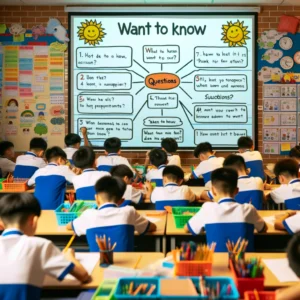
    • K (Know): Students list what they already know about a topic.
    • W (Want to Know): Students list what they want to know or learn about the topic.
    • L (Learn): After the lesson, students list what they have learned.

    This method not only helps in organizing information but also motivates students by making their learning goals explicit and trackable.

    Benefits of the KWL Technique

    1. Activating Prior Knowledge:
      • By starting with what students already know, the KWL technique helps them connect new information to existing knowledge, making learning more meaningful.
    2. Setting Learning Goals:
      • The “Want to Know” phase encourages students to set specific, personal learning goals, which increases their motivation and engagement.
    3. Reflective Learning:
      • The “Learn” phase promotes reflection, allowing students to consolidate their understanding and recognize their progress.
    4. Improved Comprehension:
      • This technique supports deeper comprehension by encouraging students to think critically about the information they encounter.
    5. Enhanced Engagement:
      • The interactive nature of the KWL technique keeps students actively involved in their learning process.

    Implementing the KWL Technique in English Classrooms

    1. Introducing the Topic:
      • Begin by introducing the topic and explaining the KWL process to students.
    1. K (Know) Phase:
      • Ask students to list everything they already know about the topic. This can be done individually, in pairs, or as a whole class discussion. Encourage them to think broadly and recall previous lessons, readings, or personal experiences.
    1. W (Want to Know) Phase:
      • Next, have students list what they want to know or learn about the topic. This step can be guided by prompting questions such as, “What questions do you have about this topic?” or “What do you hope to learn?” This phase helps set the learning objectives for the lesson.
    1. L (Learn) Phase:
      • After completing the lesson or unit, students fill out the “Learn” section of the KWL chart. They reflect on what they have learned and how their understanding has changed or expanded. This phase is crucial for reinforcing the material and for self-assessment.

    Example Activities Using the KWL Technique

    1. Reading Comprehension:
      • Before reading a novel or a short story, students fill out the “Know” and “Want to Know” sections based on the book’s title, cover, and summary. After reading, they complete the “Learn” section to summarize their understanding and insights.
    2. Research Projects:
      • When starting a research project, students use the KWL chart to outline their existing knowledge, set research questions, and document their findings. This helps them stay organized and focused throughout the research process.
    3. Thematic Units:
      • For thematic units (e.g., environmental issues, historical events), students begin with what they know about the theme, identify what they want to explore further, and conclude with what they have learned. This approach ensures comprehensive coverage of the topic.

    Success Stories

    Numerous teachers have reported success using the KWL technique in their English classrooms. For example, a high school in Texas implemented KWL charts in their English literature classes and observed a marked improvement in students’ engagement and comprehension. Another school in Florida found that using KWL charts for research projects helped students develop better organizational and critical thinking skills.

    Conclusion

    The KWL technique is an effective and versatile tool for teaching English in senior high schools. By activating prior knowledge, setting learning goals, and promoting reflection, it enhances student engagement and comprehension. Teachers looking to make their lessons more interactive and student-centered should consider integrating the KWL technique into their teaching strategies.

  • Teaching English with Project-Based Learning in Senior High Schools

    Teaching English with Project-Based Learning in Senior High Schools

    Teaching English with Project-Based Learning in Senior High Schools

    Teaching English in senior high schools can be challenging, but incorporating innovative methods such as Project-Based Learning (PjBL) can transform the experience for both teachers and students. PjBL shifts the focus from traditional rote learning to active, hands-on projects that engage students in meaningful and practical ways. This article explores the benefits of PjBL in teaching English, provides a step-by-step guide to implementing it, and highlights some success stories.

    Introduction to Project-Based Learning (PjBL)

    Project-Based Learning is an instructional approach that encourages students to learn and apply knowledge and skills through an engaging experience. In PjBL, students work on a project over an extended period, which allows them to explore and respond to complex questions, problems, or challenges. This method not only enhances their understanding of the subject matter but also helps develop essential skills such as critical thinking, collaboration, and communication.

    Benefits of PjBL in Teaching English

    1. Enhanced Engagement:
      • Projects are usually more interesting and engaging than traditional methods, which can motivate students to invest more effort in their learning.
    2. Real-World Application:
      • PjBL connects classroom learning to real-world scenarios, making the acquisition of language skills more relevant and practical.
    3. Collaboration:
      • Students often work in groups, which helps them develop teamwork and interpersonal skills.
    4. Critical Thinking:
      • PjBL encourages students to think critically and solve problems, which are crucial skills both inside and outside the classroom.
    5. Creativity:
      • Projects often require creative solutions, allowing students to express themselves and innovate.

    Implementing PjBL in English Classrooms

    1. Planning the Project:
      • Identify the learning objectives and outcomes.
      • Choose a project topic that aligns with the curriculum and interests students.
      • Design a project plan that outlines the tasks, timeline, and assessment criteria.
    2. Introducing the Project:
      • Present the project to students with a clear explanation of the objectives, expectations, and timeline.
      • Engage students with a compelling question or problem to solve.
    3. Guiding the Process:
      • Provide resources and support as students work on their projects.
      • Facilitate collaboration and ensure all students are participating and contributing.
    4. Assessment and Reflection:
      • Assess the project based on predefined criteria, including the quality of work, creativity, and adherence to objectives.
      • Encourage students to reflect on their learning process and outcomes.

    Example Projects

    1. Creating a School Magazine:
      • Students can work in teams to create a school magazine, which involves writing articles, conducting interviews, and designing layouts. This project helps develop writing, editing, and design skills.
    2. Debate Club:
      • Organize a debate club where students research, prepare, and participate in debates on various topics. This enhances their speaking and critical thinking skills.
    3. Literature Review:
      • Assign a project where students read a novel or a set of short stories and then create presentations or reports that analyze the themes, characters, and plot. This fosters analytical and presentation skills.

    Success Stories

    Many schools have successfully implemented PjBL in their English programs, resulting in improved student outcomes. For instance, a senior high school in California reported that their students showed significant improvement in language skills and engagement after introducing PjBL. Another school in New York found that PjBL helped reduce absenteeism and increased students’ enthusiasm for learning English.

    Conclusion

    Project-Based Learning is a powerful method for teaching English in senior high schools. By making learning more engaging, relevant, and practical, PjBL not only enhances students’ language skills but also prepares them for real-world challenges. Teachers looking to innovate their English curriculum should consider integrating PjBL to create a more dynamic and effective learning environment.

  • Teaching English Writing in Senior High Schools Using the Mind Mapping Method

    Teaching English Writing in Senior High Schools Using the Mind Mapping Method

    Teaching English Writing in Senior High Schools Using the Mind Mapping Method

    Teaching English writing in senior high schools can be challenging yet rewarding. One effective method to enhance students’ writing skills is mind mapping. Mind mapping is a visual tool that helps students organize their thoughts, making the writing process more structured and coherent. This article will explore the benefits of mind mapping and how it can be implemented in the classroom to improve English writing skills in senior high school students.

    The Importance of Teaching Writing Skills

    Writing is a critical skill for academic success and future career opportunities. It allows students to express their ideas, communicate effectively, and demonstrate their understanding of various subjects. However, many students find writing daunting due to the complexity of organizing thoughts and ideas coherently. This is where mind mapping can play a significant role.

    What is Mind Mapping?

    Mind mapping is a visual representation of information that shows the relationships between different concepts. It involves writing down a central idea and branching out related ideas in a hierarchical structure. This method helps in breaking down complex information into manageable chunks, making it easier for students to understand and retain.

    Benefits of Mind Mapping in Writing

    1. Improves Organization: Mind mapping helps students organize their thoughts logically. By visually mapping out their ideas, they can see the connections between different points, leading to a more structured and coherent piece of writing.
    2. Enhances Creativity: The visual nature of mind maps stimulates creative thinking. Students can explore various ideas and themes, leading to richer and more diverse content in their writing.
    3. Boosts Memory Retention: Mind maps use images, colors, and keywords, which are more memorable than linear notes. This aids in better retention and recall of information.
    4. Simplifies Complex Information: Mind mapping breaks down complex topics into simpler, more understandable parts. This makes it easier for students to tackle challenging writing assignments.
    5. Encourages Critical Thinking: Creating a mind map requires students to analyze and synthesize information, promoting critical thinking and deeper understanding.

    Steps to Implement Mind Mapping in Teaching Writing

    1. Introduce Mind Mapping: Begin by explaining the concept of mind mapping to your students. Show them examples and discuss the benefits.
    2. Choose a Central Topic: Select a central theme or topic for the writing assignment. This could be an essay question, a research topic, or a creative writing prompt.
    3. Brainstorm Ideas: Encourage students to brainstorm ideas related to the central topic. They can jot down keywords, phrases, or concepts that come to mind.
    4. Create the Mind Map: Using a large sheet of paper or digital tools, have students create their mind maps. The central topic should be in the center, with branches representing main ideas and sub-branches for supporting details.
    5. Develop the Outline: Once the mind map is complete, students can use it to create a detailed outline for their writing. Each branch and sub-branch can be expanded into paragraphs, ensuring a logical flow of ideas.
    6. Write the Draft: With the outline in hand, students can begin writing their drafts. The mind map serves as a guide, helping them stay focused and organized.
    7. Review and Revise: After completing the draft, students should review and revise their work. Encourage them to refer back to the mind map to ensure all key points are covered and well-explained.

    Practical Classroom Activities

    Activity 1: Mind Map Brainstorming Session

    • Objective: To brainstorm ideas for an essay on environmental conservation.
    • Materials: Large paper, markers, or digital mind mapping tools.
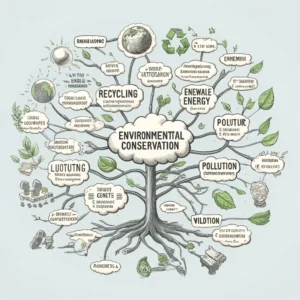
    • Procedure: Divide students into groups and ask them to create a mind map with “Environmental Conservation” as the central topic. Have them brainstorm and map out related ideas such as recycling, renewable energy, pollution, and wildlife protection.

    Activity 2: Mind Mapping for Story Writing

    • Objective: To plan a creative story using mind mapping.
    • Materials: Paper, markers, or digital tools.
    • Procedure: Ask students to choose a story theme (e.g., adventure, mystery) and create a mind map outlining the plot, characters, setting, and key events. This visual plan will help them write a more detailed and coherent story.

    Activity 3: Research Paper Preparation

    • Objective: To organize research findings using mind mapping.
    • Materials: Paper, markers, or digital tools.
    • Procedure: Assign a research topic and have students gather information from various sources. They will then create a mind map to organize their findings, highlighting key points, supporting evidence, and references. This map will serve as the foundation for their research paper.

    Conclusion

    Mind mapping is a powerful tool that can significantly enhance the teaching and learning of English writing in senior high schools. By helping students organize their thoughts, stimulate creativity, and simplify complex information, mind maps can transform the writing process into an engaging and productive activity. Implementing mind mapping in your classroom can lead to improved writing skills, better academic performance, and greater student confidence.

  • Teaching English Grammar in Senior High Schools Using the Mind Mapping Method

    Teaching English Grammar in Senior High Schools Using the Mind Mapping Method

    Introduction

    Teaching English grammar in senior high schools can be challenging for educators and students alike. Traditional methods of teaching grammar often involve rote memorization and repetitive exercises, which can be tedious and uninspiring. However, incorporating mind mapping into grammar instruction can transform the learning experience, making it more engaging and effective. This article explores the benefits of using mind mapping to teach English grammar and provides practical tips for educators.

    What is Mind Mapping?

    Mind mapping is a visual representation of information that organizes and structures concepts hierarchically. It begins with a central idea, with related subtopics branching out from it. This method, developed by Tony Buzan, leverages the brain’s natural way of processing information, making it easier for students to understand and retain complex concepts.

    Benefits of Mind Mapping in Grammar Instruction

    1. Enhanced Understanding: Mind maps help students visualize the relationships between different grammatical concepts, making it easier to grasp how they interconnect.
    2. Improved Memory Retention: The visual and hierarchical nature of mind maps aids in better memory retention. Students can recall information more effectively by associating it with visual cues.
    3. Increased Engagement: Creating mind maps is an interactive process that involves creativity and critical thinking, which can make learning grammar more enjoyable for students.
    4. Simplified Complex Information: Mind maps break down complex grammatical rules into smaller, manageable parts, making it easier for students to comprehend and apply them.

    How to Use Mind Mapping to Teach Grammar

    1. Identify the Central Concept: Begin by identifying the central concept you want to teach, such as “English Grammar.” Place this concept at the center of the mind map.
    1. Create Main Branches: Identify the main categories related to the central concept. For English grammar, these could include:
      • Tenses
      • Parts of Speech
      • Sentence Structure
      • Punctuation
      • Common Errors
    2. Add Sub-Branches: For each main category, add sub-branches that represent more detailed topics. For example, under “Tenses,” you could have:
      • Present Simple
      • Past Simple
      • Future Simple
      • Present Continuous
      • Past Continuous
      • Present Perfect
      • Past Perfect
    3. Include Examples and Rules: On each branch or sub-branch, include examples and grammatical rules. This helps students see the practical application of each concept.
    4. Use Colors and Images: To make the mind map more engaging, use different colors for each branch and include relevant images or icons. This visual appeal can help in better retention and understanding.

    Practical Tips for Educators

    1. Interactive Lessons: Encourage students to create their own mind maps during lessons. This interactive approach can help them internalize the concepts better.
    2. Group Activities: Organize group activities where students collaborate to create mind maps. This not only fosters teamwork but also allows students to learn from each other.
    3. Digital Tools: Utilize digital mind mapping tools like MindMeister, XMind, or Coggle. These tools offer various features that can enhance the learning experience.
    4. Regular Reviews: Incorporate mind maps into regular review sessions. Revisiting the maps can help reinforce the concepts and ensure long-term retention.
    5. Assessment: Use mind maps as a part of assessments. Ask students to create mind maps on specific grammar topics to demonstrate their understanding.

    Example: Teaching Tenses with Mind Mapping

    To illustrate how mind mapping can be used to teach tenses, let’s take “Tenses” as the central concept. Here’s how the mind map might look:

    Central Concept: Tenses

    • Present Tense
      • Present Simple: “She writes every day.”
      • Present Continuous: “She is writing right now.”
      • Present Perfect: “She has written three letters.”
      • Present Perfect Continuous: “She has been writing for an hour.”
    • Past Tense
      • Past Simple: “She wrote yesterday.”
      • Past Continuous: “She was writing when I called.”
      • Past Perfect: “She had written a letter before he arrived.”
      • Past Perfect Continuous: “She had been writing for two hours before he arrived.”
    • Future Tense
      • Future Simple: “She will write tomorrow.”
      • Future Continuous: “She will be writing when you arrive.”
      • Future Perfect: “She will have written the letter by noon.”
      • Future Perfect Continuous: “She will have been writing for two hours by the time you arrive.”

    Conclusion

    Using mind mapping to teach English grammar in senior high schools offers a dynamic and effective approach to learning. By visually organizing grammatical concepts, students can better understand, remember, and apply what they learn. Educators can make grammar lessons more engaging and interactive, ultimately leading to improved student outcomes.

    By breaking down tenses into their subcategories and providing examples, students can see the differences and similarities between them more clearly.

    Conclusion

  • Teaching English Vocabulary in Senior High Schools Using the Mind Mapping Method

    Teaching English Vocabulary in Senior High Schools Using the Mind Mapping Method

    In the modern educational landscape, teaching English vocabulary effectively is crucial for senior high school students. Traditional methods of rote memorization are increasingly being supplemented or replaced by more engaging and interactive techniques. One such method is mind mapping, a visual tool that can significantly enhance vocabulary acquisition and retention. This article explores how mind mapping can be utilized to teach English vocabulary to senior high school students, offering practical tips and strategies for educators.

    What is Mind Mapping?

    Mind mapping is a graphical representation of ideas and concepts. It is a visual thinking tool that helps structure information, allowing students to better analyze, comprehend, and recall information. By linking related ideas and concepts around a central theme, mind maps create a network of knowledge that mirrors the way the brain naturally works.

    Benefits of Using Mind Mapping in Vocabulary Teaching

    1. Enhances Memory Retention: The visual nature of mind maps helps students remember vocabulary better than linear notes.
    2. Encourages Active Learning: Creating mind maps involves active participation, which increases engagement and understanding.
    3. Promotes Creativity: Mind maps encourage students to think creatively and make connections between words and concepts.
    4. Improves Organization: Vocabulary is organized in a clear, hierarchical structure, making it easier to review and study.

    How to Implement Mind Mapping in the Classroom

    1. Introduce the Concept

    Begin by explaining what a mind map is and how it works. Show examples of mind maps related to various subjects to illustrate their versatility. Highlight the benefits and encourage students to think about how they can use mind maps for vocabulary learning.

    2. Choose a Central Theme

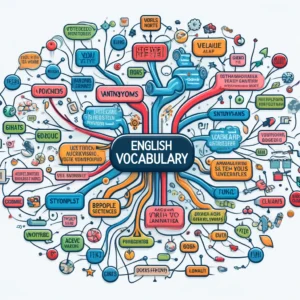
    Select a central theme for the mind map, such as “English Vocabulary.” This will be the core concept from which all related ideas will branch out. For a more focused approach, you can choose themes like “Travel Vocabulary,” “Science Vocabulary,” or “Literary Terms.”

    3. Create Main Branches

    Identify the main categories related to the central theme. For vocabulary, these could include:

    • Synonyms
    • Antonyms
    • Usage in Sentences
    • Word Forms
    • Related Words

    4. Develop Sub-Branches

    Each main branch can be further divided into sub-branches. For example, under “Synonyms,” students can list synonyms for specific vocabulary words. Under “Usage in Sentences,” they can write example sentences.

    5. Use Colors and Images

    Encourage students to use different colors for each branch and add relevant images or icons. This not only makes the mind map visually appealing but also aids in memory retention.

    6. Review and Revise

    Regularly review the mind maps with students. Encourage them to add new words and connections as they learn more. This iterative process helps reinforce their vocabulary knowledge.

    Practical Examples of Mind Maps for Vocabulary Learning

    Example 1: Mind Map for “Environmental Vocabulary”

    • Central Theme: Environmental Vocabulary
      • Main Branches:
        • Synonyms: Conservation, Preservation
        • Antonyms: Pollution, Degradation
        • Usage in Sentences: “The conservation of natural resources is crucial for sustainability.”
        • Word Forms: Conserve (verb), Conservation (noun), Conservative (adjective)
        • Related Words: Ecosystem, Biodiversity, Sustainability

    Example 2: Mind Map for “Literary Terms”

    • Central Theme: Literary Terms
      • Main Branches:
        • Synonyms: Narration, Storytelling
        • Antonyms: Non-fiction, Reality
        • Usage in Sentences: “The narrative technique used in this novel is unique.”
        • Word Forms: Narrate (verb), Narration (noun), Narrative (adjective)
        • Related Words: Protagonist, Plot, Theme

    Tips for Effective Mind Mapping

    1. Keep It Simple: Start with basic mind maps and gradually increase complexity as students become more comfortable with the technique.
    2. Encourage Personalization: Allow students to personalize their mind maps with their own drawings, symbols, and colors. This makes the process more engaging.
    3. Integrate Technology: Use digital mind mapping tools like MindMeister, XMind, or Canva to create interactive and easily editable mind maps.
    4. Collaborative Learning: Encourage group activities where students create mind maps together. This fosters teamwork and allows them to learn from each other.

    Conclusion

    Mind mapping is an innovative and effective method for teaching English vocabulary in senior high schools. By organizing vocabulary visually and making connections between words and concepts, mind maps can enhance students’ understanding and retention of new vocabulary. Implementing mind mapping in the classroom not only makes vocabulary learning more engaging but also equips students with a powerful tool for organizing and recalling information. Educators are encouraged to incorporate this method into their teaching strategies to help students master English vocabulary more effectively.

    By utilizing mind mapping in vocabulary instruction, educators can create a dynamic and effective learning environment that supports student success in mastering English vocabulary.

  • How to Enlarge and Reduce the Appearance of a Website Page on a Computer/Laptop Screen

    The following is a way to enlarge and reduce the appearance of website pages on a computer/laptop screen. If you want to enlarge the display, you just press the CTRL+ button on your computer/laptop keyboard and if you want to reduce, press CTRL- on your computer/laptop keyboard. Hope it is useful.