On your website post page, change the mode to ‘code editor’, then place the <center> .. </center> code between the text that you want to make centered. For example <center> Please be patient, Honey! </center>. Then the text Please be patient, Honey! will be in centered-position. Hopefully it’s useful.
Author: Ste Magazine
-

The Lion and the Mouse: A Timeless Fable of Kindness
The following is the story of The Lion and the Mouse

-

How to Turn off the Menu (Make the Menu not Linked) on WordPress Website
If you want to create a menu on a WordPress website, where the menu has sub-menus, and you want to turn off the link on the main menu, you only want the sub-menu to link, here is how to do it.
Click ‘page’, select the page you want to add to the menu, click ‘custom link’, in the URL type ‘#’ sign, in the ‘text link’ type the name of the menu you want (make the name similar to the name of the page), click ‘click add’ to menu, then click ‘save menu’
-
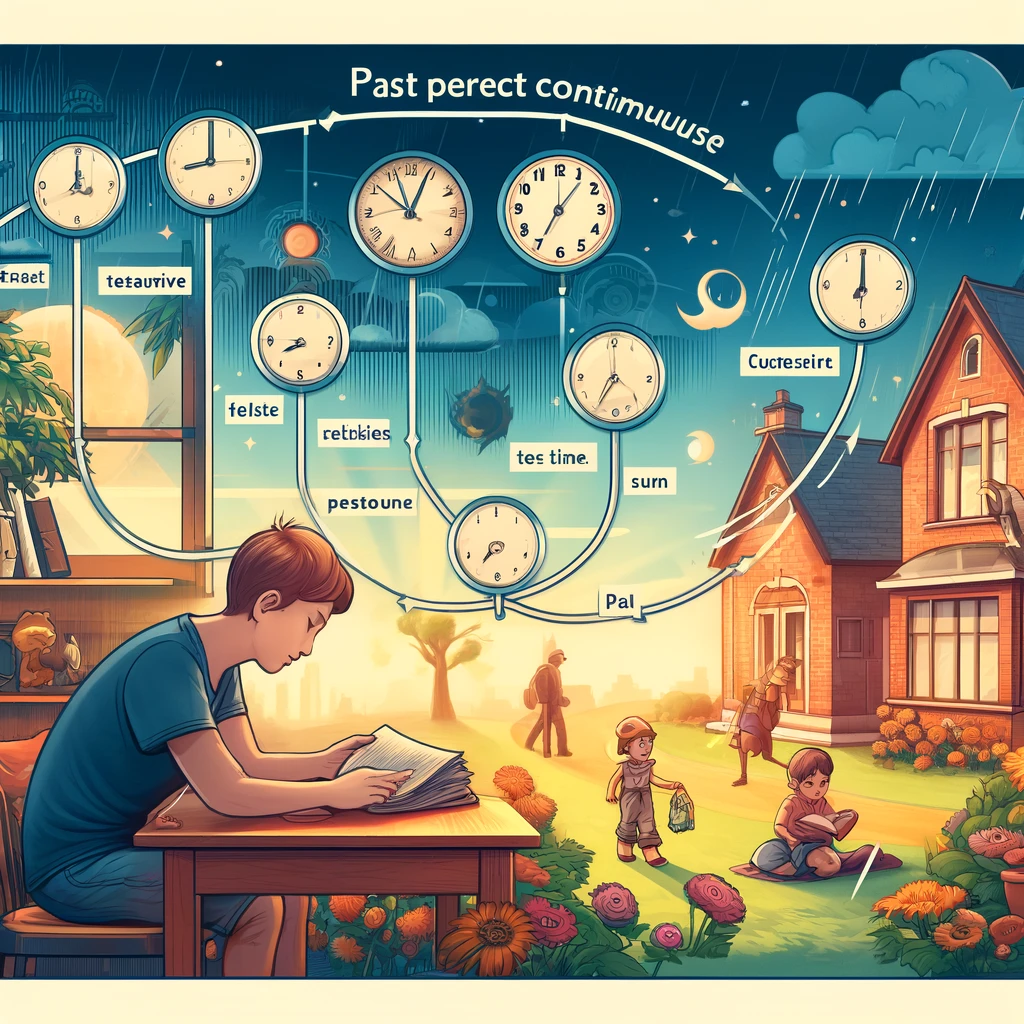
Mastering the Past Perfect Continuous Tense: Rules, Examples, and Practice Questions
Definition
The Past Perfect Continuous Tense, also known as the past perfect progressive, is used to describe an action that started in the past and continued up to another point in the past. It emphasizes the duration or continuity of an action that was happening before a specific time or another action in the past.
Uses
1. To show the duration of an action up to a certain point in the past.
Examples:
- They had been waiting for two hours by the time the bus finally came. (This sentence highlights the ongoing action of waiting that lasted for two hours until the bus arrived.)
- She had been studying for three hours when her friends arrived. (The action of studying continued for three hours up to the point when her friends arrived.)
- He had been working at the company for ten years before he decided to resign. (This indicates that the action of working at the company lasted for ten years until he made the decision to resign.)
2. To describe an action that was in progress before another action occurred.
Examples:
- He had been working on the project before he fell ill. (This indicates that the work was ongoing and then interrupted by his illness.)
- They had been planning the event for weeks before it was cancelled. (The planning was an ongoing process that was halted by the cancellation of the event.)
- She had been cleaning the house when the guests arrived early. (The cleaning was an ongoing action that was interrupted by the early arrival of the guests.)
3. To set the scene for another past event.
Examples:
- The children had been playing outside when it started to rain. (The ongoing action of playing outside sets the context for the sudden event of the rain starting.)
- He had been reading a book when the phone rang. (The reading was an ongoing activity that was interrupted by the phone ringing.)
- They had been discussing their plans when the news broke. (The ongoing discussion sets the scene for the interruption caused by breaking news.)
Pattern
The following are the grammatical pattern of the Past Perfect Continuous Tense:
Affirmative: Subject + had + been + present participle (verb+ing)
- She had been reading.
- They had been talking.
Negative: Subject + had + not + been + present participle (verb+ing)
- She had not (hadn’t) been reading.
- They had not (hadn’t) been talking.
Interrogative: Had + subject + been + present participle (verb+ing)
- Had she been reading?
- Had they been talking?
Time Signals
Common time signals used with the Past Perfect Continuous Tense include:
- For
- Since
- Before
- By the time
- Until
- When
Common Mistakes and How to Avoid Them
1. Confusing with the Past Continuous Tense
Mistake: “She was reading for two hours.” Correction: “She had been reading for two hours.” Tip: Remember, the Past Continuous is used for an action happening at a specific moment in the past, while the Past Perfect Continuous emphasizes the duration of an action up to a point in the past.
2. Using the wrong auxiliary verb
Mistake: “They was been playing.” Correction: “They had been playing.” Tip: Always use “had” as the auxiliary verb in the Past Perfect Continuous Tense, regardless of the subject.
3. Omitting “been”
Mistake: “He had studying all night.” Correction: “He had been studying all night.” Tip: The word “been” is essential in forming the Past Perfect Continuous Tense.
Conclusion
The Past Perfect Continuous Tense is a useful tense for expressing actions that were ongoing up until a specific point in the past. By understanding its definition, uses, pattern, and common time signals, learners can effectively incorporate this tense into their writing and speaking. Avoiding common mistakes will further enhance your proficiency in using the Past Perfect Continuous Tense.
Quiz
Time’s up
-
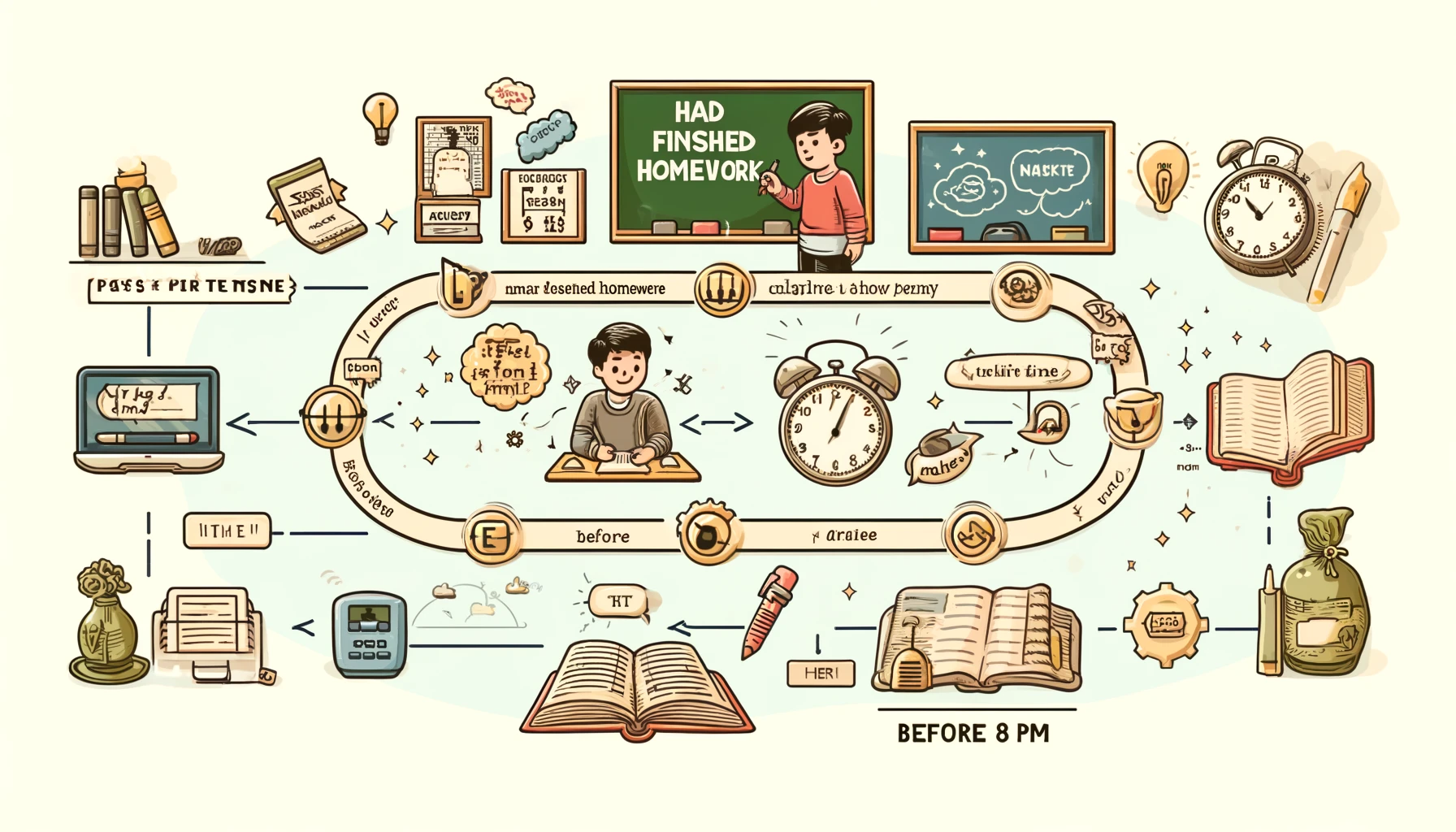
Mastering the Past Perfect Tense: Rules, Examples, and Practice Questions
Definition
The Past Perfect Tense is used to express an action that was completed before another action or event in the past. It highlights the sequence of events, showing which action happened first. The past perfect tense is formed by combining the auxiliary verb “had” with the past participle of the main verb.
Uses
- Action Completed Before Another Past Action:
Examples:
- By the time she arrived at the party, John had already left. (John’s departure happened before her arrival at the party. The past perfect tense “had left” shows that his leaving occurred first.)
- When I got home, I realized I had forgotten my keys. (Forgetting the keys happened before getting home. The past perfect tense “had forgotten” emphasizes the sequence.)
- They had finished the meeting before the boss arrived. (The meeting was completed before the boss’s arrival. The past perfect tense “had finished” indicates the prior action.)
- Action Completed Before a Specific Time in the Past:
Examples:
- He had finished his homework before 8 PM. (This sentence indicates that the homework was completed prior to 8 PM. The past perfect tense “had finished” emphasizes the action was done by that specific time.)
- By midnight, she had packed all her bags. (The packing was completed by midnight. The past perfect tense “had packed” shows the action’s completion before the specified time.)
- The train had departed before we reached the station. (The departure of the train occurred before reaching the station. The past perfect tense “had departed” highlights the sequence of events.)
- Cause and Effect in the Past:
Examples:
- They were happy because they had won the match. (The reason for their happiness (winning the match) happened before they felt happy. The past perfect tense “had won” indicates the cause of their happiness.)
- She was tired because she had worked all day. (Working all day caused her tiredness, which is highlighted by the past perfect tense “had worked.)
- He felt relieved because he had completed his assignment. (Completing the assignment caused his relief. The past perfect tense “had completed” shows the reason for his feeling.)
Pattern
The grammatical pattern of the Past Perfect Tense is:
- Affirmative: Subject + had + past participle (e.g., She had eaten.)
- Negative: Subject + had + not + past participle (e.g., She had not eaten.)
- Interrogative: Had + subject + past participle? (e.g., Had she eaten?)
Time Signals
Common time signals used with the Past Perfect Tense include:
- Before
- By the time
- When
- Already
- Until
- Never
Common Mistakes and How to Avoid Them
- Using the Past Simple Instead of Past Perfect:
- Mistake: She finished her work before he arrived.
- Correction: She had finished her work before he arrived.
- Tip: Remember to use “had” to show the action was completed before another past action.
- Forgetting the Auxiliary Verb “Had”:
- Mistake: They eaten before they went out.
- Correction: They had eaten before they went out.
- Tip: Always use “had” with the past participle to form the past perfect tense.
- Confusing Past Perfect with Present Perfect:
- Mistake: She has gone home before I called.
- Correction: She had gone home before I called.
- Tip: Use “had” for actions completed before another past event, not “has/have.”
Conclusion
The Past Perfect Tense is essential for describing actions that were completed before another event or time in the past. By understanding its definition, uses, pattern, and common time signals, learners can effectively use this tense to convey clear and accurate information about past events. Avoiding common mistakes and practicing regularly will help in mastering the past perfect tense.
Quiz
Time’s up
-
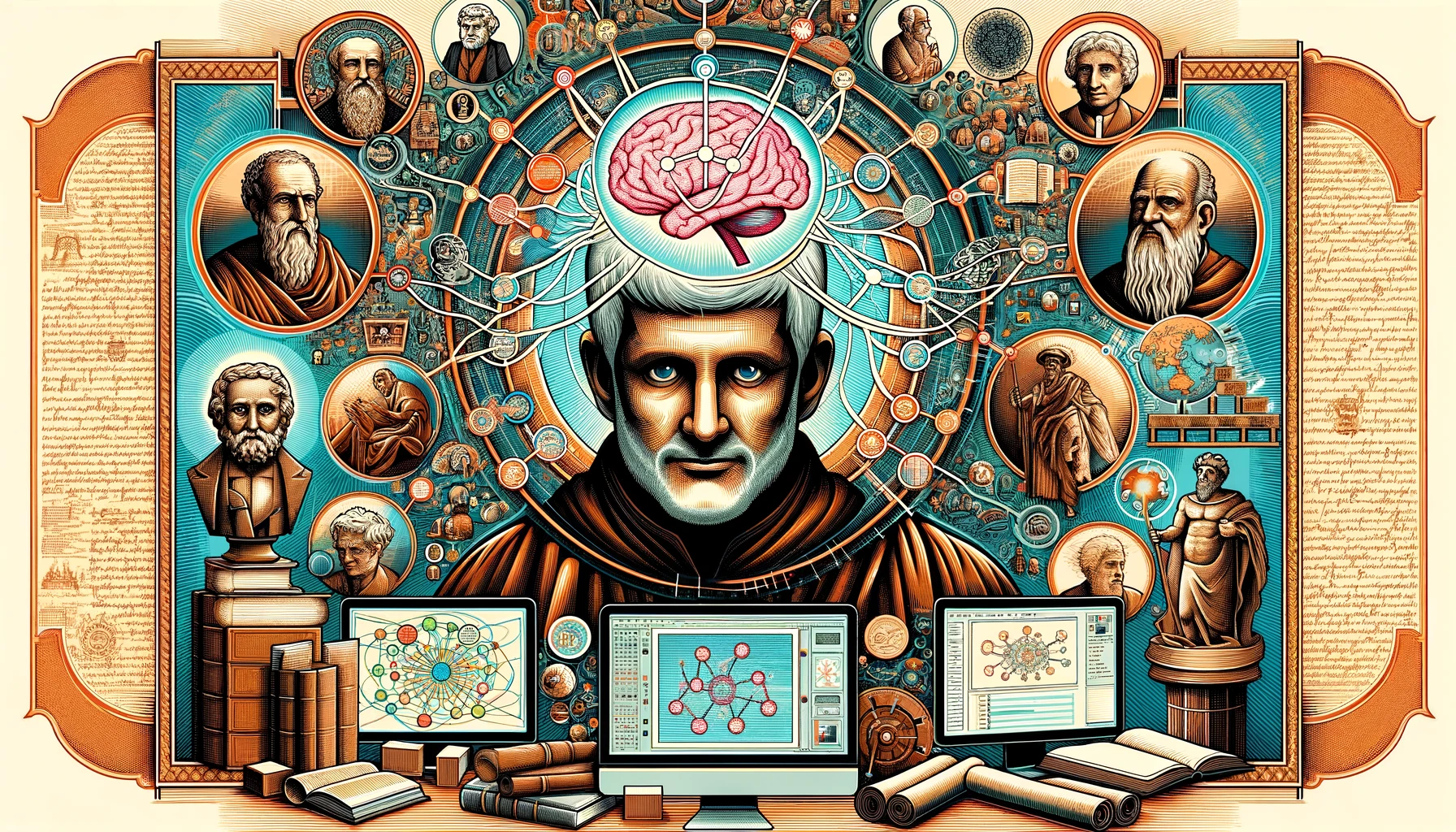
The History of Mind Mapping
Introduction
Mind mapping, a powerful tool for visualizing and organizing information, has become increasingly popular in educational, business, and personal development contexts. Its ability to simplify complex information and stimulate creative thinking has made it a go-to technique for many. But where did this innovative method originate, and how has it evolved over time? In this article, we delve into the fascinating history of mind mapping, exploring its origins, development, and the key figures who have contributed to its widespread adoption.
The Origins of Mind Mapping
The concept of mind mapping has roots that extend far back in history, even though the term “mind mapping” itself was not used until much later. Ancient philosophers and thinkers have long utilized visual diagrams to represent knowledge and ideas. One of the earliest examples can be traced to the 3rd century BC, when the Greek philosopher Porphyry of Tyre created visual representations of Aristotle’s work to illustrate logical connections.
In the Middle Ages, the use of visual tools continued with the development of “Ramon Llull’s Ars Magna,” a method created by Ramon Llull in the 13th century. Llull’s system used diagrams to represent philosophical and theological concepts, demonstrating an early use of visual thinking to solve complex problems.
Tony Buzan and the Modern Mind Map
The modern mind map, as we know it today, owes much of its development to Tony Buzan, a British psychologist, author, and educational consultant. Buzan popularized the concept in the 1970s, emphasizing its utility in enhancing memory, creativity, and problem-solving skills.
Buzan’s interest in cognitive psychology and brain research led him to develop the mind map as a tool to harness the brain’s natural associative capabilities. He introduced several principles that differentiate mind mapping from other diagrammatic techniques:
- Central Idea: A mind map starts with a central idea or theme, placed in the center of the page.
- Branches: Main ideas branch out from the central theme, radiating in all directions.
- Keywords: Each branch contains a single keyword or short phrase to represent the main idea.
- Images and Colors: The use of images, symbols, and colors enhances memory and makes the mind map more engaging.
- Organic Structure: The structure of a mind map is organic and free-flowing, mimicking the natural thought process of the human brain.
Buzan’s books, such as “The Mind Map Book” and “Use Your Head,” played a crucial role in spreading the concept. His workshops and seminars further popularized mind mapping among educators, students, and professionals.
Evolution and Technological Advancements
The advent of digital technology in the late 20th and early 21st centuries brought significant advancements to mind mapping. Software tools like MindMeister, XMind, and FreeMind made it easier to create, edit, and share mind maps. These digital tools offered features like drag-and-drop functionality, collaboration capabilities, and integration with other digital resources, making mind mapping more accessible and versatile.
Mind Mapping in Education
Mind mapping has found a special place in the field of education. Educators use mind maps to help students understand complex subjects, organize information, and enhance their critical thinking skills. Research has shown that mind mapping can improve comprehension and retention of information, making it a valuable tool in the learning process.
Mind Mapping in Business
In the business world, mind mapping is used for brainstorming, project planning, and strategic thinking. It allows teams to visualize ideas, identify relationships between concepts, and develop innovative solutions to problems. The visual nature of mind maps makes them effective for presenting information and facilitating discussions.
The Future of Mind Mapping
As technology continues to evolve, so too will the applications and capabilities of mind mapping. Emerging technologies such as artificial intelligence and virtual reality have the potential to take mind mapping to new heights, offering more immersive and interactive experiences. These advancements could further enhance the ability of individuals and teams to visualize and organize information in dynamic ways.
Conclusion
The history of mind mapping is a testament to the enduring power of visual thinking. From its ancient roots to its modern applications, mind mapping has continually evolved, adapting to new knowledge and technologies. Today, it stands as a vital tool in education, business, and personal development, helping people organize their thoughts, solve problems, and unlock their creative potential. As we look to the future, mind mapping will undoubtedly continue to innovate and inspire, shaping the way we think and learn.
-
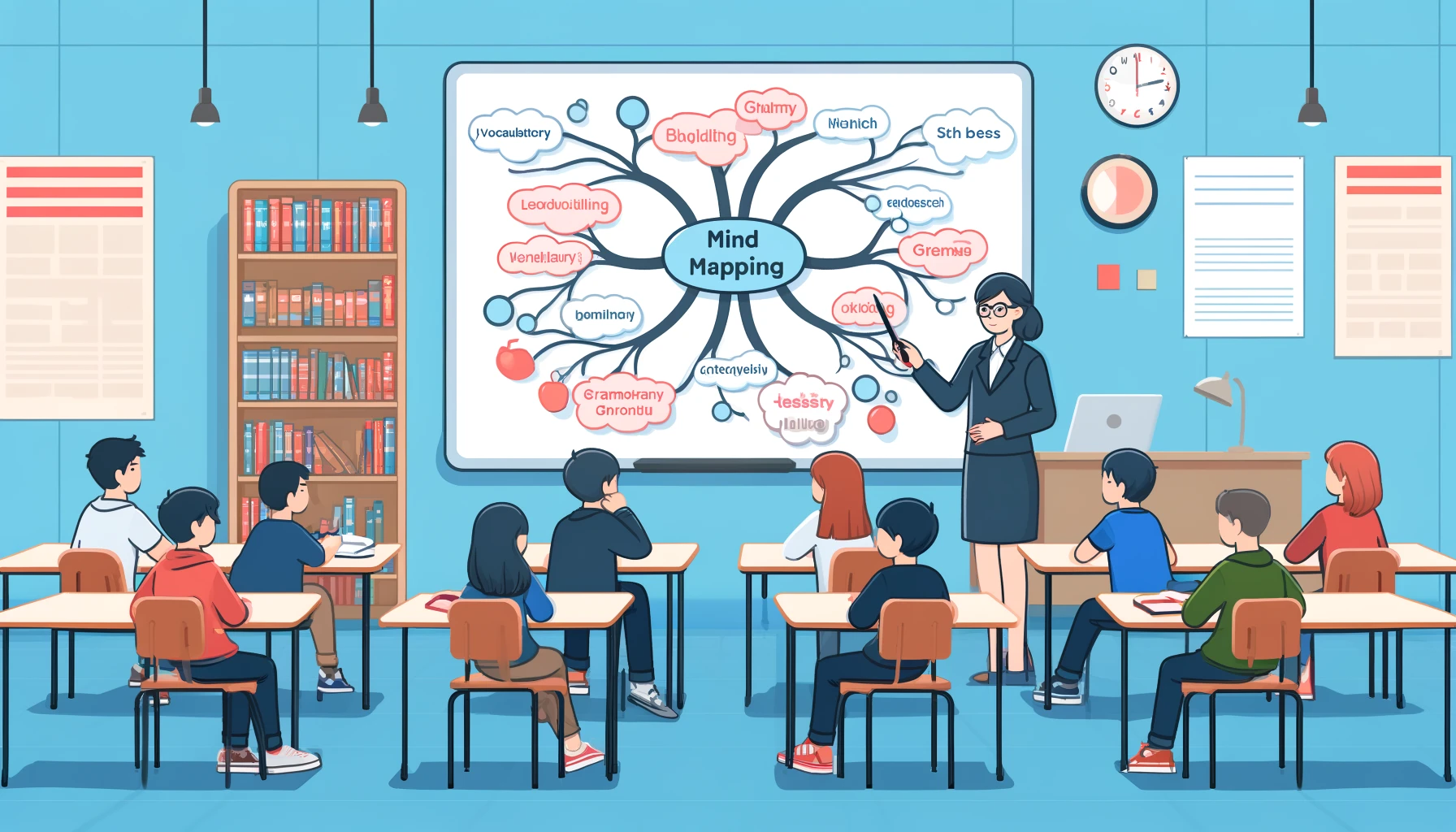
Mind Mapping for Teaching English in Senior High School
Introduction
Teaching English in senior high school can be a challenging task, given the diverse needs and varying proficiency levels of students. One effective strategy that educators can employ is mind mapping. This visual tool not only aids in the organization of thoughts but also enhances understanding and retention of information. In this article, we will explore how mind mapping can be utilized to teach English in senior high school, its benefits, and practical tips for implementation.
What is Mind Mapping?
Mind mapping is a visual representation of information, structured in a way that resembles a web or a tree. It starts with a central idea, from which related topics branch out in all directions. This method leverages the brain’s natural ability to recognize patterns and relationships, making complex information easier to understand and remember.
Benefits of Mind Mapping in Teaching English
- Enhanced Comprehension: Mind maps help students break down complex topics into manageable chunks, making it easier to grasp the core concepts.
- Improved Memory Retention: The visual nature of mind maps aids in better retention of information. Students can recall information more effectively when they visualize it in a structured format.
- Encourages Creativity: Mind mapping allows students to explore ideas freely and make connections they might not have considered otherwise.
- Boosts Engagement: Interactive and visually appealing mind maps can make learning more engaging and enjoyable for students.
- Organizes Thoughts: Mind maps provide a clear structure for students to organize their thoughts, making it easier to plan essays, projects, and presentations.
How to Create a Mind Map
- Choose a Central Topic: Start with a central idea or theme. For an English lesson, this could be a literary concept, a grammar rule, or a writing task.
- Branch Out with Main Ideas: From the central topic, draw branches for the main ideas. These should be the key points related to the central theme.
- Add Sub-Branches for Details: Each main idea can have sub-branches that delve into more specific details or examples.
- Use Colors and Images: Incorporate colors, images, and symbols to make the mind map visually appealing and to highlight important information.
- Review and Revise: Regularly review and update the mind map to reflect new information or insights.
Practical Applications of Mind Mapping in English Classes
1. Vocabulary Building
Mind maps can be an excellent tool for vocabulary building. Start with a new word as the central topic and branch out with its definition, synonyms, antonyms, usage in sentences, and related words. This helps students see the relationships between words and enhances their understanding of vocabulary.
2. Literary Analysis
When analyzing a piece of literature, students can create a mind map to explore the various elements of the story. The central topic could be the title of the book or a main theme, with branches for characters, plot points, themes, and literary devices. This allows students to visualize the structure of the literary work and understand its components in depth.
3. Grammar Rules
Teaching grammar can be simplified using mind maps. For instance, if the lesson is about tenses, the central topic could be “Tenses,” with branches for each type of tense (present, past, future) and sub-branches for examples and rules of each tense. This method helps students see the connections between different grammatical concepts.
4. Essay Planning
Mind maps are particularly useful for planning essays. Students can start with the essay topic as the central idea and create branches for the introduction, body paragraphs, and conclusion. Each branch can then have sub-branches for key points, evidence, and arguments. This helps students organize their thoughts and ensure their essay has a logical flow.
Tips for Implementing Mind Mapping in the Classroom
- Introduce the Concept: Begin by explaining what mind mapping is and its benefits. Show examples to illustrate how it works.
- Use Technology: Utilize mind mapping software and apps to create digital mind maps. Tools like MindMeister, XMind, and Coggle can make the process more interactive and engaging.
- Encourage Collaboration: Have students work in groups to create mind maps. This fosters collaboration and allows them to learn from each other.
- Incorporate into Assessments: Use mind maps as part of assessments to evaluate students’ understanding and organization of information.
- Provide Feedback: Give constructive feedback on students’ mind maps to help them improve their technique and understanding.
Conclusion
Mind mapping is a versatile and powerful tool that can significantly enhance the teaching and learning of English in senior high school. By organizing information visually, mind maps make complex concepts more accessible and engaging for students. Whether it’s building vocabulary, analyzing literature, learning grammar, or planning essays, mind mapping can transform the way students approach and understand English. As educators, embracing this tool can lead to more effective teaching and a more enriching learning experience for students.
-

Mastering the Past Continuous Tense: Rules, Examples, and Practice Questions
Definition
The Past Continuous Tense describes actions or events that were ongoing at a particular moment in the past. It emphasizes the duration of the action, indicating that it was happening at a specific point in time or during a specific period in the past.
Uses
- Describing actions in progress at a specific moment in the past:
Examples:
- At 8 PM last night, I was reading a book. (This sentence indicates that the action of reading was happening at 8 PM last night.)
- She was cooking dinner when the phone rang. (This sentence shows that the action of cooking dinner was in progress when another action (the phone ringing) occurred.
- They were watching a movie at 10 AM yesterday. (This sentence highlights that the action of watching a movie was ongoing at a specific time in the past (10 AM yesterday).
- Setting the scene in a story:
Examples:
- The sun was setting, and the birds were singing. (This sentence uses the Past Continuous Tense to describe the background actions that were happening simultaneously in the past.)
- It was raining, and people were hurrying to find shelter. (This sentence sets the scene by describing the ongoing actions during the rain.)
- The children were playing in the park while their parents were chatting on the benches. (This sentence provides a vivid picture of the ongoing activities in the park.)
- Indicating interrupted actions:
Examples:
- I was sleeping when the alarm went off. (This sentence shows that the action of sleeping was interrupted by the alarm going off.)
- He was writing an email when the computer crashed. (This sentence highlights that the action of writing an email was interrupted by the computer crashing.)
- They were walking to the store when it started to rain. (This sentence indicates that the action of walking to the store was interrupted by the rain starting.)
Pattern
The grammatical pattern of the Past Continuous Tense is as follows:
Subject + was/were + present participle (verb+ing)
Positive Form
Pattern: Subject + was/were + present participle (verb+ing)
- Example: “She was reading a book.”
- Explanation: The sentence indicates that the action of reading was ongoing in the past.
Negative Form
Pattern: Subject + was/were + not + present participle (verb+ing)
- Example: “She was not reading a book.”
- Explanation: The sentence indicates that the action of reading was not happening in the past.
Interrogative Form
Pattern: Was/Were + subject + present participle (verb+ing)?
- Example: “Was she reading a book?”
- Explanation: The sentence is a question asking if the action of reading was happening in the past.
Time Signals
Common time signals used with the Past Continuous Tense include:
- While
- When
- At that moment
- At (specific time)
- During
Common Mistakes and How to Avoid Them
- Using the wrong auxiliary verb:
- Mistake: She were working.
- Correction: She was working.
- Tip: Remember to use “was” for singular subjects (he, she, it) and “were” for plural subjects (I, you, we, they).
- Mixing Past Continuous with Simple Past:
- Mistake: I was worked all night.
- Correction: I was working all night.
- Tip: Use the present participle form of the verb (verb+ing) with the Past Continuous Tense.
- Confusing time signals:
- Mistake: He was sleeping at that time.
- Correction: He was sleeping when the bell rang.
- Tip: Use appropriate time signals to indicate the specific time or period during which the action was happening.
Conclusion
The Past Continuous Tense is crucial for describing ongoing actions in the past, setting scenes in stories, and indicating interrupted actions. Understanding its uses, pattern, and common mistakes helps learners use this tense effectively. By mastering the Past Continuous Tense, learners can effectively describe ongoing actions in the past, set vivid scenes in stories, and indicate actions that were interrupted. This knowledge leads to more fluent and accurate communication in English.
Quiz
Time’s up