Author: Ste Magazine

  • Making Invitations in English: Expressions, Responses, and Examples

    Making Invitations in English: Expressions, Responses, and Examples

    Making Invitations in English: Expressions, Responses, and Examples

    Introduction

    Making invitations is a key part of social interaction. Whether inviting someone to a party, a meeting, or just a casual outing, knowing how to extend and respond to invitations politely is essential. This article will explore common expressions for making and responding to invitations, provide detailed explanations, offer examples, and present dialogues to illustrate their use in daily life.

    Common Expressions for Making Invitations

    1. Would you like to…?
      • Example: “Would you like to come to my birthday party?”
    2. How about…?
      • Example: “How about joining us for dinner on Friday?”
    3. Do you want to…?
      • Example: “Do you want to see a movie this weekend?”
    4. I’d like to invite you to…
      • Example: “I’d like to invite you to my wedding ceremony.”
    5. Are you free…?
      • Example: “Are you free this Saturday evening?”
    6. Would you be interested in…?
      • Example: “Would you be interested in attending a charity event?”

    Common Responses to Invitations

    1. Accepting Invitations:
      • Sure, I’d love to.
        • Example: “Sure, I’d love to come to your party.”
      • That sounds great.
        • Example: “That sounds great. I’d love to join you for dinner.”
      • I’d be happy to.
        • Example: “I’d be happy to attend the meeting.”
    2. Declining Invitations:
      • I’m sorry, I can’t.
        • Example: “I’m sorry, I can’t make it to the movie.”
      • I’d love to, but I have other plans.
        • Example: “I’d love to, but I have other plans this Saturday.”
      • Thank you, but I’m busy.
        • Example: “Thank you, but I’m busy on Friday.”

    Detailed Explanation

    When making invitations, clarity and politeness are key. For casual invitations, phrases like “Do you want to…” or “How about…” are appropriate. For more formal events, use “I’d like to invite you to…” or “Would you be interested in…”.

    When responding to invitations, be polite and considerate of the inviter’s effort. If accepting, express enthusiasm. If declining, provide a polite reason or simply state your unavailability without being overly detailed.

    Examples of Making Invitations and Responses

    • Invitation:
      • “Would you like to come to my birthday party next Saturday?”
      • Response (Accepting): “Sure, I’d love to. What time does it start?”
      • Response (Declining): “I’m sorry, I can’t. I have another commitment that day.”
    • Invitation:
      • “How about joining us for dinner on Friday?”
      • Response (Accepting): “That sounds great. Where are we going?”
      • Response (Declining): “I’d love to, but I have other plans.”

    Dialogue Examples

    Accepting an Invitation

    John: Hi, Mary. Would you like to join us for a picnic this Sunday?

    Mary: Hi, John. Sure, I’d love to. What time will it be?

    John: We’re planning to start around 11 AM at Central Park.

    Mary: That sounds perfect. Should I bring anything?

    John: Just bring yourself and maybe a blanket. We’ll take care of the rest.

    Mary: Great! I’ll be there. Thanks for the invite.

    John: You’re welcome. See you on Sunday!

    Declining an Invitation

    Sarah: Hey, Tom. How about joining us for dinner on Friday?

    Tom: Hi, Sarah. I’d love to, but I have other plans that evening.

    Sarah: Oh, that’s too bad. Maybe next time?

    Tom: Definitely. Let’s plan something soon.

    Sarah: Sounds good. Have a great evening on Friday!

    Tom: Thanks, Sarah. You too!

    Conclusion

    Invitations are an integral part of our social interactions. Knowing how to make and respond to them politely can greatly enhance your social life. Use the expressions and responses provided in this article to confidently invite others and respond to their invitations. Remember to always be polite and considerate, regardless of whether you are accepting or declining an invitation.

  • Understanding Certainty and Uncertainty in English: Expressions, Responses, and Daily Conversations

    Understanding Certainty and Uncertainty in English: Expressions, Responses, and Daily Conversations

    Understanding Certainty and Uncertainty in English: Expressions, Responses, and Daily Conversations

    Certainty and uncertainty are fundamental aspects of human communication. We often express how sure or unsure we are about information, plans, or events. Understanding how to convey these feelings in English is crucial for effective communication. In this article, we will explore common expressions of certainty and uncertainty, provide their responses, explain their use in a simple manner, and offer examples and dialogues to demonstrate their application in daily life.

    Common Expressions of Certainty

    Certainty implies that you are confident about something. Here are some common expressions of certainty along with their appropriate responses:

    1. I’m sure / I’m certain:
      • Example: “I’m sure we will win the game.”
      • Response: “I hope so too!”
    2. I know for a fact:
      • Example: “I know for a fact that she is coming to the party.”
      • Response: “That’s good to hear!”
    3. Without a doubt:
      • Example: “Without a doubt, this is the best restaurant in town.”
      • Response: “Absolutely!”
    4. There’s no question:
      • Example: “There’s no question that he will succeed.”
      • Response: “I agree completely.”

    Common Expressions of Uncertainty

    Uncertainty indicates that you are not sure about something. Here are some common expressions of uncertainty along with their appropriate responses:

    1. I’m not sure:
      • Example: “I’m not sure if I can attend the meeting.”
      • Response: “Let me know when you find out.”
    2. I doubt:
      • Example: “I doubt it will rain today.”
      • Response: “Well, let’s hope for the best.”
    3. It’s possible:
      • Example: “It’s possible that we might get a promotion.”
      • Response: “That would be great!”
    4. I don’t know:
      • Example: “I don’t know if the store is open.”
      • Response: “We can check online.”

    Detailed Explanation

    Certainty and uncertainty expressions are essential in everyday conversations as they help convey your confidence level about a particular topic. Using these expressions appropriately can make your communication clearer and more effective.

    • Certainty: When you are certain about something, you can use phrases like “I’m sure,” “I know for a fact,” or “Without a doubt.” These expressions help to assert your confidence and can reassure the listener.
    • Uncertainty: When you are uncertain, phrases like “I’m not sure,” “I doubt,” or “It’s possible” come into play. These expressions indicate your lack of confidence or knowledge about the subject, prompting the listener to understand your perspective.

    Examples

    1. Certainty Example:
      • “I’m sure that the meeting is at 3 PM.”
      • Response: “Great, I’ll be there on time.”
    2. Uncertainty Example:
      • “I don’t know if John will join us for dinner.”
      • Response: “Let’s give him a call to confirm.”

    Dialogue Example

    Dialogue 1: Expressing Certainty

    • A: “I’m sure we will finish the project by Friday.”
    • B: “That’s excellent news! I’ll inform the team.”

    Dialogue 2: Expressing Uncertainty

    • A: “I’m not sure if I’ll be able to make it to the party.”
    • B: “No worries, just let me know if anything changes.”

    Conclusion

    By incorporating these dialogues into your practice, you can better understand how to use expressions of certainty and uncertainty in real-life conversations. This will enhance your ability to communicate clearly and effectively in English.

  • Understanding Likes and Dislikes in English: Expressions, Responses, and Examples

    Understanding Likes and Dislikes in English: Expressions, Responses, and Examples

    Understanding Likes and Dislikes in English: Expressions, Responses, and Examples

    Introduction

    Understanding and expressing likes and dislikes is essential in everyday communication. Whether you’re sharing your favorite hobbies, discussing food preferences, or just chatting with friends, knowing how to talk about what you like and dislike can make conversations more engaging and meaningful. This article will guide you through common expressions for likes and dislikes, how to respond to them, and provide examples and a sample dialogue to illustrate their use in daily life.

    Common Expressions for Likes and Dislikes

    Expressions of Likes

    1. I like/love/enjoy…
      • Example: “I like reading books.”
    2. I am fond of…
      • Example: “I am fond of classical music.”
    3. I am keen on…
      • Example: “I am keen on hiking.”
    4. I have a passion for…
      • Example: “I have a passion for painting.”
    5. I am a big fan of…
      • Example: “I am a big fan of football.”

    Expressions of Dislikes

    1. I don’t like…
      • Example: “I don’t like spicy food.”
    2. I dislike…
      • Example: “I dislike crowded places.”
    3. I am not a fan of…
      • Example: “I am not a fan of horror movies.”
    4. I can’t stand…
      • Example: “I can’t stand loud noises.”
    5. I am not keen on…
      • Example: “I am not keen on swimming.”

    How to Respond to Expressions of Likes and Dislikes

    Positive Responses

    Me too!
    Example:
    X: “I love pizza.”
    Y: “Me too!”

    That sounds great!
    Example:
    X: “I enjoy hiking.”
    Y: “That sounds great!”

    I feel the same way.
    Example:
    X: “I like reading.”
    Y: “I feel the same way.”

    Absolutely!
    Example:
    X: “I am a big fan of football.”
    Y: “Absolutely!”

    Neutral Responses

    Oh, really?
    Example:
    X: “I like classical music.”
    Y: “Oh, really?”

    Interesting!
    Example:
    X: “I enjoy gardening.”
    Y: “Interesting!”

    That’s nice.
    Example:
    X: “I am keen on painting.”
    Y: “That’s nice.”

    Negative Responses

    I don’t really like that.
    Example:
    X: “I enjoy running.”
    Y: “I don’t really like that.”

    That’s not my thing.
    Example:
    X: “I love camping.”
    Y: “That’s not my thing.”

    I prefer something else.
    Example:
    X: “I am fond of spicy food.”
    Y: “I prefer something else.”

    Examples

    1. Talking about hobbies:
      • X: “I love cooking. It’s so relaxing.”
      • Y: “I can’t stand cooking. I always burn things.”
    2. Discussing food:
      • X: “I am a big fan of Italian food.”
      • Y: “I dislike seafood. It tastes too fishy.”
    3. Sharing music preferences:
      • X: “I am keen on jazz music.”
      • Y: “I don’t like heavy metal.”

    Sample Dialogue

    John: “Hey, Sarah! What do you like to do in your free time?”

    Sarah: “Hi, John! I love painting. It helps me relax. How about you?”

    John: “That’s nice! I enjoy playing the guitar. It’s my way of unwinding after a long day.”

    Sarah: “That sounds fun! By the way, do you like hiking?”

    John: “Oh, really? I am not a fan of hiking. I prefer staying indoors.”

    Sarah: “Interesting! I also enjoy cooking. Do you like cooking?”

    John: “I don’t really like cooking. I usually order takeout.”

    Sarah: “I see. Well, everyone has their own preferences!”

    By understanding and using these expressions, you can effectively communicate your preferences and engage in meaningful conversations. Practice these phrases to become more fluent and confident in expressing your likes and dislikes in English.

  • Making Complaints in English and How to Respond

    Making Complaints in English and How to Respond

    Making Complaints in English and How to Respond

    Knowing how to make and respond to complaints in English is an essential skill, especially in customer service scenarios. Whether you’re a customer or a service provider, handling complaints effectively can help resolve issues quickly and maintain good relationships. This article will provide detailed and straightforward guidelines on how to make complaints and respond to them. We’ll also include practical examples and dialogues to illustrate how these conversations might occur in daily life.

    Common Expressions for Making Complaints

    • “I’m not satisfied with…”
    • “There seems to be a problem with…”
    • “I would like to report an issue with…”
    • “I have a complaint about…”
    • “This is not what I expected because…”

    How to Make a Complaint in English

    1. Stay Calm and Polite:
      • Always approach the situation calmly and politely to avoid escalating the issue.
      • Example: Instead of saying, “This is terrible service!” you can say, “I’m not satisfied with the service I received.”
    2. Be Clear and Specific:
      • Clearly describe the issue, providing specific details.
      • Example: “I ordered a red dress, but I received a blue one instead.”
    3. Provide Evidence:
      • If possible, provide evidence such as receipts, photos, or other documentation to support your complaint.
      • Example: “Here’s my receipt showing that I ordered a red dress.”
    4. State Your Desired Outcome:
      • Explain what you would like to happen as a result of your complaint.
      • Example: “I would like to exchange this for the correct item or receive a refund.”
    5. Follow Up:
      • If you do not receive a response, follow up on your complaint.
      • Example: “I am following up on my complaint from last week about the incorrect order.”

    Common Responses to Complaints

    • “I apologize for the inconvenience.”
    • “I understand your frustration. Let me see how I can help.”
    • “Thank you for bringing this to our attention.”
    • “We are sorry for the mistake. We will correct it immediately.”
    • “We appreciate your patience as we resolve this issue.”

    How to Respond to Complaints in English

    1. Listen Carefully:
      • Allow the person to explain their issue without interruption.
      • Example: “I understand you are upset. Could you please explain what happened?”
    2. Apologize Sincerely:
      • Offer a sincere apology, even if the issue wasn’t your fault.
      • Example: “I’m sorry that this happened. Let’s see how we can fix it.”
    3. Take Responsibility:
      • Take responsibility for resolving the issue.
      • Example: “I see the mistake on our part. We will correct it immediately.”
    4. Offer a Solution:
      • Provide a clear solution to the problem.
      • Example: “We can send you the correct item by express delivery or offer a full refund.”
    5. Follow Up:
      • Ensure the problem has been resolved and the customer is satisfied.
      • Example: “I wanted to check if the replacement has arrived and if you are satisfied with it.”

    Example Dialogue

    Situation: A customer received the wrong product from an online store.

    Customer: “Hello, I received the wrong product. I ordered a red dress, but I got a blue one.”

    Customer Service Representative: “I apologize for the mistake. Can you provide your order number, please?”

    Customer: “Yes, it’s 123456. I also have the receipt and a photo of the product I received.”

    Customer Service Representative: “Thank you for providing that information. I see the error on our end. We can send you the correct dress by express delivery or issue a refund. Which option would you prefer?”

    Customer: “I would prefer to receive the correct dress.”

    Customer Service Representative: “Great, we will send it out today, and it should arrive in two days. I apologize again for the inconvenience. Please let us know if there’s anything else we can do.”

    Customer: “Thank you for your help. I appreciate it.”

  • Expressing Compliments in English and How to Respond

    Expressing Compliments in English and How to Respond

    Expressing Compliments in English and How to Respond

    Compliments are a wonderful way to express admiration, appreciation, or praise. They can brighten someone’s day and strengthen relationships. Knowing how to give and respond to compliments in English can enhance your communication skills and social interactions. This article will guide you through the process of expressing compliments, responding to them, provide examples, and offer practical dialogues to illustrate their use in daily life.

    Expressing Compliments

    When giving compliments, it’s important to be sincere and specific. Here are some common phrases and examples of how to express compliments in various contexts:

    1. Complimenting Appearance
      • Phrases:
        • “You look great today!”
        • “I love your outfit.”
      • Examples:
        • “You look amazing in that dress.”
        • “Your hairstyle really suits you.”
    2. Complimenting Abilities and Skills
      • Phrases:
        • “You did a fantastic job!”
        • “You’re very talented.”
      • Examples:
        • “Your presentation was excellent.”
        • “You play the piano beautifully.”
    3. Complimenting Character and Personality
      • Phrases:
        • “You’re so kind.”
        • “You have a great sense of humor.”
      • Examples:
        • “You’re always so helpful and considerate.”
        • “I love how positive you are.”
    4. Complimenting Achievements
      • Phrases:
        • “Congratulations on your success!”
        • “You’ve done an amazing job.”
      • Examples:
        • “Well done on your promotion!”
        • “You’ve worked really hard, and it shows.”

    Responding to Compliments

    When responding to compliments, it’s important to be gracious and appreciative. Here are some common responses:

    1. Simple Thank You
      • Phrase: “Thank you.”
      • Example:
        • Compliment: “You look great today!”
        • Response: “Thank you.”
    2. Expressing Appreciation
      • Phrases:
        • “Thank you, that means a lot.”
        • “I appreciate that.”
      • Examples:
        • Compliment: “Your presentation was excellent.”
        • Response: “Thank you, that means a lot.”
    3. Reciprocating the Compliment
      • Phrases:
        • “Thank you! You too!”
        • “Thanks! I like your style as well.”
      • Examples:
        • Compliment: “I love your outfit.”
        • Response: “Thanks! I like your style as well.”
    4. Acknowledging the Compliment and Adding Humility
      • Phrases:
        • “Thank you, I’ve been practicing a lot.”
        • “I appreciate it, it wasn’t easy.”
      • Examples:
        • Compliment: “You play the piano beautifully.”
        • Response: “Thank you, I’ve been practicing a lot.”

    Examples of Compliments and Responses

    Example 1: Complimenting Appearance

    • Person A: “You look great today!”
    • Person B: “Thank you so much!”

    Example 2: Complimenting Skills

    • Person A: “You did a fantastic job on that project.”
    • Person B: “Thanks! I worked really hard on it.”

    Practical Dialogue

    Here’s a sample dialogue demonstrating how to use compliments and responses in daily conversation.

    Dialogue:

    • Alice: I love your new haircut. It looks really nice on you!
    • Bob: Thank you, Alice. I appreciate it.
    • Alice: And your presentation today was fantastic. You really nailed it.
    • Bob: Thanks a lot! I put a lot of effort into it.

    By mastering the art of giving and responding to compliments, you’ll be able to build stronger relationships and communicate more effectively in English.

  • Life-Saving Expressions in English

    Life-Saving Expressions in English

    Life-Saving Expressions in English

    When traveling or living in an English-speaking country, knowing a few key expressions can make a significant difference in navigating daily life, especially if you’re not fluent in English. These expressions can help you ask for help, find directions, and communicate basic needs. This article will detail these essential phrases, provide examples, and include practical dialogues to help you feel more confident in various situations.

    Essential Survival Expressions

    1. Help!
      • Meaning: Used in emergencies to get immediate assistance.
      • Example: “Help! I need help!”
    2. I Don’t Speak English Well
      • Meaning: Used to inform others about your limited English skills.
      • Example: “I don’t speak English well. Can you speak slowly?”
    3. Do You Speak [Your Language]?
      • Meaning: Used to find someone who might understand your language.
      • Example: “Do you speak Spanish?”
    4. Where is…?
      • Meaning: Used to ask for directions.
      • Examples:
        • “Where is the nearest hospital?”
        • “Where is the bus station?”
    5. How Much?
      • Meaning: Used to ask about prices.
      • Example: “How much is this?”
    6. I Need a Doctor
      • Meaning: Used to indicate a medical need.
      • Example: “I need a doctor. It’s an emergency.”
    7. Can You Help Me?
      • Meaning: Used to ask for assistance.
      • Example: “Can you help me find my hotel?”
    8. Thank You
      • Meaning: Used to express gratitude.
      • Example: “Thank you for your help.”
    9. Please
      • Meaning: Used to make requests more polite.
      • Example: “Please call a taxi for me.”
    10. I’m Lost
      • Meaning: Used to indicate that you need directions or help finding your way.
      • Example: “I’m lost. Can you help me?”

    Examples of Using Survival Expressions

    Example 1: Asking for Directions

    • Person A: “Excuse me, where is the nearest pharmacy?”
    • Person B: “It’s two blocks down the street on the left.”

    Example 2: Seeking Medical Help

    • Person A: “I need a doctor. It’s an emergency.”
    • Person B: “There is a clinic nearby. Let me show you the way.”

    Practical Dialogue

    Here’s a sample dialogue demonstrating how to use these survival expressions in daily life.

    Dialogue:

    • Maria: Excuse me, do you speak Spanish?
    • John: A little. How can I help you?
    • Maria: I don’t speak English well. I’m lost. Where is the train station?
    • John: The train station is this way. Follow me, please.
    • Maria: Thank you so much!
    • John: You’re welcome. Have a safe trip!

    By mastering these essential survival expressions, you’ll be better prepared to handle everyday situations and emergencies in an English-speaking country, ensuring a smoother and safer experience.

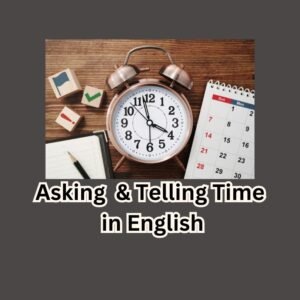
  • Expressing Time in English: Asking and Telling Time

    Expressing Time in English: Asking and Telling Time

    Expressing Time in English: Asking and Telling Time

    Introduction

    Understanding how to ask and tell time is a fundamental skill in learning English. Expressing time accurately is crucial for daily conversations, scheduling appointments, and managing your day-to-day activities. This article will guide you through the basics of asking and telling time in English, providing simple explanations, examples, and practical dialogues to help you master this essential skill.

    Asking for the Time

    When you want to know the time, there are several common phrases you can use:

    • What time is it?
    • Do you have the time?
    • Can you tell me the time?

    These questions are straightforward and polite ways to inquire about the current time.

    Telling the Time

    When telling the time, it’s important to understand the two main formats: the 12-hour clock and the 24-hour clock (also known as military time).

    The 12-Hour Clock

    The 12-hour clock is commonly used in everyday conversations. It divides the day into two periods: AM (from midnight to noon) and PM (from noon to midnight).

    Examples:

    • 7:00 AM – Seven o’clock in the morning
    • 3:30 PM – Three-thirty in the afternoon

    Here are some specific ways to express the time:

    • O’clock: Used for whole hours. Example: 2:00 – Two o’clock
    • Half past: Used for 30 minutes past the hour. Example: 4:30 – Half past four
    • Quarter past: Used for 15 minutes past the hour. Example: 7:15 – Quarter past seven
    • Quarter to: Used for 15 minutes before the hour. Example: 8:45 – Quarter to nine

    The 24-Hour Clock

    The 24-hour clock is commonly used in schedules, timetables, and by the military. It runs from 00:00 (midnight) to 23:59.

    Examples:

    • 08:00 – Eight hundred hours (8:00 AM)
    • 15:45 – Fifteen forty-five hours (3:45 PM)

    Examples of Asking and Telling Time

    Example 1: Asking the Time

    • Person A: “Excuse me, what time is it?”
    • Person B: “It’s half past three.”

    Example 2: Telling the Time

    • Person A: “Do you have the time?”
    • Person B: “Yes, it’s quarter to six.”

    Practical Dialogue

    Here’s a sample dialogue demonstrating how to use these phrases in daily conversation.

    Dialogue:

    • John: Hi Sarah, do you know what time it is?
    • Sarah: Sure, it’s ten past two.
    • John: Thanks! What time do you think the meeting will start?
    • Sarah: The meeting is scheduled for half past two.
    • John: Great, we have twenty minutes to prepare then.
    • Sarah: Yes, let’s get ready.

    By understanding and practicing these simple phrases and concepts, you’ll find it much easier to navigate daily activities and communicate effectively in English regarding time.

  • The Expression of Gratitude (Thanking) in English: A Complete Guide

    The Expression of Gratitude (Thanking) in English: A Complete Guide

    The Expression of Gratitude (Thanking) in English: A Complete Guide

    Expressing gratitude is an essential part of communication in English. Whether you’re thanking someone for a small favor or expressing deep appreciation for a significant gesture, knowing how to convey your gratitude effectively is crucial. In this article, we’ll explore various ways to express gratitude in English, provide examples, and offer dialogues to help you use these expressions in daily life.

    What is Gratitude?

    Gratitude is the feeling of appreciation or thanks towards someone for something they have done. It is a polite and positive way of acknowledging someone’s kindness, effort, or support.

    Simple Ways to Express Gratitude

    1. Thank You
      • This is the most common and straightforward way to express gratitude. It can be used in almost any situation.
      • Example: “Thank you for your help.”
    2. Thanks
      • A more casual form of “thank you.”
      • Example: “Thanks for the ride.”
    3. Thanks a lot
      • Used to express deeper gratitude.
      • Example: “Thanks a lot for picking me up from the airport.”
    4. Thank You Very Much
      • This phrase shows a higher level of appreciation.
      • Example: “Thank you very much for your assistance.”
    5. I Really Appreciate It
      • This expression conveys a genuine sense of appreciation.
      • Example: “I really appreciate your advice.”
    6. I Can’t Thank You Enough
      • Used when the gratitude is overwhelming, and words seem insufficient.
      • Example: “I can’t thank you enough for all your support.”
    7. I’m Grateful
      • This phrase is slightly more formal and expresses a deep sense of appreciation.
      • Example: “I’m grateful for your kindness.”

    Formal Ways to Express Gratitude

    1. I am deeply thankful for…
      • Example: “I am deeply thankful for your guidance during this project.”
    2. I want to express my sincere gratitude…
      • Example: “I want to express my sincere gratitude for the opportunity to work with you.”
    3. I am truly grateful for…
      • Example: “I am truly grateful for your mentorship.”

    Informal Ways to Express Gratitude

    1. Thanks a bunch
      • Example: “Thanks a bunch for helping me out.”
    2. Cheers
      • Commonly used in British English.
      • Example: “Cheers for the lift!”
    3. You’re a lifesaver
      • Example: “You’re a lifesaver for covering my shift.”

    Examples of Gratitude in Daily Life

    Situation 1: Borrowing a Book

    • A: “Can I borrow your book for the weekend?”
    • B: “Sure, no problem.”
    • A: “Thanks a lot! I really appreciate it.”

    Situation 2: Receiving Help with a Task

    • A: “I finished the report you asked for.”
    • B: “That’s fantastic! Thank you very much for your hard work.”
    • A: “I’m grateful for the opportunity to contribute.”

    Situation 3: A Friend’s Favor

    • A: “I heard you watered my plants while I was away.”
    • B: “Yes, I did.”
    • A: “You’re a lifesaver! Thanks a bunch!”

    Dialogue: Using Gratitude in Daily Conversation

    Dialogue 1: At the Office

    • John: “Sarah, I completed the presentation slides for tomorrow’s meeting.”
    • Sarah: “Oh, that’s great! Thank you very much, John. I really appreciate your help.”
    • John: “No problem at all. I’m happy to assist.”

    Dialogue 2: At a Restaurant

    • Waiter: “Here is your order, sir.”
    • Customer: “Thank you very much. The service here is excellent.”
    • Waiter: “You’re welcome. Enjoy your meal!”

    Dialogue 3: Among Friends

    • Friend 1: “Hey, I brought you some homemade cookies.”
    • Friend 2: “Wow, thanks a lot! You’re the best.”
    • Friend 1: “I’m glad you like them.”

    By understanding and using these expressions of gratitude, you’ll be able to convey your appreciation effectively in various situations, enhancing your communication skills and fostering positive relationships.

  • Cozy Dreams: Sweet Slumber in a Rainy Day

    Cozy Dreams: Sweet Slumber in a Rainy Day

    Cozy Dreams: Sweet Slumber in a Rainy Day

  • Sweet Dreams: Adorable Baby Boy Napping in Rainy Ambiance

    Sweet Dreams: Adorable Baby Boy Napping in Rainy Ambiance

    Sweet Dreams: Adorable Baby Boy Napping in Rainy Ambiance