Category: ASMR

  • Nasi Goreng Recipe

    Nasi Goreng Recipe

    Nasi Goreng Recipe

    Nasi Goreng at glance: Indonesia’s take on fried rice, nasi goreng is a beloved comfort food. It’s typically cooked with a mixture of sweet soy sauce, garlic, shallots, and topped with a fried egg.

    Ingredients:

    • 4 cups cooked rice (preferably cold)
    • 2 tbsp vegetable oil
    • 4 cloves garlic, minced
    • 3 shallots, sliced
    • 2 eggs, beaten
    • 1 chicken breast, thinly sliced (optional)
    • 3 tbsp sweet soy sauce (kecap manis)
    • 1 tbsp fish sauce
    • 1 tbsp oyster sauce
    • 2 tsp chili paste (sambal oelek)
    • 1 cup mixed vegetables (carrots, peas, corn)
    • Green onions, chopped (for garnish)
    • Fried shallots (for garnish)

    Instructions:

    1. Heat oil in a wok over medium-high heat. Add garlic and shallots, stir-fry until fragrant.
    2. Add the chicken and cook until done.
    3. Push the chicken to the side and pour the beaten eggs into the other side. Scramble the eggs and mix with the chicken.
    4. Add the cooked rice and stir to combine.
    5. Add the sweet soy sauce, fish sauce, oyster sauce, and chili paste. Mix well.
    6. Add the mixed vegetables and stir-fry for a few more minutes.
    7. Garnish with green onions and fried shallots. Serve hot.
  • Rendang Recipe

    Rendang Recipe

    Rendang Recipe

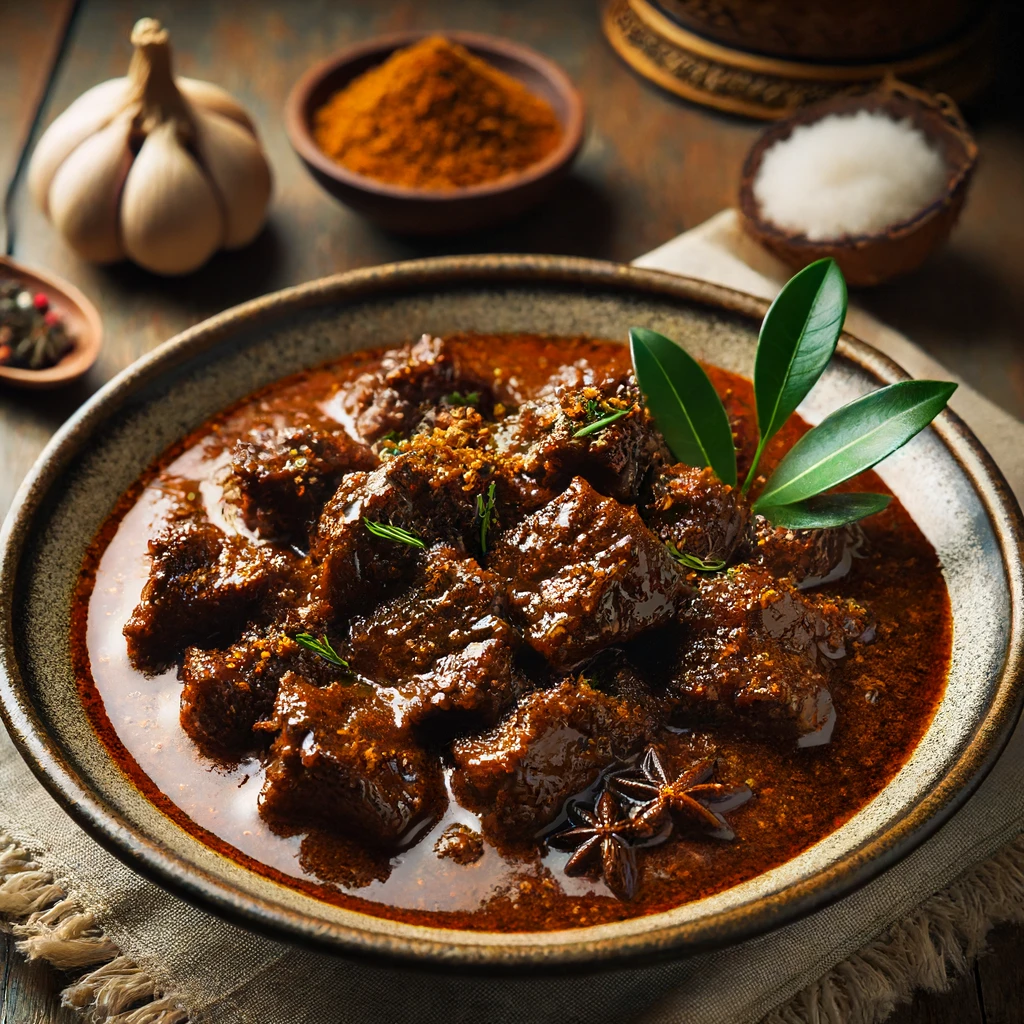
    Rendang at glance: This rich and flavorful beef stew from West Sumatra is often hailed as one of the most delicious dishes in the world. It’s made with tender beef slow-cooked in coconut milk and a mixture of lemongrass, galangal, garlic, turmeric, ginger, and chilies.

    Ingredients:

    • 2 lbs beef, cut into cubes
    • 1 can coconut milk (14 oz)
    • 2 cups water
    • 2 stalks lemongrass, smashed
    • 5 kaffir lime leaves, torn
    • 2 turmeric leaves, torn
    • 1 tbsp tamarind paste
    • 1 cup grated coconut, toasted (optional)

    Spice Paste:

    • 6 shallots
    • 4 cloves garlic
    • 5-6 red chilies
    • 1 inch ginger
    • 1 inch galangal
    • 1 tsp ground coriander
    • 1 tsp ground cumin
    • 1 tsp ground turmeric
    • 1 tsp ground nutmeg
    • 1 tbsp sugar
    • Salt to taste

    Instructions:

    1. Blend all the spice paste ingredients until smooth.
    2. Heat oil in a large pot, add the spice paste and cook until fragrant.
    3. Add the beef and cook until browned.
    4. Pour in the coconut milk, water, lemongrass, kaffir lime leaves, turmeric leaves, and tamarind paste.
    5. Bring to a boil, then reduce heat and simmer uncovered for 2-3 hours, stirring occasionally until the beef is tender and the sauce has thickened.
    6. If using, stir in the toasted grated coconut. Serve with steamed rice.
  • Self Introduction in English

    Self Identity, Family Relationship, Hobby and Habit

    1. Self Identity

    Some expression of Self Introduction

    • Let me introduce myself to you.
    • I’d like to introduce myself to you.
    • Hello, I’m Stephanie.
    • My name is Stephanie.
    • I am a student.
    • I live at Sudirman street no 21, Bandar Lampung.
    • I was born on July 7, 2001.
    • I come from/I am from Bandar Lampung.
    • I am 16 years old.

    2. Family Relationship

    • grand father: the father of one’s father
    • grand mother: the mother of one’s mother
    • father: a man in relation to his child or children
    • mother: a woman in relation to her child or children
    • child: a son or daughter of any age
    • son: a boy or man in relation to either or both of his parents
    • daughter: a girl or woman in relation to either or both of her parents
    • uncle: the brother of one’s father or mother or the husband of one’s aunt
    • aunt: the sister of one’s father or mother or the wife of one’s uncle
    • cousin: a child of one’s uncle or aunt
    • nephew: a son of one’s brother or sister, or of one’s brother-in-law or sister-in-law.
    • niece: a daughter of one’s brother or sister, or of one’s brother-in-law or sister-in-law.
    • mother-in-low: the mother of one’s husband or wife
    • father-in-low: the father of one’s husband or wife
    • son-in-low: the husband of one’s daughter
    • daughter-in-low: the wife of one’s son
    • brother-in-low: the brother of one’s husband or wife
    • sister-in-low: the sister of one’s husband or wife

    Some expressions to ask and tell about family relationship:
    1. Do you have any brothers and sisters?
    Yes, I do.
    2. How many brothers and sisters do you have?
    I have two brothers and two sisters. They are ……..(mention their names).
    3. I have three children, they are ….(mention their names)
    3. Hobby and Habit

    You can use the following expressions to ask and tell about hobby and habit:
    1. What is your hobby?
    My hobby is reading.
    2. Do you have a hobby?
    Yes, I have. It’s writing poems.
    3. What do you like to do in your spare/leisure/free time?
    I like to read in my spare time.
    I spend my time on reading.
    I usually spend my leisure time by listening to some classic music.
    3.What do you usually do in your free time?
    I usually try some new cake recipes in my free time.
    4. What time do you usually go to bed?
    I usually go to bed at 9 pm.
    5. How do you usually go to school?
    I usually go to school by riding a bike.
    To talk about self identity, family relationship, current hobby and habit, use simple present tense. It means we use the simple form of verb after the subject in a declarative sentence.

    S+V1

    • My name is Stephanie.
    • I have two sisters but no brothers.
    • My hobby is reading.
    • I usually go to bed at 9 pm.

    For more information on simple present tense, you can click here!
    Practice the following dialogue!
    Situation: In a classroom, there is a new English class with an English teacher and the students. The learning material of the day is ‘Self Introduction’. Mr. Donny, the English teacher, asks some students to come to the front of the class to perform a self introduction.
    Mr. Donny: Okey students, now I want some students to perform self introduction as I have taught you just now. The girl with yellow ribbon, please come to the front of the class and introduce your self.
    Vanessha: Good morning everybody. In this nice occasion, I’d like to introduce my self to you. My full name is Vanessha Del. People around me usually call me Vanesh. I am from Bandar Lampung and I also was born in Bandar Lampung, on March 8, 2002. So now I’m 15 years of age. Now I live at Sudirman street no 21, Bandar Lampung. As you know I am a student. My hobbies are reading and writing. I want to be a famous writer in the future. I think that’s all about me.
    Mr. Donny: If you want to know more about Vanesha, you can ask her some questions.
    Ridho: How many brothers and sisters do you have?
    Vanessha: I have two sisters but I don’t have any brothers. They are Stephanie Del and Regia Del.
    Ratna: What do you usually do in your spare time?
    Vanessha: I usually read a novel. Anymore questions?
    Nobody rises their hands, so Vanessha closes the introduction.
    Vanessha: I think that’s all, friends. Thank you very much for your very nice attention.
    Mr. Donny:Very good! Give applause for Vanessha.
    And all students give their applauses for Vanessha.
    Test your understanding on the lesson by doing the following test!

    Self Introduction

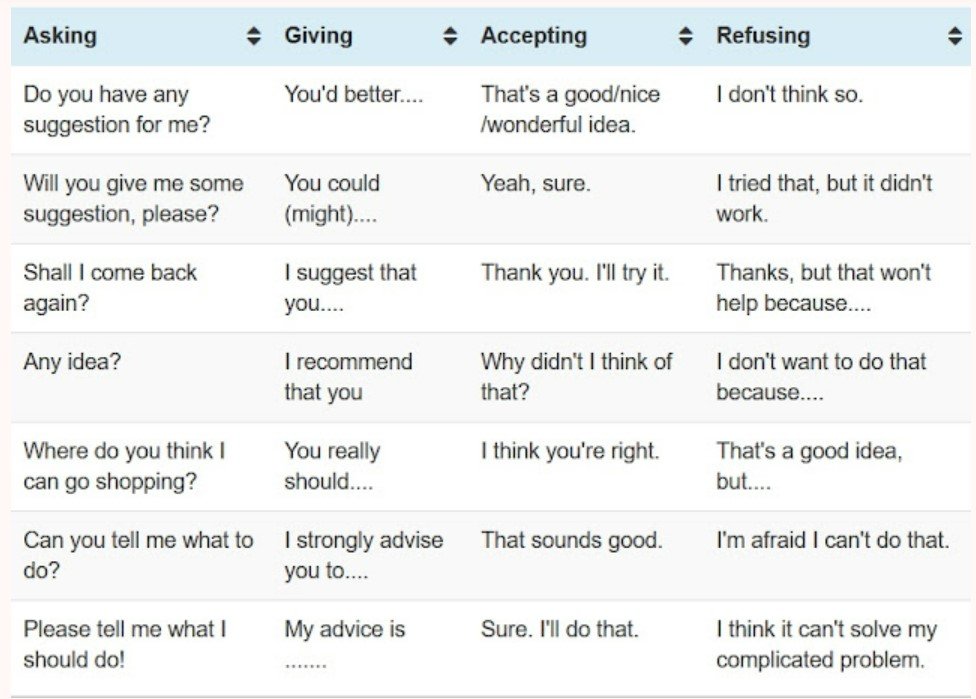
  • Expressing Plan and Suggestion in English

    Expressing Plan and Suggestion in English

    1. Expression of Plan/Intention

      The following are the examples to express your plan/intention:
      a. I would like to tell you about my childhood.
      b. I will visit my grandmother tomorrow.
      c. I want to make fried rice.
      d. I am going to introduce my sister to you.
      e. I would rather watch a movie than go shopping.

      2. Expressing Suggestion

      3. “be going to” and “would like to”

      We can use “be going to + infinitive” to talk about future intention/plan which is fairly certain.
      e.g:
      I am studying Japanese.
      I am going to be a Japanese teacher.
      Use “would like to+infinitive” to talk about ambition, hope or preference.
      e.g:
      I would like to speak Mandarin fluently.
      I would like to go to Japan soon.
      I would like to be financially free.
      Practice the following dialogue in front of the class!
      Stephanie: Hello Nesh. Do you have a plan this weekend?
      Vanesha: Hello, Ste. No, I don’t. What’s up?
      Stephanie: Will you join me? I am going to visit my uncle in village this weekend. There we can play in the rice field. It’s very beautiful because the harvesting time almost comes. It’s yellow everywhere.
      Vanesha: That sounds great, Stevy. What else we can do there?
      Stephanie: We can also go fishing in a pond behind my uncle’s house. There are many kinds of fish there such as gold fish, cat fish, tilapia fish, snakehead fish, and many others.
      Vanesha: Ow really? I can’t wait to go there, Stevy. By the way, how will we go there?
      Stephanie: We can take a bus from here. Then we continue with taxibike to reach the village. It’s not expensive. We only need to pay about 20,000 IDR to get to my uncle’s house.
      Vanesha: Okey, Stevy. I’ll talk to my mom and dad first. Hope they permit me to go. Because I usually find it difficult to get their permission when I want to go a long distance.
      Stephanie: I recommend that you tell them you’ll go with me. They know and trust me. I’m sure they’ll permit you to go.
      Vanesha: That’s a wonderful idea. I’ll try it and inform you as soon as I get my parents’ permission.
      Stephanie:Okey, Nesh. I’ll wait for the good news.
      Please answer the following questions to test your understanding on the lesson!

    1. The Type/Genre of Texts

      The Type/Genre of Texts

      NoTypes of TextAboutPurposeGeneric Structure
      1Narrativestory: fairy tale, legend, fable, myth, mystery, romance, horror, science fiction, etc.to amuse, entertain the readersorientation-evaluation-complication-resolution-reorientation
      2Recountpersonal experience, diary, history, biography, autobiographyto tell the past eventorientation-event-reorientation
      3Spooffunny storyto tell humorous story with twistorientation-event-twist
      4Anecdotefunny or interesting story about a real incident or personto share something funny or interesting about an event or personabstract-orientation-crisis-reaction-coda
      5News Itemnewsto inform listeners or readers about events of the day considered importantnewsworthy events-background-sources
      6Descriptionspecific descriptionto describe a particular person, place, or thingidentification-description
      7Reportgeneral descriptionto describe the way things are, with reference to a range of natural, man-made, and social phenomenageneral classification-description
      8Explanationthe processto explain the process involved in the formation or working of natural or socio-cultural phenomenageneral statement-explanation
      9Procedurethe ways or stepsto describe how something is accomplished through a sequence of actions or stepsgoal-material-steps
      10Analytical Expositionopinion with reiterationto persuade the readers that something is the casethesis-argument-reiteration
      11Hortatory Expositionopinion with recommendation (should/not or must/not)to persuade the readers that something should or should not be the casethesis-argument-recommendation
      12Discussionissues with different viewpointsto present information and opinions about more than one side of an issueissue-arguments for and against-conclusion
      13Reviewcritique of an art work, event, or productto evaluate and critique the work, event, or productorientation-evaluation-interpretation-summary
    2. Narrative Text

      Narrative Text

      A narrative text is a kind of text that tells a story. The story can be real or made up. It usually has a clear beginning, middle, and ending. You can find narrative texts in fairy tales, legends, fables, myths, mysteries, romances, horror stories, and science fiction.

      The Social Function

      The function of a narrative text is to entertain, to inform or  give the readers a lesson through a story.

      1. To Entertain:

      Imagine you read a funny story about a naughty cat who tries to take cookies from a jar but gets his head stuck inside. You will probably laugh and enjoy the funny moment. That is the entertainment function! The main purpose of this kind of story is to make you feel happy and have fun.

      2. To Inform:

      Imagine you read an interesting story that happens in ancient Rome. The people and events might be made up by the writer. But while you read, the writer may tell what clothes people wore, what jobs they did, or how they celebrated holidays. So, while you enjoy the story, you also learn something about Roman history and culture without noticing it. It’s like learning history in a fun way! The information is not written like in a textbook — it is part of the story.

      3. To Teach:

      Think about the story of “The Tortoise and the Hare.” It’s a fun story about a slow but steady tortoise who wins a race against a fast but proud hare. Even though the story is simple, it teaches us an important lesson: we should keep trying and never look down on others. Many fables like this use stories to teach a moral or good lesson.

      So, in a nutshell:

      Entertain: Makes you feel happy, excited, or amused.
      Inform: Gives you knowledge about something in a story format.
      Teach: Conveys a lesson or moral through the events and characters.

      The Generic Structure

      A well-written narrative text typically follows this structure:

      1. Orientation: This part introduces the setting (time and place), characters, and background of the story. It answers questions like who, where, and when.
      Setting: It refers to the time and place where the story takes place.
      Background: It provides important context for understanding the story, such as past events, character relationships, or cultural and historical details.

      Example: “Once upon a time in a small village, there lived a kind young girl named Lily. She loved helping others.”

      This example introduces:

      • Time: “Once upon a time” – This is a classic way to start a fairy tale, indicating a time in the distant past.
      • Place: “in a small village” – This sets the location of the story.
      • Character: “a kind young girl named Lily” – This introduces the main character and gives a brief positive trait.
      • Background (briefly implied): “She loved helping others” – This gives us a little initial insight into Lily’s character and hints at potential future actions or relationships within the story.

      Orientation focuses on the basic who, where, and when to get the story started.

      2. Complication: This section presents the main problem or conflict in the story. It builds suspense and interest.
      Example: “One day, a terrible storm destroyed Lily’s village, leaving many people without homes. She didn’t know what to do.”
      3. Resolution: The conflict is resolved, either happily or sadly.
      Example: “Lily decided to gather everyone and rebuild the village. With teamwork, they restored their homes and lived happily again.”
      4. Reorientation (optional): This part provides a moral lesson or a reflection.
      Example: “From that day on, Lily learned that kindness and cooperation can overcome any challenge.”

      The Language Features

      1. Using Past Tense

      It is logical since the stories typically happen in the past. They can use simple past, past continuous or past perfect tense.

      1. Using action verbs

      Action verbs are verbs that show the performance of action. They specifically describe what the subject (person, animal, force of nature, or thing) of the sentence is doing, e.g.: run, walk, cry, scream, explode, kick, etc.

      1. Using temporal conjunction

      Temporal conjunctions express relationships with time, in the flow or sequence of events, e.g.: before, after, during/while (a period or an activity), since, until, when.

      The Example

      The Clever Rabbit and the Hungry Lion

      Once upon a time, in a dense forest, there was a mighty and cruel lion. Every day, he hunted the animals, making them live in fear. The terrified animals gathered one day and decided to send one animal each day as a sacrifice to the lion, hoping to stop his ruthless hunting.

      When it was the clever rabbit’s turn, he thought of a plan to save himself and the other animals. He walked slowly toward the lion’s cave, making sure to arrive late. The lion, growing impatient, roared in anger when he saw the rabbit.

      “Why are you late?” the lion demanded, baring his sharp teeth.

      The rabbit bowed respectfully and replied, “Oh mighty king, I was on my way here when another lion stopped me. He claimed to be the true king of this forest and refused to let me pass. He said he is stronger than you.”

      The lion’s eyes widened with fury. “What? Another lion? Show me where he is!” he roared.

      The rabbit led the lion to a deep well filled with crystal-clear water. Peering into the well, the lion saw his own reflection and mistook it for another lion.

      Enraged, he let out a deafening roar, but the “other lion” roared back just as loudly. Furious, the lion jumped into the well to attack his rival, only to realize too late that he had been tricked. He struggled in the water but eventually drowned.

      The rabbit returned to the other animals and told them what had happened. They cheered and celebrated, relieved that they no longer had to live in fear.

      From that day forward, the forest was peaceful, and the clever rabbit was hailed as a hero.

      Text Analysis

      Let us examine the various elements of the narrative text presented above.

      The Social Function

      To Entertain: It’s a cool story about a small, smart rabbit outsmarting a big, scary lion. You probably enjoyed reading about how the rabbit came up with his plan and how the lion got tricked! That’s the story entertaining you.

      To Teach: The story also shows us that being smart can be more powerful than just being strong. The rabbit wasn’t strong enough to fight the lion, but he was clever enough to trick him. So, the story teaches us that using your brain can help you solve problems, even big ones.

      The Generic Structure

      1. Orientation:

      • Setting: “Once upon a time, in a dense forest” – This tells us the time (a long time ago, typical of fables) and the place (a thick forest).
      • Characters: “a mighty and cruel lion” and “the clever rabbit” and “the terrified animals.” These are the main players in the story.
      • Background: “Every day, he hunted the animals, making them live in fear.” This gives us the initial situation and the problem that sets the story in motion – the lion’s cruel behavior and the animals’ fear. It also explains why the animals decide to make a sacrifice.

      2. Complication:

      • The main problem or conflict starts when it is “the clever rabbit’s turn” to be sacrificed. This creates suspense as we wonder what the rabbit will do. The lion’s impatience and anger when the rabbit arrives late further build this tension. The rabbit’s lie about another, stronger lion is the turning point that escalates the conflict.

      3. Resolution:

      • The conflict is resolved when the lion, tricked by his own reflection, jumps into the well and “eventually drowned.” The problem of the hungry and cruel lion is eliminated.
      • The animals’ reaction – “They cheered and celebrated, relieved that they no longer had to live in fear” – confirms the resolution of the initial problem.
      • The forest becoming “peaceful” is the positive outcome of the resolution.

      4. Reorientation:

      • “From that day forward, the forest was peaceful, and the clever rabbit was hailed as a hero.” This acts as a reorientation. It provides a concluding statement about the new state of the forest and the rabbit’s status, offering a sense of finality and a subtle message about the value of cleverness.

      So, the story clearly follows the typical narrative structure, moving from setting the scene and introducing the problem to the climax of the trick and finally the resolution and its lasting impact.

      The Language Features

      • Past Tense: The story is consistently told using the past tense (“there was,” “he hunted,” “they gathered,” “he thought,” “he walked,” “the lion demanded,” “the rabbit bowed,” “another lion stopped,” “he claimed,” “show me,” “he roared,” “the rabbit led,” “the lion saw,” “he mistook,” “he let out,” “roared back,” “he jumped,” “he had been tricked,” “he struggled,” “drowned,” “returned,” “told,” “cheered,” “celebrated,” “was peaceful,” “was hailed”). This is typical for narrative texts as they recount events that have already happened.

      • Action Verbs: The story is full of action verbs that make the events vivid and engaging (“hunted,” “live,” “gathered,” “send,” “walked,” “arrive,” “roared,” “demanded,” “bowed,” “replied,” “stopped,” “claimed,” “refused,” “pass,” “widened,” “show,” “led,” “peering,” “saw,” “mistook,” “let out,” “roared back,” “jumped,” “attack,” “realize,” “struggled,” “drowned,” “returned,” “told,” “cheered,” “celebrated,” “was hailed”).

      The Exercise

      Test your understanding on the text above by answering the following questions.

      1. What is the main idea of the story?

      2. Why did the animals decide to send a sacrifice to the lion?

      3. What does the word "enraged" mean in the story?

      4. Why did the rabbit arrive late to the lion’s cave?

      5. What did the rabbit claim about the other lion?

      6. How did the rabbit defeat the lion?

      7. Why did the lion believe there was another lion in the well?

      8. What is the meaning of "crystal-clear" in the text?

      9. The word ‘he’ in ‘He struggled in the water but eventually drowned’ refers to ….

      10. What lesson can be learned from the story?

    3. Recount Text

      Recount Text

      What is it?

      If you want to tell about your personal experience; presenting a diary or find a text which contains about history, biography or autobiography then the form of the text must be recount.

      The Social Function

      The purpose of a recount is to retell a past event.

      The Generic Structure

      The generic structure of a recount text is fairly simple. It consists of orientation-event-reorientation.
      Orientation
      It introduces the participants and informs the time and the place.
      Event
      It tells the event in a chronological order.
      Reorientation
      It is optional. It states the writer’s personal comment to the story

      The Language Features

      1. Use of Past Tense

      A recount text is mainly written in the simple past tense because it tells events that happened in the past.

      Examples:

      • I visited my grandmother.

      • We played football.

      • She went to the market.

      The past tense shows that the actions already happened.


      2. Point of View

      A recount text can be written from:

      a. First-person point of view
      The writer tells their own experience.
      Example: I came to the museum.

      b. Third-person point of view
      The writer tells someone else’s experience as an observer.
      Example: Tom visited the place.


      3. Time Expressions

      Recount texts use time expressions to show when the events happened.

      Examples:

      • yesterday

      • last week

      • one day

      • when I was a child

      • in the morning

      These expressions help readers understand the time of the events.


      4. Sequencing Connectives

      Sequencing Connectives are used to show the order of events.

      Examples:

      • first

      • next

      • then

      • after that

      • finally

      These words make the story clear and organized.


      5. Action Verbs

      Recount texts use action verbs to describe activities or events.

      Examples:

      • went

      • played

      • visited

      • saw

      • helped

      • walked

      These verbs show what the people did.


      6. Focus on Events

      A recount text focuses on what an individual or a group of people did in the past. The events are usually told in chronological order.

      The Example of Recount Text

      My Childhood

      When I was a child, I lived in a small village near a wide river and beautiful rice fields. My days were simple, but they were full of joy and unforgettable moments. At that time, my friends and I often spent our afternoons playing outside after finishing our homework. We usually gathered near a big mango tree beside the field, and we played traditional games together. Playing outside was our favorite activity because it made us feel free and happy.

      One day, when the weather was sunny and warm, I met my three best friends near the big mango tree beside the field. We decided to play hide and seek because it was our favorite game. At first, I became the seeker, and my friends ran in different directions to find good hiding places. Then, I counted loudly while covering my eyes. When I finished counting, I started looking for them one by one.

      First, I saw one of my friends hiding behind a pile of dry leaves. I walked slowly and suddenly shouted his name. We all laughed loudly. After that, I found another friend hiding behind a wooden fence. However, I could not find my last friend anywhere. Because I was curious, I walked toward the river. Finally, I saw him sitting quietly behind a large rock near the water. We laughed again and continued playing.

      After playing for a long time, we felt tired and hungry. Then, we sat together under the mango tree and shared the snacks that we brought from home. We talked about school, our dreams, and funny stories. Before sunset, we said goodbye and went home.

      Looking back, that simple day taught me that happiness does not always come from expensive toys or modern games. It comes from togetherness, friendship, and simple moments. My childhood was not perfect, but it was meaningful and full of warm memories that I will always treasure.

      The Analysis of the Text “My Childhood”

      A. Generic Structure

      1. Orientation

      The orientation introduces the background information, including the time, place, and participants in the story.

      Excerpt:

      When I was a child, I lived in a small village near a wide river and beautiful rice fields. My days were simple, but they were full of joy and unforgettable moments. At that time, my friends and I often spent our afternoons playing outside after finishing our homework. We usually gathered near a big mango tree beside the field, and we played traditional games together.

      Function:
      This part provides general information about the writer’s childhood, where they lived, and what they usually did. It helps the reader understand the setting before the main event begins.


      2. Series of Events

      This section tells the events in chronological order.

      Excerpt:

      One day, when the weather was sunny and warm, I met my three best friends near the big mango tree beside the field…
      First, I saw one of my friends hiding behind a pile of dry leaves…
      After playing for a long time, we felt tired and hungry…

      Function:
      This part describes the specific experience of playing hide and seek. The events are presented step by step, from meeting friends, playing the game, finding them one by one, until resting and going home.


      3. Reorientation

      The reorientation contains the writer’s personal comment or reflection about the experience.

      Excerpt:

      Looking back, that simple day taught me that happiness does not always come from expensive toys or modern games…

      Function:
      This section gives a personal reflection and lesson learned from the experience. It closes the story in a meaningful way.


      B. Language Features

      1. Simple Past Tense

      The text mainly uses the simple past tense because it tells about events that happened in the past.

      Some examples of simple past verbs in the text are:

      lived, was, were, spent, gathered, played, met, decided, became, ran, counted, finished, started, saw, walked, shouted, laughed, found, continued, felt, sat, shared, brought, talked, said, went, taught

      These verbs show actions and situations that were completed in the past. Most of them describe what the writer and the other characters did during the childhood.

      Although the text mostly uses the simple past tense, there are a few present tense forms in the reflection part, such as “It comes from togetherness” and “I will always treasure.” These are used to express general truth and future intention.


      2. Time Expressions

      The text uses several time expressions to indicate when the events happened. These expressions establish the time setting and clarify the chronological background of the story.

      The time expressions found in the text are:

      When I was a child, At that time, One day, when the weather was sunny and warm, When I finished counting, After playing for a long time, Before sunset

      These expressions answer the question “when did it happen?”.


      3. Action Verbs

      The recount text “My Childhood” uses various action verbs to describe activities and events that happened in the past. The verbs are written in the simple past tense because the text retells past experiences.

      The action verbs found in the text are:

      lived, spent, gathered, played, met, decided, ran, counted, finished, started, looked, saw, walked, shouted, laughed, found, continued, sat, shared, brought, talked, said, went, taught, treasure

      These action verbs help make the events clear and show what the writer and the other characters did throughout the story.


      4. Point of View

      The recount text “My Childhood” is written from the first-person point of view. The writer tells his/her own personal experience and directly participates in the events of the story.

      This can be seen from the use of first-person pronouns such as “I,” “my,” and “we.” For example:

      “When I was a child, I lived in a small village…”

      “I met my three best friends…”

      “I became the seeker…”

      “We decided to play hide and seek…”

      These pronouns show that the narrator is the main character who experienced the events personally. The writer does not act as an outside observer but as someone directly involved in the story.

      Therefore, the text clearly uses the first-person point of view, which is commonly used in recount texts to retell personal experiences.


      5. Sequencing Connectives

      The text uses several sequencing connectives to show the chronological order of events. Expressions such as When I was a child, One day, At first, First, Then, After that, Finally, After playing for a long time, and Before sunset help organize the story from beginning to end.

      These connectives guide the reader through the progression of time, clearly signaling when events start, continue, and end. As a result, the text flows smoothly and logically.

    4. Spoof Text

      Spoof Text

      What is It?

      Spoof is a text that tells a factual story which happened in the past with unpredictable and funny ending.

      Social Function

      The social function of spoof is to tell the humorous story which meant to entertain the readers.
      Generic Structure
      Orientation
      It tells the participants of the story and informs the time and place of the happening.
      Events
      It tells the happening in a chronological order.
      Twist
      It provides the funniest part of the story with an unpredictable ending.

      Language features

      1. Focusing on people, animals or certain things 2. Using connectives: first, then, finally
      3. Using action verb: ate, ran, walked, laughed etc
      4. Using adverb of time and place: in the park, last week, etc
      5. Using simple past tense
    5. News Item Text

      News Item Text

      What is it?

      A text which contains about news is categorized as news item text. This text supplies you the up to date information or the hottest issue of the day since media like news papers are published daily.

      Social Function

      News Item text purposes to inform readers or listeners about events of the day which are considered newsworthy or important.

      Generic Structure

      Newsworthy event
      It tells the main event which is considered newsworthy in a summary form.
      Background event
      It elaborates what happened or tell the detail information or what causes the incident. It can include the background, participant, time, and place relating to the news.
      Source
      It contains comments which can be from the participants, witness, the official authorities or experts in the events.

      Language Feature

      1. Using of action verbs (hit, attack)
      2. Using of saying verbs (said, added, claimed)
      3. Using of passive sentences (Aceh was hit by Tsunami in 2004)
      4. Using of adverbs in passive sentences (The victims were badly injured)
      5. Using past tense. It is logical as the consequence of telling thing which happens in the past.
    6. Descriptive Text

      Descriptive Text

      Descriptive Text

      A descriptive text is a type of text that describes a person, place, object, or event in detail. It provides vivid imagery to help the reader visualize and understand the subject being described.

      Social Function

      The social function of a descriptive text is to provide detailed information about a subject to create a clear picture in the reader’s mind. It helps engage the senses and emotions of the audience.

      Generic Structure

      A well-written descriptive text typically follows this structure:

      1. Identification: This part introduces the subject that will be described.

      Example: “Bali is a beautiful island in Indonesia, known for its stunning beaches and rich culture.”

      2. Description: This section provides detailed characteristics of the subject, including appearance, qualities, and other specific features.

      Example: “The island has golden sandy beaches, lush green forests, and a vibrant nightlife. Tourists can explore ancient temples, enjoy traditional Balinese dances, and taste delicious local cuisine.”

      Types

      There are several types of descriptive texts, including:

      1. Describing People – Example: A character description.
      2. Describing Places – Example: A tourist destination, a hometown, or a favorite spot.
      3. Describing Objects – Example: A favorite book, a historical artifact, or a gadget.
      4. Describing Events – Example: A festival, a wedding ceremony, or a school event.

      Language Features

      Descriptive texts use specific language features, such as:

      1. Adjectives: beautiful, enormous, ancient

      Examples:

      -The beautiful sunset painted the sky with golden hues.
      -The enormous elephant walked gracefully through the jungle.

      -The ancient temple stood proudly amid the lush greenery.

      2. Adverbs: gracefully, softly, vividly

      Examples:

      -She danced gracefully across the stage.

      -The wind blew softly through the trees.

      -The artist painted vividly, bringing the scene to life.

      3. Present tense

      Examples:

      -The house is big and beautiful.

      -The sun rises in the east and sets in the west.

      -Many tourists visit Raja Ampat every year to enjoy its beauty.

      -The ocean contains thousands of marine species.

      -Visitors explore the islands to witness their natural beauty.

      4. Figurative language (e.g., similes and metaphors)

      Simile, a figure of speech that compares two different things using the words “like” or “as”

      Examples:

      -The lake is as clear as crystal.

      -The waves crashed like roaring thunder against the rocky shore.

      Metaphor, a direct comparison between two unrelated things, saying that one thing is another without using “like” or “as”.

      Examples:

      -The coral reef is a vibrant underwater city, bustling with life.

      -The underwater world of Raja Ampat is a paradise for divers and snorkelers.

      5. Sensory details (e.g., describing how something looks, smells, feels, sounds, or tastes)

      Examples:

      Looks: The turquoise water sparkles under the bright sunlight.

      Smells: The salty sea breeze fills the air with a refreshing scent.

      Feels: The soft, warm sand gently tickles my feet as I walk along the shore.

      Sounds: The waves crash against the rocks with a soothing rhythm.

      Tastes: The fresh coconut water is sweet and cool, perfect for a hot day.

      Example

      Raja Ampat

      Raja Ampat is one of Indonesia’s most beautiful and famous tourist destinations. Located in West Papua, this archipelago is known for its breathtaking marine biodiversity, crystal-clear waters, and stunning limestone islands.

      The region consists of over 1,500 small islands, cays, and shoals. The underwater world of Raja Ampat is a paradise for divers and snorkelers, offering colorful coral reefs, diverse marine life, and rare species such as the walking shark. Above the surface, visitors can enjoy the scenic view of towering limestone cliffs, hidden lagoons, and lush tropical forests. The region is also home to various exotic bird species, such as the famous Cendrawasih, or bird of paradise, which can be found in the forests of Waigeo Island.

      Apart from its natural beauty, Raja Ampat is rich in cultural heritage. The indigenous Papuan tribes have preserved their traditions for centuries, performing unique dances, crafting handmade wooden sculptures, and passing down oral stories about their ancestors. Visitors who come to Raja Ampat can engage in cultural experiences, such as watching traditional performances or tasting local cuisine made from freshly caught seafood.

      Tourism in Raja Ampat is largely focused on eco-tourism, with conservation efforts playing a vital role in maintaining the region’s pristine environment. Many organizations work together to protect the coral reefs and marine life, ensuring that future generations can also enjoy the natural wonders of Raja Ampat. Tourists are encouraged to follow sustainable travel practices, such as avoiding plastic waste and respecting the local customs.

      The best time to visit Raja Ampat is during the dry season, from October to April, when the sea is calm and visibility is excellent for underwater exploration. Many travelers describe Raja Ampat as a hidden gem, offering a perfect blend of adventure, natural beauty, and cultural richness.

      Exercise

      Test your understanding of the text above by answering the following questions.

      1. What is the main idea of the text?

      2. What makes Raja Ampat famous?

      3. What kind of marine life can be found in Raja Ampat?

      4. How do local people preserve their culture in Raja Ampat?

      5. What does the word "breathtaking" mean in the text?

      6. The phrase "this archipelago" in the sentence "Located in West Papua, this archipelago is known for its breathtaking marine biodiversity…" (paragraph 1) refers to ….

      7. Based on the text, what can be inferred about the people of Raja Ampat?

      8. In the third paragraph, the word "engage" most nearly means ….

      9. What is mainly discussed in paragraph 4?

      10. Based on the last paragraph, it can be inferred that ….