


10 Fun Learning Activities for Toddlers at Home (Easy & Low Cost)
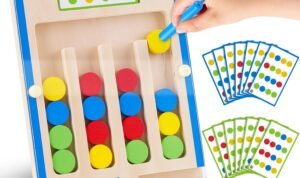
GET Montessori Magnetic Wooden Puzzle-Educational Maze Toy for Kids HERE
The early years of a child’s life are a period of nearly miraculous transformation. Between birth and the age of eight, the human brain is more flexible, active, and ready to soak up information than it will ever be again. During this window, millions of neural connections are formed every second, creating the literal “wiring” for future language, logic, and emotional health. While this science sounds serious and complex, the most effective way to support this growth is through something simple: play.
For a young child, play is their work. It is the primary way they experiment with the world and discover their own capabilities. The best developmental activities are those that don’t feel like “lessons” at all. When a child is genuinely having fun, their brain releases chemicals like dopamine that actually make learning easier and more permanent. Here are ten fun learning activities that support early childhood development across physical, cognitive, and social-emotional domains.
1. The Magic of Sensory Bins
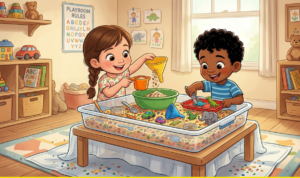
Sensory bins are essentially a “mini-playground” in a box. They provide a safe space for children to explore, mess around, and discover how the physical world works through their five senses.
Here is a deeper look at how this activity works and why it is so effective for young learners.
What is a Sensory Bin?
Think of a sensory bin as a contained treasure chest. It is usually a shallow plastic tub or tray filled with “filler” materials (like rice or sand) and a few toys. Instead of being told what to do, the child is free to touch, scoop, and pour however they like.
How to Set It Up
You don’t need expensive toys to make this work. In fact, items from your kitchen often work best!
-
The Container: A clear plastic storage bin or a large baking tray.
-
The Filler: Choose one main material. Popular choices include:
-
Dry: Uncooked rice, dried beans, pasta shapes, or birdseed.
-
Wet: Water (add bubbles or food coloring!), shaving cream, or “oobleck” (cornstarch and water).
-
Natural: Sand, soil, smooth stones, or dried leaves.
-
-
The Tools: Give them things to move the filler around.
-
Measuring cups, spoons, and whisks.
-
Funnels and empty yogurt containers.
-
Tongs or tweezers (to pick up specific items).
-
-
The Theme: Drop in a few “surprises” like plastic dinosaurs, toy cars, or colorful buttons.
How the “Magic” Happens
While it looks like the child is just making a mess, their brain is actually working overtime. Here is a breakdown of what they are learning:
a. Building “Hand Power”
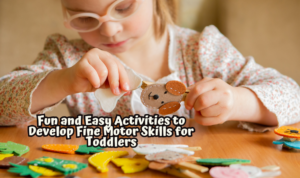
When a child uses tongs to pick up a single bean or squeezes a sponge full of water, they are exercising the tiny muscles in their fingers and wrists.
-
Why it matters: These are the exact same muscles they will need later to hold a pencil, use scissors, and button their own clothes.
b. Early Math & Science
Children don’t understand the word “volume” yet, but they understand the feeling of it.
-
The Discovery: They see that a large cup of rice won’t fit into a tiny cup. They feel how heavy a bucket gets when it is full versus when it is empty. This is functional math in action.
c. Language Skills
Sensory play is a great time to talk. As you play with them, you can use “descriptive words” that they might not hear in everyday conversation.
-
Examples: “Is the rice crunchy?” “Does the water feel slippery?” “The sand is very gritty.”
d. Emotional Calm
Much like adults find gardening or kneading dough relaxing, children find sensory play very soothing. Sifting sand or pouring water can help a child “reset” if they are feeling overwhelmed or anxious.
Quick Tip for Parents: To keep the mess contained, place a large towel or a cheap shower curtain liner under the bin before you start. When playtime is over, you can just shake the “escaped” rice back into the bin!
2. Interactive “Sportscasting”
Interactive “Sportscasting” is essentially giving your child a play-by-play narration of their day.
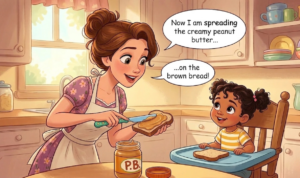
Imagine you are a radio announcer or a sports commentator. Since babies and toddlers can’t always “see” what you are thinking, you use your voice to turn every ordinary moment into a live story. This helps them connect the things they see and do with the words we use to describe them.
How to Do It
You don’t need any special equipment—just your own voice! There are two main ways to “sportscast”:
a. Narrate Your Own Actions
Talk about what you are doing while your child watches.
-
Instead of: Making dinner in silence.
-
Try this: “Now, I’m taking the big, cold milk out of the fridge. I’m pouring it into the blue bowl. Splash! Look at those bubbles.”
b. Narrate Your Child’s Actions
This is like being their personal cheerleader. Talk about what they are doing, feeling, or seeing.
-
Instead of: Just watching them play with blocks.
-
Try this: “You’re picking up the red block. Oh, you’re putting it right on top of the yellow one! Wiggle, wiggle… crash! It fell down.”
Why It Works Like Magic
While it might feel a little silly to talk to yourself at first, here is what is actually happening in your child’s brain:
a. Building a “Word Bank”
Before a child can say a word, they have to hear it hundreds of times. By sportscasting, you are filling their “internal dictionary” with names for colors, shapes, textures, and actions.
b. No-Pressure Learning
When we ask a child, “What color is this?” it can sometimes feel like a test. Sportscasting is stress-free. They are learning the names of things naturally while they are relaxed and having fun.
c. Making Connections
It helps them understand cause and effect. When you say, “I’m turning the knob, and now the water is coming out,” they begin to understand how the world works through your description.
d. Emotional Bonding
Hearing your voice consistently makes a child feel seen and important. It shows them that you are paying attention to their world, which builds a strong sense of security and “belonging.”
Quick Tips for Success
-
Keep it Simple: Use short sentences. Instead of “I am currently utilizing the serrated knife to bisect the sandwich,” say, “I’m cutting the sandwich in half!”
-
Use “Sound” Words: Kids love “BEEP,” “WHOOSH,” or “SPLAT.” It grabs their attention and makes the “broadcast” more exciting.
-
Follow Their Eyes: If your child is staring at a dog in the park, start sportscasting about the dog. “Look at that doggie! He has a long tail. Wag, wag, wag!”
Do you have a specific daily routine, like bath time or grocery shopping, where you’d like to try this out?
3. Indoor Obstacle Courses
Indoor Obstacle Courses are essentially a “living room adventure” that turns everyday furniture into a giant playground. It is a fantastic way to burn off energy while teaching a child’s brain and body how to work together as a team.
Imagine your hallway is a canyon and your sofa is a mountain—this game turns your home into a training ground for physical and mental skills.
Children Education 1000 Titles
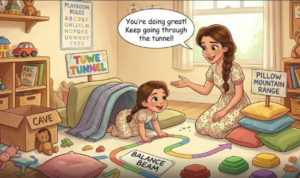
How to Set It Up
You don’t need any fancy gym equipment. Just look around your house for soft items and safe surfaces:
-
Pillow Mountains: Stack sofa cushions and bed pillows on the floor. Ask your child to climb over them or crawl across the “mountain range.”
-
The Tightrope: Stick a line of masking tape on the floor or lay down a long piece of yarn. Your child has to walk exactly on the line without “falling off” into the “lava” (the floor).
-
Tunnel Exploration: Drape a large blanket or bedsheet over two chairs to create a dark, secret tunnel they have to crawl through.
-
Lily Pad Jumps: Place a few small towels or cushions apart from each other. The child must jump from one to the next to cross the room.
Why the “Magic” Happens
a. Building “Big Muscle” Power (Gross Motor Skills)
Climbing, jumping, and crawling use the large muscles in the arms, legs, and core. This builds the physical strength and stamina your child needs for running, swimming, and even sitting upright at a school desk later on.
b. Brain Connection (Coordination)
Navigating an obstacle course requires the left and right sides of the brain to talk to each other. When a child crawls (moving the opposite arm and leg at the same time), they are strengthening the neural pathways that help with balance and spatial awareness.
c. Physical Problem Solving
Every obstacle is a tiny puzzle. The child has to think: “How high do I need to lift my leg to clear this pillow?” or “How fast should I crawl to get through the tunnel?” This teaches them how to judge distances and plan their movements.
d. Boosting Confidence
There is a huge sense of pride when a child reaches the “finish line.” Every time they conquer a tricky part of the course, their self-esteem grows, making them more willing to try new physical challenges in the future.
Quick Tips for Success
-
Safety First: Make sure the area is clear of sharp table corners or breakable items.
-
Add a Story: Give the course a theme! Are they “exploring a jungle” or “escaping a dragon’s lair”?
-
Time It: If they are older, use a stopwatch to see if they can beat their own record, or play upbeat music to keep the energy high.
4. Sorting and Categorizing
Sorting and Categorizing is basically a “brain-building” game where children learn to look at a big pile of things and figure out how they belong together. It’s like being a tiny detective who is looking for clues to organize the world.
While it might look like your child is just “cleaning up” or moving things around, they are actually practicing the very first steps of logic and mathematics.
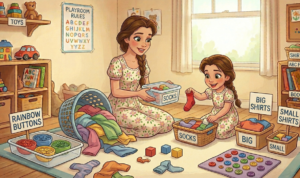
How to Do It
The best part is that you don’t need to buy anything new. You can use whatever is already in your cabinets or laundry basket:
-
The Sock Match: Dump out a pile of clean laundry and ask, “Can you find all the socks?” or “Can you find the tiny socks and the big socks?”
-
Kitchen Sorting: Take a drawer of plastic containers and ask them to find all the round ones, then all the square ones.
-
Button Rainbow: If you have a jar of buttons (with adult supervision!), have them put all the red ones in one bowl and the blue ones in another.
-
Pasta Patterns: Use different shapes of dry pasta (like bows, tubes, and spirals) and have them sort them into an empty egg carton.
Why the “Magic” Happens
a. Building “Eagle Eyes” (Observation)
To sort something, a child has to look really closely at the details. They have to notice that one button has four holes and another has two, or that one sock is fuzzy and another is smooth. This builds attention to detail, which is vital for learning to read and write later.
b. The Foundation of Math
Math isn’t just about numbers; it’s about patterns. When a child realizes that all the red blocks go together regardless of their size, they are learning the basics of “set theory”—a fancy math concept—through simple play.
c. Logical Reasoning
Sorting teaches children how to make decisions based on rules. If the rule is “only big things go in this box,” the child has to think and compare every item they pick up. This is the beginning of problem-solving.
d. Organizing Information
In the future, your child will need to organize thoughts, school subjects, and digital files. Sorting physical objects now prepares their brain to handle complex “data” (information) when they are older.
Quick Tips for Success
-
Start Simple: If your child is very young, start with just two categories (like “Red” and “Not Red”).
-
Talk it Through: Ask questions like, “Why did you put this one here?” This helps them practice explaining their logic.
-
Use Containers: Give them clear bowls, baskets, or even an empty egg carton to make the “sorting zones” feel special.
reasoning.
5. The “Emotion Mirror” Game
The “Emotion Mirror” game is a simple, playful way to help children understand the invisible world of feelings by making them visible. It treats your child’s face like a map, helping them recognize the “landmarks” of different emotions.
Here is a deeper look at how it works and why it’s so effective.

How to Play: Step-by-Step
You don’t need any special toys—just a mirror and a few minutes of undivided attention.
a. Get Level: Sit side-by-side with your child in front of a mirror so you can both see your reflections clearly.
b. The “Copycat” Phase: Make a very clear face—like a wide-eyed “surprised” look. Ask your child to copy you. Point out the details: “Look how our eyebrows go up high!”
c. The “Guessing” Phase: Take turns. Ask your child, “Can you show me what a frustrated face looks like?” and then you mimic them.
d. Connect to Stories: Give the face a “why.” Say, “I make this face when I drop my ice cream. When do you feel sad?”
Why It Works: The “Science” of the Smile
While it feels like simple silliness, this game is actually building a child’s brain in three specific ways:
-
Building a Vocabulary: Children often feel “big” things but don’t have the words for them. By naming a face “disappointed” or “excited,” you give them a label. It is much easier for a child to say “I feel frustrated” than to start a tantrum to show you they are upset.
-
Reading Others: By watching your face change in the mirror, the child learns to “read” people. This is the start of empathy. If they can recognize a “sad” face on you, they will be better at recognizing it on a friend at school.
-
The “Pause” Button: This game teaches self-regulation. It shows children that emotions are things we can observe and talk about, rather than just things that “happen” to us.
Pro-Tips for Parents
-
Don’t ignore the “tough” ones: Don’t just stick to “happy.” Practice “bored,” “nervous,” or “angry.” This shows your child that all feelings are okay to talk about.
-
Exaggerate! Use your whole body. For a “mad” face, cross your arms and huff. For “excited,” wiggle your shoulders.
-
Keep it short: Two to five minutes is plenty. It’s better to play for a moment while brushing teeth than to try and force a long “lesson.”
The Big Idea: When a child learns to “name it,” they can “tame it.” The Emotion Mirror turns a scary or confusing feeling into a simple word they can handle.
6. Kitchen Chemistry and Baking
The “Kitchen Chemistry” activity is all about turning your daily meal prep into a fun, hands-on science lab. You don’t need a white lab coat—just an apron and a little bit of patience!
In the kitchen, children get to see “magic” happen right before their eyes, which helps them understand how the world works.

How to Do It: Simple Kitchen Steps
You can turn almost any recipe into a learning moment by slowing down and letting your child take the lead on small tasks.
-
The Counting Game: Ask your child to count out loud as they add three eggs or four scoops of flour. This makes numbers feel “real” rather than just symbols on a page.
-
The Big Change: Point out when things change form. Show them how solid butter melts into a liquid in a warm pan, or how clear water turns into “ghostly” steam when it boils.
-
The “Messy” Mixer: Let them stir the dry flour into the wet milk. Ask them, “Where did the white powder go?” This is their first lesson in how different materials combine to make something new.
-
The Waiting Game: Watch through the oven window as a flat circle of dough puffs up into a golden cookie or a tall loaf of bread.
Why It’s So Good for Their Brain
Cooking is one of the best ways to teach complex ideas in a way that a child can literally touch and taste.
-
Hidden Math: When you use a half-cup or a whole cup, you are teaching fractions without using a single textbook. They learn that two small scoops can equal one big scoop.
-
Cause and Effect: Children learn that their actions have results. “If I add yellow food coloring to blue frosting, it turns green!” or “If I forget the baking powder, the cake stays flat.”
-
Fine Motor Skills: Cracking an egg or pouring milk requires a steady hand and focus. These small movements help prepare their hands for holding a pencil and writing later on.
-
Confidence: Completing a recipe gives a child a huge sense of “I did it!” Plus, they get a delicious reward at the end.
Safety First (The “Lab” Rules)
-
The “Hot Zone”: Always establish a safe distance from the stove and sharp knives.
-
Clean Hands: Teach them that every good scientist (and chef) starts by washing their hands.
-
Accept the Mess: There will be flour on the floor. Think of it as “evidence” of a successful experiment!
The Big Idea: In the kitchen, your child isn’t just making a snack—they are discovering the laws of nature. It turns “boring” chores into an exciting adventure of discovery.
7. Dramatic and Pretend Play
The “Dramatic and Pretend Play” game is the “workout” for a child’s imagination. It is the stage where a cardboard box becomes a rocket ship and a wooden spoon becomes a magic wand. This isn’t just “playing house”—it is a massive leap in how a child’s brain processes the world.
When a child pretends, they are learning that one thing can stand in for another (symbolism), which is exactly how reading (letters standing for sounds) and math (numbers standing for amounts) work.
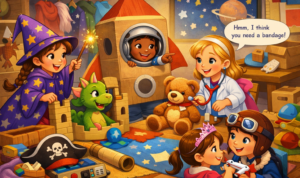
How to Do It: The “Prop Box” Method
The best part about pretend play is that you don’t need expensive, high-tech toys. In fact, “low-tech” items often spark more creativity.
-
The Prop Box: Find a sturdy bin and fill it with “loose parts.” Think of things like:
-
Old hats, scarves, or oversized shirts.
-
An old, unplugged computer keyboard or a calculator.
-
Plastic bowls, wooden spoons, and empty (clean) food boxes.
-
Empty paper towel rolls (swords, telescopes, or microphones).
-
-
Follow the Leader: Let your child pick the “theme.” If they say they are a doctor, ask them, “Oh no, my elbow hurts! What should I do, Doctor?” * Stay in Character: Try to stay in the story for a few minutes. If they are a space explorer, talk about the “stars” you see out the window.
Why It’s a “Golden Age” for the Brain
This type of play is like a rehearsal for real life. It builds several “superpowers” at once:
-
Symbolic Thinking: When a child uses a scarf as a “river” they have to cross, they are using high-level brain power to turn an object into a concept. This is the foundation for understanding abstract ideas later in school.
-
Empathy (Walking in Someone Else’s Shoes): When a child pretends to be a teacher, a grumpy giant, or a caring parent, they are practicing how to feel what others feel. They are learning to see the world from a different perspective.
-
Social Negotiation: If two children play together, they have to agree on the rules: “I’ll be the pilot, and you be the passenger, okay?” This teaches them how to compromise and solve problems with others.
-
Emotional Safety: Pretend play allows children to “act out” things that might be scary. Playing “Doctor” helps them feel more in control the next time they have a real check-up.
Pro-Tips for Parents
-
Don’t Correct the Reality: If your child says the blue rug is “hot lava,” don’t tell them it’s just a rug. Jump over it!
-
Ask Open-Ended Questions: Instead of telling them what to do, ask, “What happens next in our story?” or “What tool do you need to fix this robot?”
-
The Power of “Silence”: Sometimes, the best thing you can do is just sit nearby and watch. Let them build the world entirely on their own.
The Big Idea: In pretend play, your child is the director, the actor, and the writer. They are learning that they have the power to create, change, and understand the world around them.
8. “Freeze Dance” for Self-Control
The “Freeze Dance” game is much more than a living room dance party—it is a workout for the “brakes” in a child’s brain. In the world of child development, we call this inhibitory control. It is the ability to stop doing something fun the moment a rule changes.
This skill is a “superpower” for school because it’s the same part of the brain a child uses to stay in their seat when they want to run, or to listen to a teacher instead of talking to a friend.

How to Play: The Rules of the “Stop-and-Go”
The beauty of this game is that it requires almost zero setup—just some music and a little bit of floor space.
a. The Groove: Turn on some upbeat, high-energy music. Tell everyone to dance as wildly and creatively as they can.
b. The Sudden Silence: Without warning, hit the “pause” button. Everyone must immediately stop moving and “freeze” exactly where they are—even if they are balanced on one foot or mid-spin!
c. The Statue Challenge: Try to stay frozen for 5 to 10 seconds. You can make it harder by making funny faces at the “statues” to see if they’ll break.
d. The Restart: Hit “play” again and the party resumes.
Why It’s a “Brain Builder”
While the kids are laughing and wobbling, their brains are doing some very heavy lifting:
-
Practicing the “Stop” Signal: The brain has to send a lightning-fast message from the ears to the muscles to stop immediately. This strengthens the prefrontal cortex, which is the part of the brain that manages impulses.
-
Active Listening: To win the game, a child has to pay very close attention to the environment (the music). This builds sustained attention and focus.
-
Emotional Resilience: Sometimes, staying still is hard! Learning to manage that “itch” to move helps children handle frustration and stay calm in high-pressure situations.
-
Working Memory: The child has to keep the rule of the game (“When the sound stops, I stop”) at the front of their mind while they are busy doing something else (dancing).
Fun Variations to Try
-
Animal Freeze: When the music stops, yell out an animal! Everyone has to freeze like a lion, a frog, or a flamingo.
-
Slow Motion: Play a slow song and have them dance in “slow-mo,” then a fast song for “high speed.” This teaches them to regulate the tempo of their movements.
-
The “Leader” Role: Let your child be the one to control the “pause” button. This gives them a sense of responsibility and helps them understand the logic behind the rules.
The Big Idea: Freeze Dance turns the difficult task of “self-control” into a game. Instead of telling a child “stop moving,” you are inviting them to practice stopping, which makes them much more likely to succeed when they need to sit still in the real world.
9. Nature Scavenger Hunts
The “Nature Scavenger Hunt” is a game that turns a simple walk into an outdoor detective mission. It encourages children to stop looking at the “big picture” and start noticing the tiny, fascinating details of the world around them.
While it feels like a simple treasure hunt, it is actually a workout for a child’s five senses and their growing body.
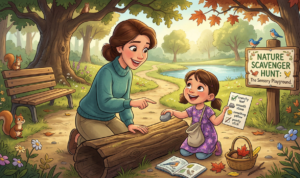
How to Do It: Your Nature Mission
You don’t need a deep forest for this—a backyard, a local park, or even a sidewalk with some trees will work perfectly.
-
The Explorer’s Kit: Give your child a small bag or an empty egg carton. This gives them a “home” for their treasures and makes the mission feel official.
-
The “Sensory” List: Instead of just asking for a “leaf,” ask for specific textures and colors. Try asking them to find:
-
Something “crunchy” (like a dried leaf).
-
Something “smooth” (like a river stone).
-
Something “yellow” (like a dandelion).
-
Something “pointy” (like a pine needle or a twig).
-
-
The Discussion: Once the bag is full, sit down together and look at the “loot.” Ask them, “Which one is the roughest?” or “How many different greens did we find?”
Why It’s Great for a Growing Brain
Nature is the “ultimate playground” because it isn’t predictable like a plastic toy. It offers three major benefits:
-
Building a “Feeling” Vocabulary: Using words like brittle, fuzzy, damp, or rubbery helps a child connect physical touch to language. This makes their “descriptive” brain much stronger.
-
Observation Skills: It teaches a child to “zoom in” and focus. In a world of fast-moving screens, the ability to slow down and find a specific tiny stone is a huge win for their attention span.
-
“Heavy Work” for the Body: Walking on uneven grass, climbing over a small log, or squatting down to pick up a pebble provides “heavy work.” This type of physical movement is like a “reset button” for a child’s nervous system, helping them feel calm and grounded.
-
Balance and Coordination: Unlike a flat indoor floor, nature is full of slopes and bumps. Navigating these helps develop a child’s sense of balance and body awareness.
Pro-Tips for Parents
-
Let Them Lead: If your child gets distracted by a line of ants or a cool-looking puddle, let them explore! The “list” is just a starting point—the real goal is curiosity.
-
The “Leave No Trace” Lesson: Use this time to teach them about nature. “We can pick up the fallen leaves, but let’s leave the flowers growing for the bees.”
-
Any Weather is Scavenger Weather: A hunt in the rain (looking for “splashy” puddles and “slippery” mud) can be just as fun as a hunt in the sun.
The Big Idea: A Nature Scavenger Hunt turns the outdoors into a living classroom. It teaches children that the world is full of wonder, if only they take the time to look closely.
10. Water Lab Explorations
The “Water Lab Explorations” activity turns bath time or a simple kitchen sink into a hands-on science experiment. Water is the perfect “teacher” because it is constantly changing—it pours, it splashes, it fills up shapes, and it feels different depending on how you touch it.
By letting a child play with water and a few simple tools, you are giving them their first real-world lesson in physics and math.
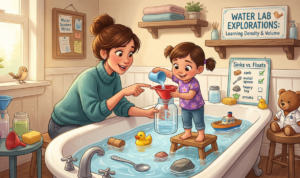
How to Do It: Your Sink-Side Laboratory
You don’t need anything fancy. The best “lab equipment” is usually already in your kitchen cabinets.
-
The Sinking and Floating Test: Gather a few safe household items—like a cork, a plastic toy, a metal spoon, and a heavy rock. Ask your child to guess: “Will this stay on top or go to the bottom?” and let them drop it in.
-
The Transfer Game: Give them different-sized containers, like a tiny espresso cup and a large yogurt tub. Let them try to fill the big tub using only the tiny cup. Count the scoops together!
-
The “Squeeze” Challenge: Give them a sponge or a washcloth. Show them how it “hides” the water inside until they squeeze it out. This is a great way to see how materials hold liquid.
-
Funnels and Tubes: If you have a funnel, show them how a lot of water at the top has to wait its turn to go through the tiny hole at the bottom.
Why It’s So Good for Their Brain
Water play is more than just a splashy mess; it’s a direct way for a child to learn the “laws” of the world.
-
Understanding Volume: Children often think a “tall” glass has more water than a “wide” bowl, even if they hold the same amount. By pouring water back and forth between different shapes, they learn that volume stays the same even when the shape changes.
-
Density and Weight: This is a child’s first look at density. They learn that some things are “heavy for their size” (like a small pebble) and sink, while others are “light for their size” (like a big piece of Styrofoam) and float.
-
Cause and Effect: Water provides “immediate feedback.” If they pour too fast, it splashes. If they fill a cup to the brim, it overflows. This helps them understand that their actions have specific results.
-
Early Scientific Inquiry: When a child asks “Why did the spoon sink?” they are acting like a scientist. They are noticing a pattern and trying to find the reason behind it.
Pro-Tips for Parents
-
The “Splash Zone”: If you’re worried about the mess, lay down a few old towels or do this outside on a warm day.
-
Temperature Talk: Use warm water and cold water (and maybe a few ice cubes). Ask them how the different temperatures feel and watch how the ice disappears.
-
Focus on Process, Not Result: There is no “right” way to play with water. Let them pour, dump, and stir however they like!
The Big Idea: In a Water Lab, your child isn’t just getting clean—they are exploring the properties of matter. They are learning that the world has rules and that they can use their curiosity to figure those rules out.
The Role of the Caregiver: “Serve and Return”
Throughout all these activities, the most important element is not the toy or the specific task, but the interaction. Developmental scientists use the term “serve and return” to describe the back-and-forth between a child and an adult.
When a child “serves” an interaction by pointing or babbling, and the adult “returns” the ball by responding, a neural connection is forged. You don’t need a perfectly organized playroom or a strict schedule to support early growth. What you need is the willingness to follow your child’s lead and stay present in the moment. When you join them in their play, you are telling them that their ideas are important and their world is worth exploring.
Early childhood development is a marathon of patience and connection. By integrating these simple, fun activities into your daily life, you are providing the building blocks for a strong and healthy brain. Every shared laugh, every built tower, and every splashed puddle is a step toward a bright and capable tomorrow. Encouraging their natural desire to learn ensures they will approach the world with confidence and joy for years to come.
GET the Kids Clay Tool Set – 44PCS Molds, Rollers & Cutters HERE