
Tag: English conversation

  • Understanding Certainty and Uncertainty in English: Expressions, Responses, and Daily Conversations

    Understanding Certainty and Uncertainty in English: Expressions, Responses, and Daily Conversations

    Understanding Certainty and Uncertainty in English: Expressions, Responses, and Daily Conversations

    Certainty and uncertainty are fundamental aspects of human communication. We often express how sure or unsure we are about information, plans, or events. Understanding how to convey these feelings in English is crucial for effective communication. In this article, we will explore common expressions of certainty and uncertainty, provide their responses, explain their use in a simple manner, and offer examples and dialogues to demonstrate their application in daily life.

    Common Expressions of Certainty

    Certainty implies that you are confident about something. Here are some common expressions of certainty along with their appropriate responses:

    1. I’m sure / I’m certain:
      • Example: “I’m sure we will win the game.”
      • Response: “I hope so too!”
    2. I know for a fact:
      • Example: “I know for a fact that she is coming to the party.”
      • Response: “That’s good to hear!”
    3. Without a doubt:
      • Example: “Without a doubt, this is the best restaurant in town.”
      • Response: “Absolutely!”
    4. There’s no question:
      • Example: “There’s no question that he will succeed.”
      • Response: “I agree completely.”

    Common Expressions of Uncertainty

    Uncertainty indicates that you are not sure about something. Here are some common expressions of uncertainty along with their appropriate responses:

    1. I’m not sure:
      • Example: “I’m not sure if I can attend the meeting.”
      • Response: “Let me know when you find out.”
    2. I doubt:
      • Example: “I doubt it will rain today.”
      • Response: “Well, let’s hope for the best.”
    3. It’s possible:
      • Example: “It’s possible that we might get a promotion.”
      • Response: “That would be great!”
    4. I don’t know:
      • Example: “I don’t know if the store is open.”
      • Response: “We can check online.”

    Detailed Explanation

    Certainty and uncertainty expressions are essential in everyday conversations as they help convey your confidence level about a particular topic. Using these expressions appropriately can make your communication clearer and more effective.

    • Certainty: When you are certain about something, you can use phrases like “I’m sure,” “I know for a fact,” or “Without a doubt.” These expressions help to assert your confidence and can reassure the listener.
    • Uncertainty: When you are uncertain, phrases like “I’m not sure,” “I doubt,” or “It’s possible” come into play. These expressions indicate your lack of confidence or knowledge about the subject, prompting the listener to understand your perspective.

    Examples

    1. Certainty Example:
      • “I’m sure that the meeting is at 3 PM.”
      • Response: “Great, I’ll be there on time.”
    2. Uncertainty Example:
      • “I don’t know if John will join us for dinner.”
      • Response: “Let’s give him a call to confirm.”

    Dialogue Example

    Dialogue 1: Expressing Certainty

    • A: “I’m sure we will finish the project by Friday.”
    • B: “That’s excellent news! I’ll inform the team.”

    Dialogue 2: Expressing Uncertainty

    • A: “I’m not sure if I’ll be able to make it to the party.”
    • B: “No worries, just let me know if anything changes.”

    Conclusion

    By incorporating these dialogues into your practice, you can better understand how to use expressions of certainty and uncertainty in real-life conversations. This will enhance your ability to communicate clearly and effectively in English.

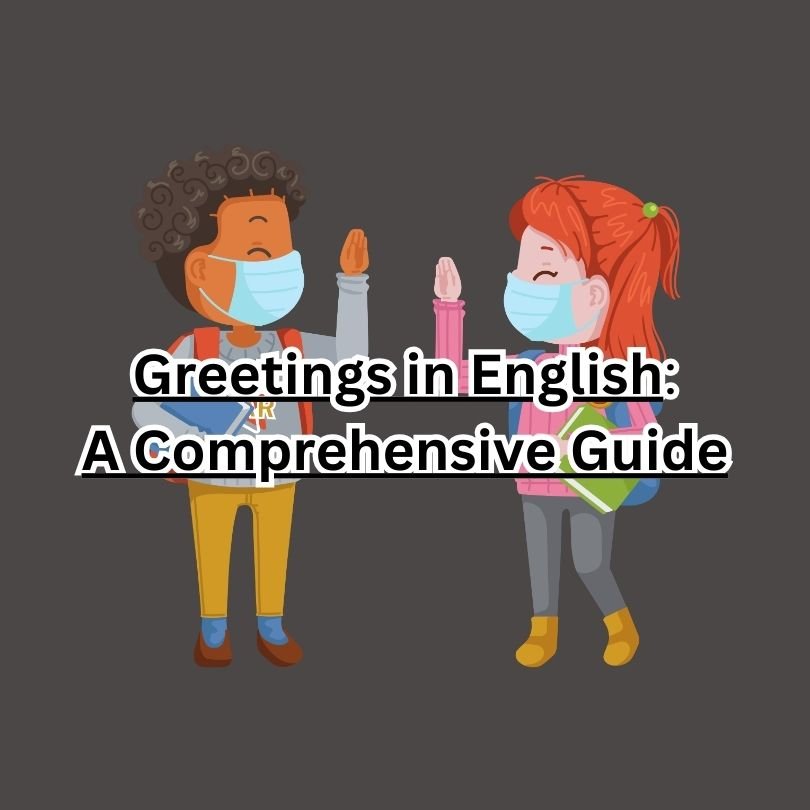
  • Greetings in English: A Comprehensive Guide

    Greetings in English: A Comprehensive Guide

    Greetings in English: A Comprehensive Guide

    Greetings are an essential part of any language, and English is no exception. They serve as the first point of contact in conversations and can set the tone for interactions. In this article, we will explore the various types of greetings in English, provide examples, and demonstrate how to use them in daily conversations through dialogues.

    Types of Greetings in English

    1. Formal Greetings
    2. Informal Greetings
    3. Time-Specific Greetings
    4. Seasonal and Holiday Greetings
    Formal Greetings

    Formal greetings are used in professional settings or when addressing someone with respect. They are typically used with people you do not know well, such as colleagues, business partners, or elders.

    • Good morning: Used from sunrise until noon.
    • Good afternoon: Used from noon until around 6 PM.
    • Good evening: Used after 6 PM until bedtime.
    • Hello: A neutral, formal greeting suitable for any time of day.
    • How do you do?: A very formal greeting used when meeting someone for the first time.

    Example:

    • “How do you do, Mr. Smith?”
    Informal Greetings

    Informal greetings are used among friends, family, or peers. They are more relaxed and casual.

    • Hi
    • Hey
    • What’s up?
    • How’s it going?
    • How are you?

    Example:

    • “Hey, Sarah! What’s up?”
    Time-Specific Greetings

    These greetings are used at specific times of the day.

    • Good night: Used when parting ways at night or going to bed.
    • Good day: A formal way to greet someone during the daytime, not commonly used in modern English but still understood.

    Example:

    • “Good night, everyone. See you tomorrow.”
    Seasonal and Holiday Greetings

    These greetings are used during specific seasons or holidays to spread cheer and good wishes.

    • Merry Christmas
    • Happy New Year
    • Happy Holidays
    • Happy Easter

    Example:

    • “Happy Holidays, everyone!”

    Using Greetings in Daily Life

    To understand how these greetings are used in daily conversations, let’s look at some dialogues.

    Dialogue 1: Formal Setting

    John: How do you do, Dr. Adams?

    Dr. Adams: How do you do, John?

    John: Pleased to meet you.

    Dialogue 2: Informal Setting

    Anna: Hey, Tom! How’s it going?

    Tom: Hi, Anna! It’s going well, thanks. How about you?

    Anna: I’m good, just busy with work.

    Dialogue 3: Time-Specific Greeting

    Emily: Good night, everyone. See you tomorrow!

    Group: Good night, Emily!

    Dialogue 4: Seasonal Greeting

    Mike: Happy Holidays, Emma!

    Emma: Happy Holidays, Mike! Hope you have a great holiday.

    By understanding and practicing these greetings, you can improve your English communication skills and make a positive impression in various social and professional settings.