Tag: English Education

  • Teaching English Writing in Senior High Schools Using the Mind Mapping Method

    Teaching English Writing in Senior High Schools Using the Mind Mapping Method

    Teaching English Writing in Senior High Schools Using the Mind Mapping Method

    Teaching English writing in senior high schools can be challenging yet rewarding. One effective method to enhance students’ writing skills is mind mapping. Mind mapping is a visual tool that helps students organize their thoughts, making the writing process more structured and coherent. This article will explore the benefits of mind mapping and how it can be implemented in the classroom to improve English writing skills in senior high school students.

    The Importance of Teaching Writing Skills

    Writing is a critical skill for academic success and future career opportunities. It allows students to express their ideas, communicate effectively, and demonstrate their understanding of various subjects. However, many students find writing daunting due to the complexity of organizing thoughts and ideas coherently. This is where mind mapping can play a significant role.

    What is Mind Mapping?

    Mind mapping is a visual representation of information that shows the relationships between different concepts. It involves writing down a central idea and branching out related ideas in a hierarchical structure. This method helps in breaking down complex information into manageable chunks, making it easier for students to understand and retain.

    Benefits of Mind Mapping in Writing

    1. Improves Organization: Mind mapping helps students organize their thoughts logically. By visually mapping out their ideas, they can see the connections between different points, leading to a more structured and coherent piece of writing.
    2. Enhances Creativity: The visual nature of mind maps stimulates creative thinking. Students can explore various ideas and themes, leading to richer and more diverse content in their writing.
    3. Boosts Memory Retention: Mind maps use images, colors, and keywords, which are more memorable than linear notes. This aids in better retention and recall of information.
    4. Simplifies Complex Information: Mind mapping breaks down complex topics into simpler, more understandable parts. This makes it easier for students to tackle challenging writing assignments.
    5. Encourages Critical Thinking: Creating a mind map requires students to analyze and synthesize information, promoting critical thinking and deeper understanding.

    Steps to Implement Mind Mapping in Teaching Writing

    1. Introduce Mind Mapping: Begin by explaining the concept of mind mapping to your students. Show them examples and discuss the benefits.
    2. Choose a Central Topic: Select a central theme or topic for the writing assignment. This could be an essay question, a research topic, or a creative writing prompt.
    3. Brainstorm Ideas: Encourage students to brainstorm ideas related to the central topic. They can jot down keywords, phrases, or concepts that come to mind.
    4. Create the Mind Map: Using a large sheet of paper or digital tools, have students create their mind maps. The central topic should be in the center, with branches representing main ideas and sub-branches for supporting details.
    5. Develop the Outline: Once the mind map is complete, students can use it to create a detailed outline for their writing. Each branch and sub-branch can be expanded into paragraphs, ensuring a logical flow of ideas.
    6. Write the Draft: With the outline in hand, students can begin writing their drafts. The mind map serves as a guide, helping them stay focused and organized.
    7. Review and Revise: After completing the draft, students should review and revise their work. Encourage them to refer back to the mind map to ensure all key points are covered and well-explained.

    Practical Classroom Activities

    Activity 1: Mind Map Brainstorming Session

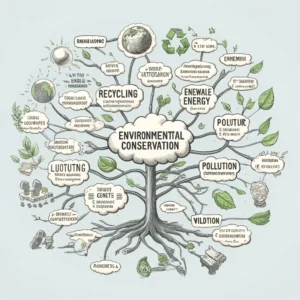
    • Objective: To brainstorm ideas for an essay on environmental conservation.
    • Materials: Large paper, markers, or digital mind mapping tools.
    • Procedure: Divide students into groups and ask them to create a mind map with “Environmental Conservation” as the central topic. Have them brainstorm and map out related ideas such as recycling, renewable energy, pollution, and wildlife protection.

    Activity 2: Mind Mapping for Story Writing

    • Objective: To plan a creative story using mind mapping.
    • Materials: Paper, markers, or digital tools.
    • Procedure: Ask students to choose a story theme (e.g., adventure, mystery) and create a mind map outlining the plot, characters, setting, and key events. This visual plan will help them write a more detailed and coherent story.

    Activity 3: Research Paper Preparation

    • Objective: To organize research findings using mind mapping.
    • Materials: Paper, markers, or digital tools.
    • Procedure: Assign a research topic and have students gather information from various sources. They will then create a mind map to organize their findings, highlighting key points, supporting evidence, and references. This map will serve as the foundation for their research paper.

    Conclusion

    Mind mapping is a powerful tool that can significantly enhance the teaching and learning of English writing in senior high schools. By helping students organize their thoughts, stimulate creativity, and simplify complex information, mind maps can transform the writing process into an engaging and productive activity. Implementing mind mapping in your classroom can lead to improved writing skills, better academic performance, and greater student confidence.

  • Mind Mapping for Teaching English in Senior High School

    Mind Mapping for Teaching English in Senior High School

    Introduction

    Teaching English in senior high school can be a challenging task, given the diverse needs and varying proficiency levels of students. One effective strategy that educators can employ is mind mapping. This visual tool not only aids in the organization of thoughts but also enhances understanding and retention of information. In this article, we will explore how mind mapping can be utilized to teach English in senior high school, its benefits, and practical tips for implementation.

    What is Mind Mapping?

    Mind mapping is a visual representation of information, structured in a way that resembles a web or a tree. It starts with a central idea, from which related topics branch out in all directions. This method leverages the brain’s natural ability to recognize patterns and relationships, making complex information easier to understand and remember.

    Benefits of Mind Mapping in Teaching English

    1. Enhanced Comprehension: Mind maps help students break down complex topics into manageable chunks, making it easier to grasp the core concepts.
    2. Improved Memory Retention: The visual nature of mind maps aids in better retention of information. Students can recall information more effectively when they visualize it in a structured format.
    3. Encourages Creativity: Mind mapping allows students to explore ideas freely and make connections they might not have considered otherwise.
    4. Boosts Engagement: Interactive and visually appealing mind maps can make learning more engaging and enjoyable for students.
    5. Organizes Thoughts: Mind maps provide a clear structure for students to organize their thoughts, making it easier to plan essays, projects, and presentations.

    How to Create a Mind Map

    1. Choose a Central Topic: Start with a central idea or theme. For an English lesson, this could be a literary concept, a grammar rule, or a writing task.
    2. Branch Out with Main Ideas: From the central topic, draw branches for the main ideas. These should be the key points related to the central theme.
    3. Add Sub-Branches for Details: Each main idea can have sub-branches that delve into more specific details or examples.
    4. Use Colors and Images: Incorporate colors, images, and symbols to make the mind map visually appealing and to highlight important information.
    5. Review and Revise: Regularly review and update the mind map to reflect new information or insights.

    Practical Applications of Mind Mapping in English Classes

    1. Vocabulary Building

    Mind maps can be an excellent tool for vocabulary building. Start with a new word as the central topic and branch out with its definition, synonyms, antonyms, usage in sentences, and related words. This helps students see the relationships between words and enhances their understanding of vocabulary.

    2. Literary Analysis

    When analyzing a piece of literature, students can create a mind map to explore the various elements of the story. The central topic could be the title of the book or a main theme, with branches for characters, plot points, themes, and literary devices. This allows students to visualize the structure of the literary work and understand its components in depth.

    3. Grammar Rules

    Teaching grammar can be simplified using mind maps. For instance, if the lesson is about tenses, the central topic could be “Tenses,” with branches for each type of tense (present, past, future) and sub-branches for examples and rules of each tense. This method helps students see the connections between different grammatical concepts.

    4. Essay Planning

    Mind maps are particularly useful for planning essays. Students can start with the essay topic as the central idea and create branches for the introduction, body paragraphs, and conclusion. Each branch can then have sub-branches for key points, evidence, and arguments. This helps students organize their thoughts and ensure their essay has a logical flow.

    Tips for Implementing Mind Mapping in the Classroom

    1. Introduce the Concept: Begin by explaining what mind mapping is and its benefits. Show examples to illustrate how it works.
    2. Use Technology: Utilize mind mapping software and apps to create digital mind maps. Tools like MindMeister, XMind, and Coggle can make the process more interactive and engaging.
    3. Encourage Collaboration: Have students work in groups to create mind maps. This fosters collaboration and allows them to learn from each other.
    4. Incorporate into Assessments: Use mind maps as part of assessments to evaluate students’ understanding and organization of information.
    5. Provide Feedback: Give constructive feedback on students’ mind maps to help them improve their technique and understanding.

    Conclusion

    Mind mapping is a versatile and powerful tool that can significantly enhance the teaching and learning of English in senior high school. By organizing information visually, mind maps make complex concepts more accessible and engaging for students. Whether it’s building vocabulary, analyzing literature, learning grammar, or planning essays, mind mapping can transform the way students approach and understand English. As educators, embracing this tool can lead to more effective teaching and a more enriching learning experience for students.