Tag: English Grammar

  • Mastering The Future Continuous Tense: Rules, Examples, and Practice Questions

    Mastering The Future Continuous Tense: Rules, Examples, and Practice Questions

    The Future Continuous Tense

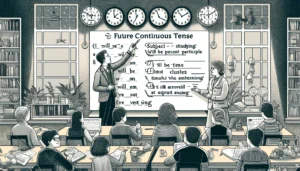
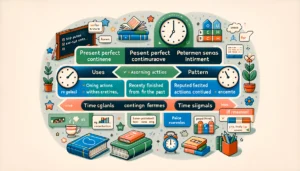
    The Future Continuous Tense is an essential aspect of English grammar that allows speakers to describe actions that will be ongoing at a specific point in the future. This tense is particularly useful for expressing future activities that are planned or expected to occur over a duration of time.
    Definition

    The Future Continuous Tense describes actions that will be happening at a particular moment in the future. It emphasizes the duration or continuity of an activity that will be in progress at a future time.

    Uses

    The Future Continuous Tense is used in various contexts, including:

    1. Actions in Progress at a Specific Future Time

     This tense indicates that an action will be ongoing at a particular future moment.

    Examples:

    • This time next week, I will be traveling to Japan. (The action of traveling will be happening at a specific future time.)
    • At 10 PM tonight, she will be working on her project. (The action of working will be happening at 10 PM.)
    • By tomorrow morning, they will be flying to New York. (The action of flying will be ongoing tomorrow morning.)
    1. Planned Future Activities

    It expresses activities that are already planned or arranged to happen in the future.

    Examples:

    • She will be meeting with the clients tomorrow afternoon. (The meeting is a scheduled activity that will take place in the future.)
    • We will be attending the conference next week. (Attending the conference is a planned activity for next week.)
    • He will be hosting a dinner party on Friday. (Hosting the dinner party is a pre-arranged event for Friday.)
    1. Predicting the Present

    Sometimes, it is used to speculate about what is currently happening, based on future knowledge.

    Examples:

    • They will be arriving at the airport right now. (Based on future plans, the speaker predicts the current activity.)
    • She will be having lunch at this moment. (The speaker assumes that she is currently having lunch based on her usual schedule.)
    • He will be studying for his exams now. (The speaker predicts that he is studying at the present moment, considering his upcoming exams.)

    Pattern

    The grammatical pattern of the Future Continuous Tense involves the following structure:

    Subject + will be + present participle (verb+ing)

    For example:

    • Affirmative: “I will be studying at 8 PM.”
    • Negative: “She will not be coming to the party.”
    • Interrogative: “Will they be joining us for dinner?”

    Time Signals

    Common time signals used with the Future Continuous Tense include:

    • At this time next week
    • Tomorrow at [specific time]
    • In the future
    • Next [day/week/month/year]

    Common Mistakes and How to Avoid Them

    Learners often make mistakes with the Future Continuous Tense. Here are some common errors and tips to avoid them:

    1. Incorrect Auxiliary Verb Usage
      • Mistake: “I am will be studying.”
      • Correction: Use “will be” correctly: “I will be studying.”
      • Tip: Remember that “will” is always followed by “be” and then the present participle.
    2. Misplacing Time Signals
      • Mistake: “I will be at this time next week studying.”
      • Correction: Correctly place the time signal: “At this time next week, I will be studying.”
      • Tip: Place time signals at the beginning or end of the sentence for clarity.
    3. Forgetting the Present Participle Form
      • Mistake: “She will be to cook dinner.”
      • Correction: Use the present participle form: “She will be cooking dinner.”
      • Tip: Always use the -ing form of the verb after “will be.”

    Conclusion

    The Future Continuous Tense is a versatile and useful tense for describing actions that will be ongoing at a specific future time, planned future activities, and speculating about the present based on future knowledge. By understanding its structure, uses, and common time signals, learners can effectively use this tense to communicate their future plans and predictions. Avoiding common mistakes ensures clarity and accuracy in usage.

    Test your understanding of the Future Continuous Tense with this 10-question multiple-choice quiz. Choose the correct answer for each question.

    1. Which sentence correctly uses the Future Continuous Tense?

    2. Choose the sentence with the correct time signal:

    3. Identify the correct use of Future Continuous Tense for a scheduled event:

    4. Choose the sentence that predicts a current action:

    5. Which of these is not a time signal for the Future Continuous Tense?

    6. Correct the mistake: "She will be sings in the choir."

    7. Which of the following sentences correctly uses the Future Continuous Tense to indicate an action in progress at a specific future time?

    8. How do you express a planned future activity using the Future Continuous Tense?

    9. Which sentence is predicting a current action based on future knowledge?

    10. Choose the sentence that correctly uses the Future Continuous Tense for a planned activity:

  • Mastering The Future Perfect Tense: Rules, Examples, and Practice Questions

    Mastering The Future Perfect Tense: Rules, Examples, and Practice Questions

    Mastering The Future Perfect Tense: Rules, Examples, and Practice Questions

    The Future Perfect Tense is a grammatical tense used to describe actions that will be completed at a specific point in the future. Understanding this tense can enhance your ability to communicate future events with clarity and precision.

    Definition

    The Future Perfect Tense is used to express actions that will be finished before a certain time or event in the future. It emphasizes the completion of an activity rather than its duration or occurrence.

    Uses

    1. Indicating Completion Before a Future Time

    Examples:

    • By next year, she will have completed her degree. (This sentence indicates that her degree will be finished before next year.)
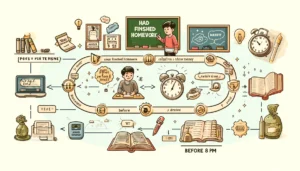
    • By 10 PM, I will have finished my homework. (This indicates that homework will be done before 10 PM.)
    • By the time you arrive, we will have eaten dinner. (This shows that dinner will be eaten before your arrival.)
    1. Predicting Results of Future Actions

    Examples:

    • He will have saved enough money to buy a car by the end of the month. (This predicts that his savings will be sufficient for a car purchase by month’s end.)
    • They will have learned all the necessary skills by the time they graduate. (This predicts that all necessary skills will be acquired before graduation.)
    • The project will have reached completion before the deadline. (This predicts that the project will be completed before the deadline.)
    1. Expressing Expectations

    Examples:

    • They will have arrived home before the storm hits. (This sentence expresses the expectation that they will be home before the storm.)
    • By tomorrow morning, she will have slept for eight hours. (This expects that she will complete eight hours of sleep by tomorrow morning.)
    • We will have finished the preparations by the time the guests arrive. (This expects that all preparations will be done before the guests’ arrival.)

    Pattern

    The grammatical pattern of the Future Perfect Tense is: Subject + will have + past participle

    Examples:

    • I will have finished the project.
    • They will have gone to bed.

    Time Signals

    Common time signals used with the Future Perfect Tense include:

    • By tomorrow
    • By next week/month/year
    • Before
    • By the time
    • In [time period] (e.g., in two hours)

    Common Mistakes and How to Avoid Them

    1. Using the Wrong Auxiliary Verb
      • Mistake: She will has completed the task.
      • Correction: She will have completed the task.
      • Tip: Always use “will have” followed by the past participle.
    2. Confusing with Future Simple Tense
      • Mistake: By 5 PM, he will finish his work.
      • Correction: By 5 PM, he will have finished his work.
      • Tip: Remember that the Future Perfect Tense emphasizes the completion of an action by a certain future time.
    3. Forgetting the Past Participle Form
      • Mistake: They will have go to the party.
      • Correction: They will have gone to the party.
      • Tip: Use the past participle form of the verb, not the base or present form.

    Conclusion

    The Future Perfect Tense is a useful tool for indicating that an action will be completed before a certain time in the future. By mastering its use, you can describe future events more precisely and avoid common grammatical errors.

    Test your understanding of the Future Perfect Tense with this 10-question multiple-choice quiz. Choose the correct answer for each question.

    1. By this time next year, I ___ my book.

    2. She ___ the report before the meeting starts.

    3. They ___ the construction by next month.

    4. By 8 PM, he ___ dinner.

    5. You ___ all the chapters by the time of the exam.

    6. The team ___ the project before the deadline.

    7. By the time he arrives, we ___.

    8. She ___ her homework before her friends arrive.

    9. By the end of the year, we ___ 100 products.

    10. He ___ the test by 3 PM.

  • Mastering the Past Perfect Continuous Tense: Rules, Examples, and Practice Questions

    Mastering the Past Perfect Continuous Tense: Rules, Examples, and Practice Questions

    Definition

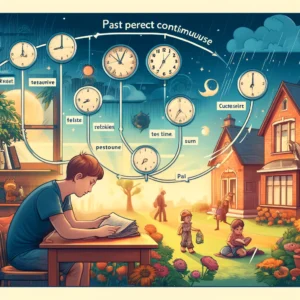
    The Past Perfect Continuous Tense, also known as the past perfect progressive, is used to describe an action that started in the past and continued up to another point in the past. It emphasizes the duration or continuity of an action that was happening before a specific time or another action in the past.

    Uses

    1. To show the duration of an action up to a certain point in the past.

    Examples:

    • They had been waiting for two hours by the time the bus finally came. (This sentence highlights the ongoing action of waiting that lasted for two hours until the bus arrived.)
    • She had been studying for three hours when her friends arrived. (The action of studying continued for three hours up to the point when her friends arrived.)
    • He had been working at the company for ten years before he decided to resign. (This indicates that the action of working at the company lasted for ten years until he made the decision to resign.)

    2. To describe an action that was in progress before another action occurred.

    Examples:

    • He had been working on the project before he fell ill. (This indicates that the work was ongoing and then interrupted by his illness.)
    • They had been planning the event for weeks before it was cancelled. (The planning was an ongoing process that was halted by the cancellation of the event.)
    • She had been cleaning the house when the guests arrived early. (The cleaning was an ongoing action that was interrupted by the early arrival of the guests.)

    3. To set the scene for another past event.

    Examples:

    • The children had been playing outside when it started to rain. (The ongoing action of playing outside sets the context for the sudden event of the rain starting.)
    • He had been reading a book when the phone rang. (The reading was an ongoing activity that was interrupted by the phone ringing.)
    • They had been discussing their plans when the news broke. (The ongoing discussion sets the scene for the interruption caused by breaking news.)

    Pattern

    The following are the grammatical pattern of the Past Perfect Continuous Tense:

    Affirmative: Subject + had + been + present participle (verb+ing)

    • She had been reading.
    • They had been talking.

    Negative: Subject + had + not + been + present participle (verb+ing)

    • She had not (hadn’t) been reading.
    • They had not (hadn’t) been talking.

    Interrogative: Had + subject + been + present participle (verb+ing)

    • Had she been reading?
    • Had they been talking?

    Time Signals

    Common time signals used with the Past Perfect Continuous Tense include:

    • For
    • Since
    • Before
    • By the time
    • Until
    • When

    Common Mistakes and How to Avoid Them

    1. Confusing with the Past Continuous Tense

    Mistake: “She was reading for two hours.” Correction: “She had been reading for two hours.” Tip: Remember, the Past Continuous is used for an action happening at a specific moment in the past, while the Past Perfect Continuous emphasizes the duration of an action up to a point in the past.

    2. Using the wrong auxiliary verb

    Mistake: “They was been playing.” Correction: “They had been playing.” Tip: Always use “had” as the auxiliary verb in the Past Perfect Continuous Tense, regardless of the subject.

    3. Omitting “been”

    Mistake: “He had studying all night.” Correction: “He had been studying all night.” Tip: The word “been” is essential in forming the Past Perfect Continuous Tense.

    Conclusion

    The Past Perfect Continuous Tense is a useful tense for expressing actions that were ongoing up until a specific point in the past. By understanding its definition, uses, pattern, and common time signals, learners can effectively incorporate this tense into their writing and speaking. Avoiding common mistakes will further enhance your proficiency in using the Past Perfect Continuous Tense.

    Quiz

    Test your understanding of the Past Perfect  Continuous Tense with this 10-question multiple-choice quiz. Choose the correct answer for each question.

    1. They ____ for an hour before the train arrived.

    2. She ____ the piano for years before she gave her first concert.

    3. By the time we got home, it ____ snowing for hours.

    4. He ____ to lose weight before his wedding.

    5. The students ____ for the exam until late at night.

    6. They ____ for hours before the manager finally arrived.

    7. I ____ to get tickets for the concert for weeks before they sold out.

    8. We ____ about the trip when he called.

    9. She ____ all afternoon before she took a break.

    10. They ____ for a new house before they found this one.

  • Mastering the Past Perfect Tense: Rules, Examples, and Practice Questions

    Mastering the Past Perfect Tense: Rules, Examples, and Practice Questions

    Definition

    The Past Perfect Tense is used to express an action that was completed before another action or event in the past. It highlights the sequence of events, showing which action happened first. The past perfect tense is formed by combining the auxiliary verb “had” with the past participle of the main verb.

    Uses

    1. Action Completed Before Another Past Action:

    Examples:

    • By the time she arrived at the party, John had already left. (John’s departure happened before her arrival at the party. The past perfect tense “had left” shows that his leaving occurred first.)
    • When I got home, I realized I had forgotten my keys. (Forgetting the keys happened before getting home. The past perfect tense “had forgotten” emphasizes the sequence.)
    • They had finished the meeting before the boss arrived. (The meeting was completed before the boss’s arrival. The past perfect tense “had finished” indicates the prior action.)
    1. Action Completed Before a Specific Time in the Past:

    Examples:

    • He had finished his homework before 8 PM. (This sentence indicates that the homework was completed prior to 8 PM. The past perfect tense “had finished” emphasizes the action was done by that specific time.)
    • By midnight, she had packed all her bags. (The packing was completed by midnight. The past perfect tense “had packed” shows the action’s completion before the specified time.)
    • The train had departed before we reached the station. (The departure of the train occurred before reaching the station. The past perfect tense “had departed” highlights the sequence of events.)
    1. Cause and Effect in the Past:

    Examples:

    • They were happy because they had won the match. (The reason for their happiness (winning the match) happened before they felt happy. The past perfect tense “had won” indicates the cause of their happiness.)
    • She was tired because she had worked all day. (Working all day caused her tiredness, which is highlighted by the past perfect tense “had worked.)
    • He felt relieved because he had completed his assignment. (Completing the assignment caused his relief. The past perfect tense “had completed” shows the reason for his feeling.)

    Pattern

    The grammatical pattern of the Past Perfect Tense is:

    • Affirmative: Subject + had + past participle (e.g., She had eaten.)
    • Negative: Subject + had + not + past participle (e.g., She had not eaten.)
    • Interrogative: Had + subject + past participle? (e.g., Had she eaten?)

    Time Signals

    Common time signals used with the Past Perfect Tense include:

    • Before
    • By the time
    • When
    • Already
    • Until
    • Never

    Common Mistakes and How to Avoid Them

    1. Using the Past Simple Instead of Past Perfect:
      • Mistake: She finished her work before he arrived.
      • Correction: She had finished her work before he arrived.
      • Tip: Remember to use “had” to show the action was completed before another past action.
    2. Forgetting the Auxiliary Verb “Had”:
      • Mistake: They eaten before they went out.
      • Correction: They had eaten before they went out.
      • Tip: Always use “had” with the past participle to form the past perfect tense.
    3. Confusing Past Perfect with Present Perfect:
      • Mistake: She has gone home before I called.
      • Correction: She had gone home before I called.
      • Tip: Use “had” for actions completed before another past event, not “has/have.”

    Conclusion

    The Past Perfect Tense is essential for describing actions that were completed before another event or time in the past. By understanding its definition, uses, pattern, and common time signals, learners can effectively use this tense to convey clear and accurate information about past events. Avoiding common mistakes and practicing regularly will help in mastering the past perfect tense.

    Quiz

    Test your understanding of the Past Perfect Tense with this 10-question multiple-choice quiz. Choose the correct answer for each question.

    1. By the time we _______ (arrive), the movie had already started.

    2. She had _______ (finish) her meal before the guests arrived.

    3. They _______ (not leave) the house until it had stopped raining.

    4. Had you _______ (read) the book before you watched the movie?

    5. We had _______ (know) each other for years before we got married.

    6. She _______ (never see) such a beautiful sunset before her trip to Hawaii.

    7. He realized he had _______ (forget) his keys when he reached the door.

    8. By the time I _______ (get) to the station, the train had left.

    9. Had they _______ (complete) the project before the deadline?

    10. She _______ (not hear) the news until she turned on the radio.

  • Mastering the Past Continuous Tense: Rules, Examples, and Practice Questions

    Mastering the Past Continuous Tense: Rules, Examples, and Practice Questions

    Definition

    The Past Continuous Tense describes actions or events that were ongoing at a particular moment in the past. It emphasizes the duration of the action, indicating that it was happening at a specific point in time or during a specific period in the past.

    Uses

    1. Describing actions in progress at a specific moment in the past:

    Examples:

    • At 8 PM last night, I was reading a book. (This sentence indicates that the action of reading was happening at 8 PM last night.)
    • She was cooking dinner when the phone rang. (This sentence shows that the action of cooking dinner was in progress when another action (the phone ringing) occurred.
    • They were watching a movie at 10 AM yesterday. (This sentence highlights that the action of watching a movie was ongoing at a specific time in the past (10 AM yesterday).
    1. Setting the scene in a story:

    Examples:

    • The sun was setting, and the birds were singing. (This sentence uses the Past Continuous Tense to describe the background actions that were happening simultaneously in the past.)
      • It was raining, and people were hurrying to find shelter. (This sentence sets the scene by describing the ongoing actions during the rain.)
      • The children were playing in the park while their parents were chatting on the benches. (This sentence provides a vivid picture of the ongoing activities in the park.)
    1. Indicating interrupted actions:

    Examples:

    • I was sleeping when the alarm went off. (This sentence shows that the action of sleeping was interrupted by the alarm going off.)
    • He was writing an email when the computer crashed. (This sentence highlights that the action of writing an email was interrupted by the computer crashing.)
    • They were walking to the store when it started to rain. (This sentence indicates that the action of walking to the store was interrupted by the rain starting.)

    Pattern

    The grammatical pattern of the Past Continuous Tense is as follows:

    Subject + was/were + present participle (verb+ing)

    Positive Form

    Pattern: Subject + was/were + present participle (verb+ing)

    • Example: “She was reading a book.”
    • Explanation: The sentence indicates that the action of reading was ongoing in the past.

    Negative Form

    Pattern: Subject + was/were + not + present participle (verb+ing)

    • Example: “She was not reading a book.”
    • Explanation: The sentence indicates that the action of reading was not happening in the past.

    Interrogative Form

    Pattern: Was/Were + subject + present participle (verb+ing)?

    • Example: “Was she reading a book?”
    • Explanation: The sentence is a question asking if the action of reading was happening in the past.

    Time Signals

    Common time signals used with the Past Continuous Tense include:

    • While
    • When
    • At that moment
    • At (specific time)
    • During

    Common Mistakes and How to Avoid Them

    1. Using the wrong auxiliary verb:
      • Mistake: She were working.
      • Correction: She was working.
      • Tip: Remember to use “was” for singular subjects (he, she, it) and “were” for plural subjects (I, you, we, they).
    2. Mixing Past Continuous with Simple Past:
      • Mistake: I was worked all night.
      • Correction: I was working all night.
      • Tip: Use the present participle form of the verb (verb+ing) with the Past Continuous Tense.
    3. Confusing time signals:
      • Mistake: He was sleeping at that time.
      • Correction: He was sleeping when the bell rang.
      • Tip: Use appropriate time signals to indicate the specific time or period during which the action was happening.

    Conclusion

    The Past Continuous Tense is crucial for describing ongoing actions in the past, setting scenes in stories, and indicating interrupted actions. Understanding its uses, pattern, and common mistakes helps learners use this tense effectively. By mastering the Past Continuous Tense, learners can effectively describe ongoing actions in the past, set vivid scenes in stories, and indicate actions that were interrupted. This knowledge leads to more fluent and accurate communication in English.

    Quiz

    Test your understanding of the Past Continuous Tense with this 10-question multiple-choice quiz. Choose the correct answer for each question.

    1. Which sentence is in the Past Continuous Tense?

    2. Identify the correct use of the Past Continuous Tense:

    3. Choose the correct sentence:

    4. What is the correct form of the verb in this sentence? "She ___ (work) here last night."

    5. Which time signal is commonly used with the Past Continuous Tense?

    6. Choose the correct form: "We ___ (study) at 8 PM yesterday."

    7. Which sentence correctly uses the Past Continuous Tense to describe an interrupted action?

    8. Which sentence emphasizes the duration of the activity?

    9. Select the correct option: "I ___ (live) in this city last year."

    10. Which of the following sentences sets the scene for a story using the Past Continuous Tense?

  • Mastering the Present Perfect Continuous Tense: Rules, Examples, and Practice Questions

    Mastering the Present Perfect Continuous Tense: Rules, Examples, and Practice Questions

    Definition

    The Present Perfect Continuous Tense, also known as the Present Perfect Progressive Tense, is used to describe actions that started in the past and are still continuing or have recently stopped but have a connection to the present. This tense emphasizes the duration of an action or the continuity of an activity over a period of time.

    Uses

    1. To express an action that started in the past and is still continuing:

    Examples:

    • She has been studying for three hours. (This sentence indicates that the studying began three hours ago and is still happening at the moment of speaking.)
    • We have been living in this city since 2010. (This shows that the action of living in the city started in 2010 and continues up to the present.)
    • He has been working at the same company for five years. (This implies that he started working at the company five years ago and is still employed there.)
    1. To indicate a recently finished action that has a result in the present:

    Examples:

    • They have been working on the project, and now it’s nearly complete. (The action of working on the project has recently finished, and the result is that the project is almost done.)
    • I have been cooking all afternoon, and the meal is finally ready. (The cooking just finished, and the result is that the meal is now ready to be eaten.)
    • She has been cleaning the house, so it looks spotless now. (The action of cleaning was recently completed, resulting in a spotless house.)
    1. To show repeated actions that started in the past and are still continuing:

    Examples:

    • He has been visiting his grandmother every weekend. (This sentence tells us that the visits started in the past and are still happening regularly.)
    • They have been meeting for coffee every morning for years. (This indicates that the action of meeting for coffee started years ago and continues to this day.)
    • She has been attending yoga classes every week since January. (This shows that the action of attending yoga classes began in January and continues regularly.)

    By understanding these uses and examples, learners can effectively apply the Present Perfect Continuous Tense to express ongoing actions, recently completed actions with present relevance, and repeated actions continuing from the past.

    Pattern

    The grammatical pattern of the Present Perfect Continuous Tense is: Subject + has/have + been + verb (present participle)

    Positive Form

    • Pattern: Subject + has/have + been + verb (present participle)
    • Example: “I have been studying Mandarin Chinese for three hours.”

    Negative Form

    • Pattern: Subject + has/have + not + been + verb (present participle)
    • Example: “I have not been studying English for three hours.”

    Interrogative Form

    • Pattern: Has/Have + subject + been + verb (present participle)?
    • Example: “Have you been studying Japanese for three hours?”

    Time Signals

    Common time signals used with the Present Perfect Continuous Tense include:

    • For (a period of time): for two hours, for a month
    • Since (a point in time): since Monday, since 2010
    • Lately, Recently

    Common Mistakes and How to Avoid Them

    1. Using the wrong auxiliary verb:
      • Mistake: “She have been reading.”
      • Correction: “She has been reading.”
      • Tip: Remember to use “has” with third-person singular subjects (he, she, it) and “have” with all other subjects (I, you, we, they).
    2. Omitting ‘been’:
      • Mistake: “They have working all day.”
      • Correction: “They have been working all day.”
      • Tip: Always include “been” after “has/have” in this tense.
    3. Confusing Present Perfect with Present Perfect Continuous:
      • Mistake: “I have read for three hours.”
      • Correction: “I have been reading for three hours.”
      • Tip: Use the Present Perfect Continuous to emphasize the duration or continuity of the action.

    Conclusion

    The Present Perfect Continuous Tense is a versatile tense used to describe actions that started in the past and are still ongoing or have recently stopped with present relevance. By understanding its uses, patterns, and common mistakes, learners can effectively communicate actions with a sense of duration and continuity.

    Quiz

    Test your understanding of the Present Perfect Continuous Tense with this 10-question multiple-choice quiz. Choose the correct answer for each question.

    1. How long ____ you been studying English?

    2. She ____ been living in New York since 2015.

    3. They ____ been working on this project for months.

    4. I ____ been feeling well lately.

    5. He ____ been playing the guitar since he was a child.

    6. We ____ been watching this show for hours.

    7. She ____ been going to the gym regularly.

    8. You ____ been working hard recently.

    9. It ____ been raining all day.

    10. I ____ been trying to reach you.

  • Mastering the Present Continuous Tense: Rules, Examples, and Practice Questions

    Mastering the Present Continuous Tense: Rules, Examples, and Practice Questions

    Definition

    The Present Continuous Tense, also known as the Present Progressive Tense, is used to describe actions that are currently happening at the moment of speaking or actions that are ongoing. This tense emphasizes the continuity and progression of an action.

    Uses

    The Present Continuous Tense is used in various contexts. Here are three primary uses along with multiple examples and explanations:

    1. Actions happening at the moment of speaking

    Examples:

    • She is reading a book right now. (This sentence indicates that the action of reading is occurring at this very moment.)
    • They are playing soccer in the park. (This sentence shows that the action of playing soccer is taking place as we speak.)
    • I am cooking dinner. (This sentence means that the action of cooking is happening right now.)
    1. Temporary actions or situations

    Examples:

    • They are staying at a hotel for the weekend. (This sentence implies that staying at the hotel is a temporary situation, limited to the weekend.)
    • He is working on a temporary project. (This sentence indicates that working on the project is a temporary situation.)
    • We are using my sister’s car while she is away. (This sentence shows that using the sister’s car is a temporary arrangement while she is away.)
    1. Planned future events

    Examples:

    • We are meeting them for dinner tomorrow. (This sentence indicates a future event that has already been arranged or planned.)
    • She is flying to New York next week. (This sentence shows a planned trip to New York in the future.)
    • They are starting a new course next month. (This sentence means that starting a new course is a planned future event.)

    Pattern

    The grammatical pattern of the Present Continuous Tense is straightforward:

    • Positive form: Subject + am/is/are + verb (base form) + -ing
      • Example: “I am working on my project.”
    • Negative form: Subject + am/is/are + not + verb (base form) + -ing
      • Example: “She is not watching TV.”
    • Question form: Am/Is/Are + subject + verb (base form) + -ing?
      • Example: “Are you coming to the party?”

    Time Signals

    Common time signals used with the Present Continuous Tense include:

    • Now
    • Right now
    • At the moment
    • Currently
    • Today
    • This week
    • Tonight

    Common Mistakes and How to Avoid Them

    Learners often make mistakes when using the Present Continuous Tense. Here are some common errors and tips to avoid them:

    1. Using the wrong auxiliary verb
      • Mistake: “He am playing soccer.”
      • Correction: “He is playing soccer.”
      • Tip: Ensure that the auxiliary verb (am, is, are) matches the subject.
    2. Forgetting the -ing ending
      • Mistake: “She is read a book.”
      • Correction: “She is reading a book.”
      • Tip: Always add the -ing ending to the main verb.
    3. Using the Present Continuous for non-continuous verbs
      • Mistake: “I am knowing the answer.”
      • Correction: “I know the answer.”
      • Tip: Some verbs (e.g., know, like, believe) are not typically used in the continuous form. Use the simple present tense for these verbs.

    Conclusion

    The Present Continuous Tense is essential for describing ongoing actions, temporary situations, and planned future events. By understanding its uses, grammatical pattern, time signals, and common mistakes, learners can use this tense effectively in their communication.

    Quiz

    Test your understanding of the Present Continuous Tense with this 10-question multiple-choice quiz. Choose the correct answer for each question.

    1. Which sentence is correct?

    2. What is the correct form of the verb in this sentence? "They ___ (play) soccer right now."

    3. Choose the correct sentence:

    4. Which sentence is in the Present Continuous Tense?

    5. Choose the correct form: "They ________ (play) soccer right now."

    6. Identify the time signal often used with the Present Continuous Tense:

    7. Which sentence indicates a temporary action?

    8. Fill in the blank: "I ________ (study) for my exams this week."

    9. Which form is correct for the Present Continuous Tense?

    10. Fill in the blank: "They ________ (not/watch) TV now."

  • Mastering the Present Perfect Tense: Rules, Examples, and Practice Questions

    Mastering the Present Perfect Tense: Rules, Examples, and Practice Questions

    Definition

    The Present Perfect Tense is used to describe actions that have occurred at an unspecified time before now. The exact time is not important. This tense is also used to describe actions that began in the past and continue to the present.

    Uses

    1. Actions That Occurred at an Unspecified Time in the Past
      The Present Perfect Tense is used to express actions that happened at some point in the past, but the exact time is not mentioned.
      Examples:
      -I have visited Paris. (The speaker has visited Paris at some time in the past, but the specific time is not mentioned.)
      -They have read the book. (The action of reading the book happened at some point in the past, without specifying when.)
      -She has gone to the store. (She went to the store at an unspecified time in the past.)
    2. Actions That Started in the Past and Continue to the Present
      This tense is used to describe actions that began in the past and are still happening now or have an effect on the present moment.
      Examples:
      -She has lived here for ten years. (She started living here ten years ago and still lives here.)
      -We have known each other since childhood. (The relationship began in childhood and continues to the present.)
      -He has worked at this company since 2015. (He started working at the company in 2015 and still works there.)
    3. Completed Actions with Relevance to the Present
      The Present Perfect Tense is also used to describe past actions that have a connection to the present moment.
      Examples:
      -He has finished his homework. (He completed his homework at some point in the past, and now the homework is done.)
      -I have cleaned the house. (The house was cleaned at some point in the past, and it is now clean.)
      -They have made dinner. (Dinner was prepared at some point in the past, and it is now ready to be eaten.)

    Pattern

    The grammatical pattern of the Present Perfect Tense is as follows:

    • Affirmative: Subject + has/have + past participle
      • Example: “She has eaten.”
    • Negative: Subject + has/have + not + past participle
      • Example: “They have not seen.”
    • Interrogative: Has/Have + subject + past participle?
      • Example: “Have you been?”

    Time Signals

    Common time signals used with the Present Perfect Tense include:

    • Ever
    • Never
    • Already
    • Yet
    • Just
    • Recently
    • So far
    • Until now
    • For
    • Since

    Common Mistakes and How to Avoid Them

    1. Using the Simple Past Instead of Present Perfect
      • Mistake: “I visited Paris last year.”
      • Correction: “I have visited Paris.”
      • Tip: Use the Present Perfect when the time is not specified or is not important.
    2. Forgetting to Use ‘Has’ or ‘Have’
      • Mistake: “She eaten her lunch.”
      • Correction: “She has eaten her lunch.”
      • Tip: Always include ‘has’ or ‘have’ before the past participle.
    3. Confusing ‘For’ and ‘Since’
      • Mistake: “I have lived here since ten years.”
      • Correction: “I have lived here for ten years.”
      • Tip: Use ‘for’ to indicate the duration of time and ‘since’ to indicate the starting point.

    Conclusion

    The Present Perfect Tense is a versatile and essential part of English grammar. It is used to describe actions without specifying the exact time, actions that continue to the present, and completed actions with relevance to now. Remember the pattern, time signals, and common mistakes to master the Present Perfect Tense.

    Quiz

    Test your understanding of the Present Perfect Tense with this 10-question multiple-choice quiz. Choose the correct answer for each question.

    1. Which sentence is in the Present Perfect Tense?

    2. Choose the correct form: "She ___ (to be) to the new restaurant."

    3. Which time signal is commonly used with the Present Perfect Tense?

    4. Fill in the blank: "They ___ (to finish) their project."

    5. Identify the error: "I has visited London."

    6. Which sentence is correct?

    7. Choose the correct form: "We ___ (to not see) that film."

    8. Which sentence uses ‘since’ correctly?

    9. Fill in the blank: "___ you ever ___ (to try) sushi?"

    10. Identify the error: "They has just arrived."

  • Mastering the Simple Past Tense: Rules, Examples, and Practice Questions

    Mastering the Simple Past Tense: Rules, Examples, and Practice Questions

    The Simple Past Tense

    The Simple Past Tense is used to describe actions or events that occurred in the past and are no longer happening. It is a fundamental tense in English, crucial for recounting events, narrating stories, and expressing completed actions.

    Uses

    1. Completed Actions in the Past

    Examples:

    • She visited Paris last summer. (This sentence indicates that the action of visiting Paris happened and was completed in the past.)
    • He bought a new car yesterday. (This sentence shows a single, completed action that took place in the past.)
    • They attended the concert last weekend. (This sentence describes a completed event that happened at a specific time in the past.)
    1. Series of Completed Actions

    Examples:

    • He finished his homework, cooked dinner, and watched a movie. (This sentence describes a sequence of actions that all occurred in the past, one after the other.)
    • She packed her bags, locked the door, and left for the airport. (This sentence shows a series of actions completed in the past.)
    • They met at the café, discussed the project, and decided on the next steps. (This sentence outlines multiple completed actions in the past.)
    1. Duration in the Past

    Examples:

    • They lived in Japan for three years. (This sentence specifies the duration of an action that started and ended in the past.)
    • She worked at the company from 2015 to 2019. (This sentence describes the duration of her employment, which is now in the past.)
    • He studied French for two years in college. (This sentence indicates the length of time he spent studying French, which is no longer ongoing.)

    Pattern

    The grammatical pattern of the Simple Past Tense is straightforward:

    • Affirmative Sentences: Subject + Verb (in the past form) + Object/Complement
      • Example: “I played football.”
    • Negative Sentences: Subject + did not (didn’t) + Verb (base form) + Object/Complement
      • Example: “She didn’t watch the movie.”
    • Interrogative Sentences: Did + Subject + Verb (base form) + Object/Complement?
      • Example: “Did they visit the museum?”

    Time Signals

    Common time signals used with the Simple Past Tense include:

    • Yesterday
    • Last (night, week, month, year, etc.)
    • Ago (two days ago, a week ago, etc.)
    • In (1990, June, etc.)
    • When (when I was young, when he arrived, etc.)

    Common Mistakes and How to Avoid Them

    1. Incorrect Verb Forms
      • Mistake: Using the base form of the verb instead of the past form.
      • Correction: Ensure you are using the correct past form, especially for irregular verbs (e.g., “go” should be “went”).
    2. Incorrect Negation
      • Mistake: Using “didn’t” with a past form of the verb.
      • Correction: Use “didn’t” with the base form (e.g., “She didn’t went” should be “She didn’t go”).
    3. Incorrect Word Order in Questions
      • Mistake: Placing the subject before “did” in questions.
      • Correction: Use the correct order (e.g., “Did he went?” should be “Did he go?”).

    Conclusion

    The Simple Past Tense is essential for discussing past events and actions. By understanding its uses, grammatical patterns, and common mistakes, learners can effectively communicate about the past.

    Quiz

    Test your understanding of the Simple Past Tense with this 10-question multiple-choice quiz. Choose the correct answer for each question.

    1. Which sentence is in the Simple Past Tense?

    2. Choose the correct form of the verb: "She ___ a cake yesterday."

    3. Which sentence is negative in the Simple Past Tense?

    4. Select the time signal commonly used with the Simple Past Tense:

    5. Which one is the correct question form?

    6. Identify the irregular past tense verb:

    7. Complete the sentence: "They ___ for a long time."

    8. Which sentence is correct?

    9. Which verb is the correct form of Simple Past Tense?

    10. Which sentence describes a series of actions in the past?

  • Mastering the Simple Present Tense: Rules, Examples, and Practice Questions

    Mastering the Simple Present Tense: Rules, Examples, and Practice Questions

    Understanding the Simple Present Tense

    The simple present tense is one of the most commonly used tenses in English. It describes habits, general truths, unchanging situations, emotions, and fixed arrangements. Understanding how to properly use the simple present tense is essential for mastering the English language.

    Uses of Simple Present Tense

    1. Habits and Routines
      Examples:
      -She drinks coffee every morning. (This sentence describes a habitual action that she performs regularly every morning.)
      -They play tennis every weekend. (This indicates a routine activity that happens every weekend.)
      -I read the newspaper daily. (This shows a regular habit of reading the newspaper each day.)
    2. General Truths and Facts
      Examples:
      -The sun rises in the east. (This is a general truth that does not change over time.)
      -Water boils at 100 degrees Celsius. (This is a scientific fact that remains constant.)
      -Cats meow. (This describes a general truth about the behavior of cats.)
    3. Unchanging Situations
      Examples:
      -He lives in New York. (This describes a situation that is not expected to change.)
      -She works at a bank. (This indicates a stable employment situation.)
      -The store opens at 9 AM. (This describes a fixed opening time that does not change.)

    Structure of Simple Present Tense

    The simple present tense is formed using the base form of the verb for most subjects (I, you, we, they). For the third person singular (he, she, it), an ‘s’ or ‘es’ is added to the base form of the verb.

    • Affirmative Sentences:
      • I/You/We/They play football.
      • He/She/It plays football.
    • Negative Sentences:
      • I/You/We/They do not (don’t) play football.
      • He/She/It does not (doesn’t) play football.
    • Interrogative Sentences:
      • Do I/you/we/they play football?
      • Does he/she/it play football?

    Spelling Rules for Adding ‘s’ or ‘es’

    1. For most verbs, simply add ‘s’:
      • run → runs
      • eat → eats
    2. For verbs ending in ‘s’, ‘ss’, ‘sh’, ‘ch’, ‘x’, or ‘z’, add ‘es’:
      • kiss → kisses
      • wash → washes
    3. For verbs ending in a consonant + ‘y’, change ‘y’ to ‘i’ and add ‘es’:
      • try → tries
      • study → studies
    4. For verbs ending in a vowel + ‘y’, simply add ‘s’:
      • play → plays
      • enjoy → enjoys

    Common Mistakes and How to Avoid Them

    1. Forgetting to add ‘s’ or ‘es’ in the third person singular:
      • Incorrect: He go to school.
      • Correct: He goes to school.
    2. Using the base form instead of ‘does’ for questions in third person singular:
      • Incorrect: Does she likes apples?
      • Correct: Does she like apples?
    3. Neglecting the auxiliary ‘do/does’ in negative sentences:
      • Incorrect: She not like coffee.
      • Correct: She does not like coffee.

    Quiz

    Test your understanding of the Simple Present Tense with this 10-question multiple-choice quiz. Choose the correct answer for each question.

    1. She _____ every morning.

    2. The sun _____ in the west.

    3. They usually _____ to the gym on Fridays.

    4. He _____ to New York every summer.

    5. _____ she like chocolate?

    6. Water _____ at 100 degrees Celsius.

    7. We don’t _____ to the park on Sundays.

    8. The dog always _____ loudly at night.

    9. She _____ her homework every day.

    10. My brother _____ football very well.