Tag: English Learning

  • Will vs. Going to: Understanding Future Intentions and Plans

    Will vs. Going to: Understanding Future Intentions and Plans

    Question: What is the difference between Will and Going to?

    Answer:

    Introduction

    When learning English, one of the common areas of confusion is knowing when to use “will” and “going to” for expressing future intentions and plans. While both are used to talk about the future, they are used in different contexts and have distinct meanings. This article will help you understand the differences between “will” and “going to” and provide practical examples to use them correctly.

    Understanding “Will”

    “Will” is a modal verb that is used to express:

    1. Spontaneous Decisions: Decisions made at the moment of speaking.
      • Example: “I’m thirsty. I think I will get a glass of water.”
    2. Predictions: Predictions about the future that are based on opinions or experiences.
      • Example: “I think it will rain tomorrow.”
    3. Promises: Making promises or offers.
      • Example: “I will help you with your homework.”
    4. Offers: Offering help or services.
      • Example: “I will carry your bag for you.”

    Understanding “Going to”

    “Going to” is used to express:

    1. Plans or Intentions: Plans that were decided before the moment of speaking.
      • Example: “I am going to visit my grandparents next weekend.”
    2. Predictions with Evidence: Predictions about the future that are based on current evidence.
      • Example: “Look at those dark clouds. It is going to rain.”

    Key Differences

    1. Decision Time: “Will” is used for decisions made at the moment of speaking, while “going to” is used for decisions made before the moment of speaking.
      • Example:
        • Will: “I will call him now.”
        • Going to: “I am going to call him after dinner.”
    2. Predictions: “Will” is often used for general predictions, while “going to” is used for predictions based on evidence.
      • Example:
        • Will: “You will get better soon.”
        • Going to: “You are going to get better. The doctor said so.”
    3. Plans and Intentions: “Going to” is used for plans or intentions.
      • Example: “She is going to start a new job next month.”

    Practical Exercises

    1. Fill-in-the-Blanks
      • I ____ (will/going to) travel to Japan next summer. (Answer: am going to)
      • It looks like it ____ (will/going to) snow soon. (Answer: is going to)
      • I think they ____ (will/going to) win the match. (Answer: will)
      • She ____ (will/going to) call you when she arrives. (Answer: will)
    2. Correct the Sentences
      • I think I’m going to get a taxi. (Correct: I think I will get a taxi.)
      • Look at the sky. It will rain. (Correct: Look at the sky. It is going to rain.)
    3. Role-Play Activity
      • Pair up with a partner and create dialogues using “will” and “going to” appropriately. Discuss future plans, make spontaneous decisions, and predict the future.

    Conclusion

    Understanding the differences between “will” and “going to” is essential for expressing future plans and intentions correctly in English. Remember, “will” is used for spontaneous decisions, general predictions, promises, and offers, while “going to” is used for pre-decided plans and predictions with evidence. Practice using these forms in different contexts to become more comfortable and confident in your English communication.

  • Mastering The Past Future Continuous Tense: Rules, Examples, and Practice Questions

    Mastering The Past Future Continuous Tense: Rules, Examples, and Practice Questions

    Mastering The Past Future Continuous Tense: Rules, Examples, and Practice Questions

    Definition

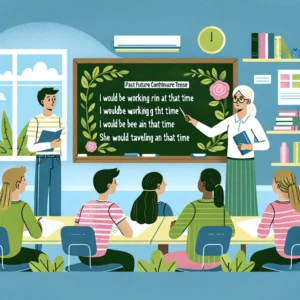
    The Past Future Continuous Tense is used to express an action that would be happening at a certain point in the future, from the perspective of a past time. It indicates that an action was expected to be in progress at a specific time in the future.

    Uses

    1.   Predicting Actions

    The Past Future Continuous Tense is often used to predict actions that would be happening at a future time from a past perspective.

    Examples:

    • I knew she would be studying at 10 PM. (This sentence means that at some point in the past, it was predicted or expected that she would be studying at 10 PM.)
    • He thought they would be traveling to New York by this time next week. (This indicates that from a past viewpoint, it was expected they would be in the process of traveling to New York.)
    • She expected the children would be playing in the garden. (This suggests that from her past perspective, it was predicted that the children would be playing in the garden.)

    2.   Indicating Planned Actions

    This tense can also indicate planned actions or events that were supposed to occur in the future from a past viewpoint.

    Examples:

    • He said they would be meeting the clients at 3 PM. (This implies that there was a plan to meet the clients at 3 PM, seen from a past point in time.)
    • She mentioned that she would be attending the conference the next day. (This indicates that from a past perspective, attending the conference was a planned future action.)
    • They told us they would be launching the product next month. (This means that the product launch was planned to occur next month, viewed from a past point in time.)

    3.   Describing Interrupted Actions

    It can describe an action that would be in progress in the future but gets interrupted.

    Examples:

    • They hoped we would be playing when they arrived. (This suggests that the playing would be interrupted by their arrival.)
    • She thought he would be cooking dinner when she got home. (This implies that the action of cooking dinner would be in progress but interrupted by her arrival.)
    • He imagined they would be discussing the project when he joined the meeting. (This means the discussion would be ongoing but interrupted by his joining the meeting.)

    Pattern

    The grammatical patterns for the Past Future Continuous Tense are:

    Positive Form

    Pattern: Subject + would be + verb-ing

    Example:

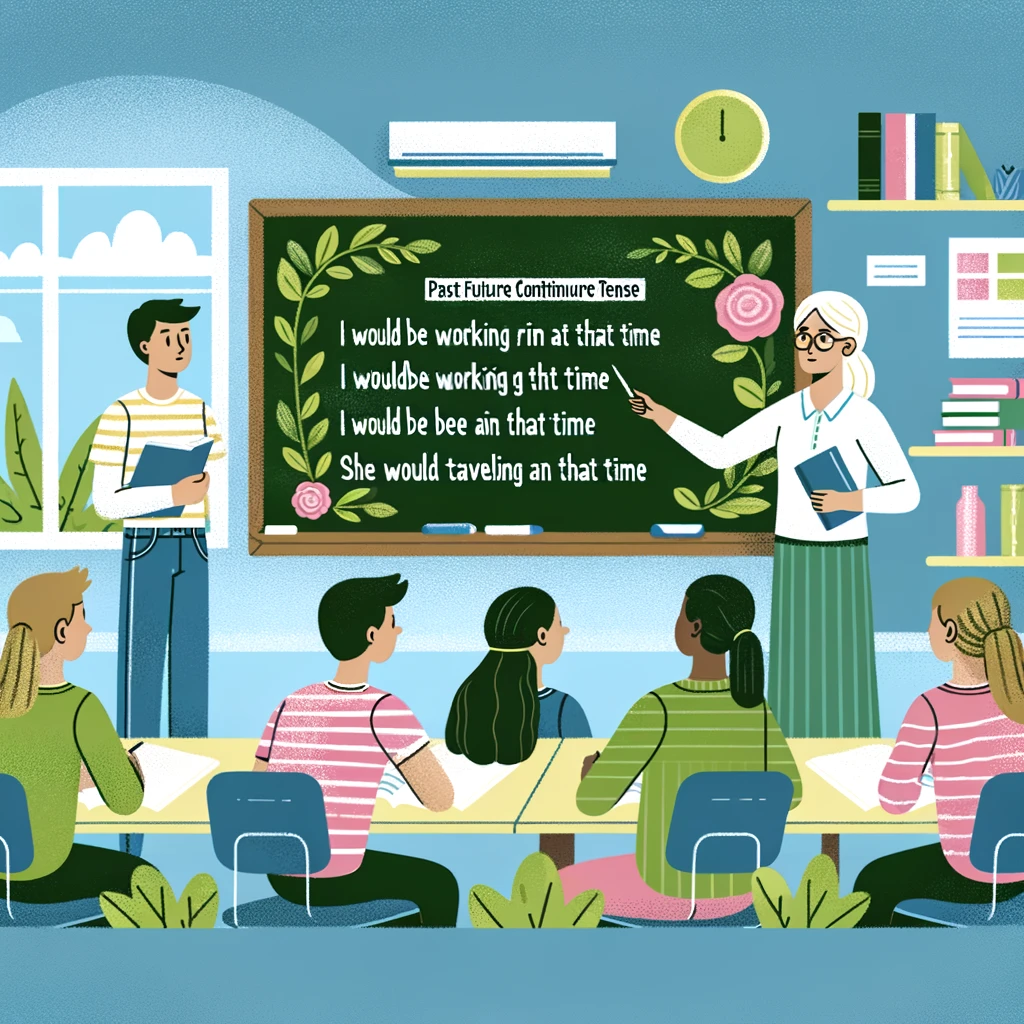
    • I would be working at that time.

    Negative Form

    Pattern: Subject + would not be + verb-ing

    Example:

    • I would not be working at that time.

    Interrogative Form

    Pattern: Would + subject + be + verb-ing?

    Example:

    • Would I be working at that time?

    Time Signals

    Common time signals used with the Past Future Continuous Tense include:

    • At that time
    • At this time tomorrow
    • By then
    • In the future from now
    • When he/she/they arrived

    Common Mistakes and How to Avoid Them

    Mistake 1: Misplacing “would”

    • Incorrect: “I would working be at that time.”
    • Correct: “I would be working at that time.”

    Tip: Always place “would” before “be.”

    Mistake 2: Forgetting the “ing” form

    • Incorrect: “She would be travel to New York.”
    • Correct: “She would be traveling to New York.”

    Tip: Use the “-ing” form of the verb after “be.”

    Mistake 3: Confusing Past Future Continuous with Past Continuous

    • Incorrect: “He was be working when they called.”
    • Correct: “He would be working when they called.”

    Tip: Remember that Past Continuous uses “was/were” while Past Future Continuous uses “would be.”

    Conclusion

    The Past Future Continuous Tense is essential for discussing actions that were expected to be in progress at a future time from a past viewpoint. By understanding its uses, patterns, and common mistakes, learners can effectively use this tense to enhance their English communication skills.

    Quiz

    Test your understanding of The Past Future Perfect Continuous with this 10-question multiple-choice quiz. Choose the correct answer for each question.

    1. Analyze the use of the Past Future Perfect Continuous Tense in the following sentence and choose the correct explanation: "If he had taken the job offer, he would have been managing the new project by now."

    2. Compare the Past Future Perfect Continuous Tense with the Past Perfect Continuous Tense and choose the correct example for each:

    3. Evaluate the following sentence for correct tense usage and choose the correct justification: "She said that by the time we arrived, they would have been preparing dinner for two hours."

    4. Choose the sentence that correctly uses the Past Future Perfect Continuous Tense in a short story context:

    5. Interpret the underlying implication of using the Past Future Perfect Continuous Tense in this sentence and choose the correct answer: "By the end of the day, they would have been negotiating for six hours without a break."

    6. Choose the dialogue that correctly uses the Past Future Perfect Continuous Tense to express a regret:

    7. Propose a scenario where the Past Future Perfect Continuous Tense would be the best choice to convey the intended meaning and choose the correct sentence:

    8. He thought that by the time they returned, they _______ (to explore) the city for days.

    9. If I had known, I _______ (to travel) with you all week.

    10. If she had joined us, she _______ (to work) with us for months.

  • Mastering The Past Future Perfect Tense: Rules, Examples, and Practice Questions

    Mastering The Past Future Perfect Tense: Rules, Examples, and Practice Questions

    Mastering The Past Future Perfect Tense: Rules, Examples, and Practice Questions

    The Past Future Perfect Tense: A Comprehensive Guide

    Definition

    The Past Future Perfect Tense is a verb form used to describe an action that would have been completed before a certain point in the past. It is used to indicate that an action was expected or intended to happen, but it was also anticipated to be completed before another action in the past.

    Uses

    1. To Express Actions That Would Have Been Completed in the Past

    This tense is used to talk about actions that were supposed to be finished before another past action or time.

    Examples:

    • By the time we arrived, they would have finished dinner. (The sentence means that at the time we arrived, the action of finishing dinner was expected to be already completed.)
    • She would have left by the time you got there. (This means she was expected to leave before you arrived.)
    • They would have completed the project by yesterday if they had started on time. (The project was expected to be finished by yesterday if they had started as planned.)
    1. To Describe Past Expectations

    It can be used to express an expectation or a prediction about what would have happened by a certain time in the past.

    Examples:

    • She would have graduated by last year if she hadn’t taken a gap year. (This indicates that graduation was expected to happen by last year if not for the gap year.)
    • They would have been here by now if they had caught the earlier train. (They were expected to be here by now, assuming they caught the earlier train.)
    • He would have finished his homework by now if he hadn’t gone out. (The homework was expected to be done by now if he hadn’t gone out.)
    1. To Indicate Regret or Assumptions About the Past

    This tense helps to express assumptions or regrets about actions that were expected to be completed in the past.

    Examples:

    • I thought you would have called me by now. (This implies that the speaker expected a call by now, suggesting an assumption or regret about the action not happening.)
    • We assumed they would have arrived by 8 PM. (The expectation was that they would have arrived by 8 PM, indicating an assumption about their arrival time.)
    • She would have apologized by now if she realized her mistake. (There is a regret or assumption that an apology would have happened if she recognized her error.)

    Pattern

    The grammatical pattern for the Past Future Perfect Tense is:

    1. Positive Form
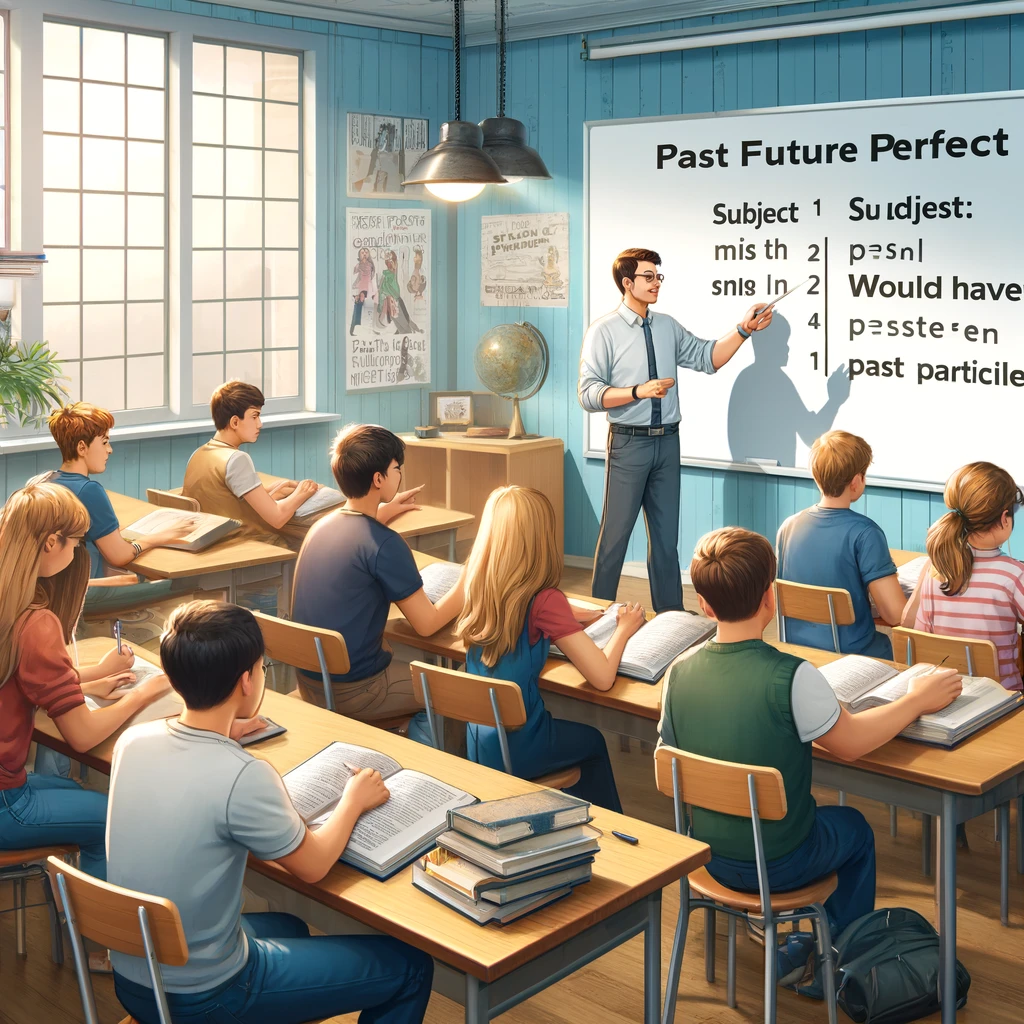
      • Pattern: Subject + would have + past participle
      • Example: They would have completed the task by now.
    2. Negative Form
      • Pattern: Subject + would not have + past participle
      • Example: She would not have missed the bus if she had left earlier.
    3. Interrogative Form
      • Pattern: Would + subject + have + past participle?
      • Example: Would you have finished the report if you had more time?

    Time Signals

    Common time signals used with the Past Future Perfect Tense include:

    • By the time
    • Before
    • By then
    • By (a specific time)
    • Already

    Common Mistakes and How to Avoid Them

    1. Confusing with Other Tenses
      • Mistake: Using the Past Future Perfect Tense interchangeably with the Future Perfect or Past Perfect tenses.
      • Tip: Remember that the Past Future Perfect Tense specifically deals with actions that were expected to be completed before another action in the past, while the Future Perfect is about actions expected to be completed before a future point, and the Past Perfect deals with actions completed before another past action.
    2. Incorrect Use of “Would Have”
      • Mistake: Using “would have” in clauses where it is not needed.
      • Tip: Ensure that “would have” is only used in the main clause of the sentence when referring to an expected or intended action in the past.
    3. Omitting the Past Participle
      • Mistake: Forgetting to use the past participle form of the verb.
      • Tip: Always use the past participle (e.g., finished, called, seen) after “would have.”

    Conclusion

    The Past Future Perfect Tense is a valuable tool for discussing actions that were expected to be completed before a certain time in the past. Understanding its uses, pattern, and common mistakes can help you use it accurately in your writing and speech.

    Quiz

    Test your understanding of the Past Future Perfect with this 10-question multiple-choice quiz. Choose the correct answer for each question.

    1. By the time the guests arrived, we _______ (decorate) the entire hall.

    2. If he had known about the meeting, he _______ (prepare) a presentation by last week.

    3. She thought that by the end of the month, they _______ (complete) the construction.

    4. By the time you saw the movie, they _______ (release) the sequel.

    5. Had you asked for directions, we _______ (arrive) earlier.

    6. By last winter, the committee _______ (implement) the new policies.

    7. If they had followed the schedule, they _______ (launch) the product by now.

    8. He assumed that by the age of 30, he _______ (achieve) his career goals.

    9. By the time the train arrived, we _______ (wait) for over an hour.

    10. By the time the meeting started, I _______ (read) all the reports.

  • Teaching English with Three-Step Interviews in Senior High Schools

    Teaching English with Three-Step Interviews in Senior High Schools

    Teaching English with Three-Step Interviews in Senior High Schools

    Three-Step Interviews is an engaging and interactive instructional strategy that can significantly enhance the teaching and learning experience in senior high school English classrooms. By promoting communication, collaboration, and critical thinking, this method helps students improve their language skills in a dynamic and enjoyable way. This article explores the benefits of Three-Step Interviews, provides a step-by-step guide to implementing it, and shares some practical examples.

    Introduction to Three-Step Interviews

    The Three-Step Interview is a cooperative learning technique designed to foster active engagement and deep understanding through structured interaction. It involves three main steps:

    1. Partner A interviews Partner B.
    2. Partner B interviews Partner A.
    3. Partners share their findings with another pair or the whole class.

    This method not only helps students practice their speaking and listening skills but also encourages them to think critically and reflect on the content.

    Benefits of Three-Step Interviews

    1. Enhanced Communication Skills:
      • By participating in interviews, students practice both asking questions and articulating responses, improving their speaking and listening skills.
    2. Active Engagement:
      • The interactive nature of Three-Step Interviews keeps students actively involved in their learning process.
    3. Critical Thinking:
      • Students must think critically about the questions they ask and the answers they give, which promotes deeper understanding.
    4. Collaboration:
      • This technique encourages students to work together, fostering a sense of teamwork and mutual support.
    5. Confidence Building:
      • Regular practice of interviewing and being interviewed helps students build confidence in their language abilities.

    Implementing Three-Step Interviews in English Classrooms

    1. Preparation:
      • Choose a topic relevant to the lesson. Prepare a list of open-ended questions related to the topic that students can use during their interviews.
    1. Step 1: Partner A Interviews Partner B:
      • Divide the class into pairs. Partner A interviews Partner B using the prepared questions. Encourage students to take notes during the interview to capture key points.
    1. Step 2: Partner B Interviews Partner A:
      • After a set amount of time, partners switch roles. Partner B now interviews Partner A, again using the prepared questions and taking notes.
    1. Step 3: Sharing Findings:
      • After both interviews are complete, each pair shares their findings with another pair or with the entire class. This step helps consolidate their learning and allows them to hear different perspectives.

    Example Activities Using Three-Step Interviews

    1. Character Analysis:
      • After reading a novel or a short story, students interview each other about the motivations, characteristics, and development of different characters. This activity helps deepen their understanding of the text.
    2. Debate Preparation:
      • In preparation for a debate, students interview each other on their viewpoints and arguments related to the debate topic. This helps them refine their arguments and anticipate counterarguments.
    3. Research Projects:
      • When starting a research project, students interview each other about their research questions, methodologies, and expected outcomes. This activity encourages thorough preparation and critical thinking.

    Success Stories

    Numerous schools have reported positive outcomes from using Three-Step Interviews in their English classes. For example, a senior high school in Oregon found that this technique improved students’ oral communication skills and increased their engagement in class discussions. Another school in New Jersey reported that students became more confident in expressing their ideas and more effective in collaborating with their peers.

    Conclusion

    Three-Step Interviews is an effective and versatile tool for teaching English in senior high schools. By promoting communication, collaboration, and critical thinking, it enhances student engagement and language proficiency. Teachers looking to create a more interactive and student-centered learning environment should consider incorporating Three-Step Interviews into their instructional strategies.

  • Teaching English with the KWL Technique in Senior High Schools

    Teaching English with the KWL Technique in Senior High Schools

    Teaching English with the KWL Technique in Senior High Schools

    The Know-Want to Know-Learn (KWL) technique is a powerful instructional strategy that can significantly enhance the teaching and learning experience in senior high school English classrooms. By encouraging students to activate prior knowledge, set learning goals, and reflect on their learning, the KWL technique fosters a more engaged and effective learning environment. This article explores the benefits of the KWL technique, provides a step-by-step guide to implementing it, and shares some practical examples.

    Introduction to the KWL Technique

    The KWL technique was developed by Donna Ogle in 1986 and is widely used in classrooms to guide students through their learning process. It consists of three main steps:

    • K (Know): Students list what they already know about a topic.
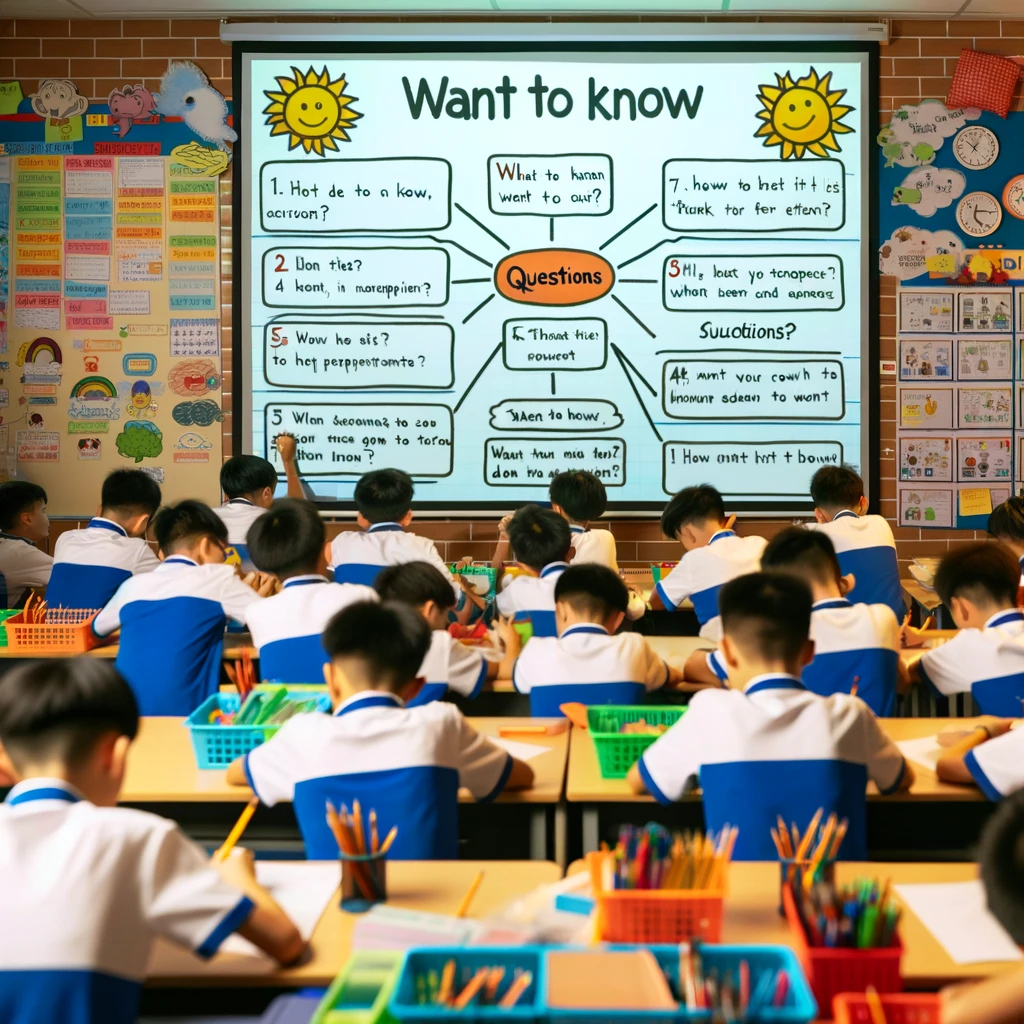
    • W (Want to Know): Students list what they want to know or learn about the topic.
    • L (Learn): After the lesson, students list what they have learned.

    This method not only helps in organizing information but also motivates students by making their learning goals explicit and trackable.

    Benefits of the KWL Technique

    1. Activating Prior Knowledge:
      • By starting with what students already know, the KWL technique helps them connect new information to existing knowledge, making learning more meaningful.
    2. Setting Learning Goals:
      • The “Want to Know” phase encourages students to set specific, personal learning goals, which increases their motivation and engagement.
    3. Reflective Learning:
      • The “Learn” phase promotes reflection, allowing students to consolidate their understanding and recognize their progress.
    4. Improved Comprehension:
      • This technique supports deeper comprehension by encouraging students to think critically about the information they encounter.
    5. Enhanced Engagement:
      • The interactive nature of the KWL technique keeps students actively involved in their learning process.

    Implementing the KWL Technique in English Classrooms

    1. Introducing the Topic:
      • Begin by introducing the topic and explaining the KWL process to students.
    1. K (Know) Phase:
      • Ask students to list everything they already know about the topic. This can be done individually, in pairs, or as a whole class discussion. Encourage them to think broadly and recall previous lessons, readings, or personal experiences.
    1. W (Want to Know) Phase:
      • Next, have students list what they want to know or learn about the topic. This step can be guided by prompting questions such as, “What questions do you have about this topic?” or “What do you hope to learn?” This phase helps set the learning objectives for the lesson.
    1. L (Learn) Phase:
      • After completing the lesson or unit, students fill out the “Learn” section of the KWL chart. They reflect on what they have learned and how their understanding has changed or expanded. This phase is crucial for reinforcing the material and for self-assessment.

    Example Activities Using the KWL Technique

    1. Reading Comprehension:
      • Before reading a novel or a short story, students fill out the “Know” and “Want to Know” sections based on the book’s title, cover, and summary. After reading, they complete the “Learn” section to summarize their understanding and insights.
    2. Research Projects:
      • When starting a research project, students use the KWL chart to outline their existing knowledge, set research questions, and document their findings. This helps them stay organized and focused throughout the research process.
    3. Thematic Units:
      • For thematic units (e.g., environmental issues, historical events), students begin with what they know about the theme, identify what they want to explore further, and conclude with what they have learned. This approach ensures comprehensive coverage of the topic.

    Success Stories

    Numerous teachers have reported success using the KWL technique in their English classrooms. For example, a high school in Texas implemented KWL charts in their English literature classes and observed a marked improvement in students’ engagement and comprehension. Another school in Florida found that using KWL charts for research projects helped students develop better organizational and critical thinking skills.

    Conclusion

    The KWL technique is an effective and versatile tool for teaching English in senior high schools. By activating prior knowledge, setting learning goals, and promoting reflection, it enhances student engagement and comprehension. Teachers looking to make their lessons more interactive and student-centered should consider integrating the KWL technique into their teaching strategies.

  • Teaching English with Project-Based Learning in Senior High Schools

    Teaching English with Project-Based Learning in Senior High Schools

    Teaching English with Project-Based Learning in Senior High Schools

    Teaching English in senior high schools can be challenging, but incorporating innovative methods such as Project-Based Learning (PjBL) can transform the experience for both teachers and students. PjBL shifts the focus from traditional rote learning to active, hands-on projects that engage students in meaningful and practical ways. This article explores the benefits of PjBL in teaching English, provides a step-by-step guide to implementing it, and highlights some success stories.

    Introduction to Project-Based Learning (PjBL)

    Project-Based Learning is an instructional approach that encourages students to learn and apply knowledge and skills through an engaging experience. In PjBL, students work on a project over an extended period, which allows them to explore and respond to complex questions, problems, or challenges. This method not only enhances their understanding of the subject matter but also helps develop essential skills such as critical thinking, collaboration, and communication.

    Benefits of PjBL in Teaching English

    1. Enhanced Engagement:
      • Projects are usually more interesting and engaging than traditional methods, which can motivate students to invest more effort in their learning.
    2. Real-World Application:
      • PjBL connects classroom learning to real-world scenarios, making the acquisition of language skills more relevant and practical.
    3. Collaboration:
      • Students often work in groups, which helps them develop teamwork and interpersonal skills.
    4. Critical Thinking:
      • PjBL encourages students to think critically and solve problems, which are crucial skills both inside and outside the classroom.
    5. Creativity:
      • Projects often require creative solutions, allowing students to express themselves and innovate.

    Implementing PjBL in English Classrooms

    1. Planning the Project:
      • Identify the learning objectives and outcomes.
      • Choose a project topic that aligns with the curriculum and interests students.
      • Design a project plan that outlines the tasks, timeline, and assessment criteria.
    2. Introducing the Project:
      • Present the project to students with a clear explanation of the objectives, expectations, and timeline.
      • Engage students with a compelling question or problem to solve.
    3. Guiding the Process:
      • Provide resources and support as students work on their projects.
      • Facilitate collaboration and ensure all students are participating and contributing.
    4. Assessment and Reflection:
      • Assess the project based on predefined criteria, including the quality of work, creativity, and adherence to objectives.
      • Encourage students to reflect on their learning process and outcomes.

    Example Projects

    1. Creating a School Magazine:
      • Students can work in teams to create a school magazine, which involves writing articles, conducting interviews, and designing layouts. This project helps develop writing, editing, and design skills.
    2. Debate Club:
      • Organize a debate club where students research, prepare, and participate in debates on various topics. This enhances their speaking and critical thinking skills.
    3. Literature Review:
      • Assign a project where students read a novel or a set of short stories and then create presentations or reports that analyze the themes, characters, and plot. This fosters analytical and presentation skills.

    Success Stories

    Many schools have successfully implemented PjBL in their English programs, resulting in improved student outcomes. For instance, a senior high school in California reported that their students showed significant improvement in language skills and engagement after introducing PjBL. Another school in New York found that PjBL helped reduce absenteeism and increased students’ enthusiasm for learning English.

    Conclusion

    Project-Based Learning is a powerful method for teaching English in senior high schools. By making learning more engaging, relevant, and practical, PjBL not only enhances students’ language skills but also prepares them for real-world challenges. Teachers looking to innovate their English curriculum should consider integrating PjBL to create a more dynamic and effective learning environment.

  • Mastering the Past Perfect Continuous Tense: Rules, Examples, and Practice Questions

    Mastering the Past Perfect Continuous Tense: Rules, Examples, and Practice Questions

    Definition

    The Past Perfect Continuous Tense, also known as the past perfect progressive, is used to describe an action that started in the past and continued up to another point in the past. It emphasizes the duration or continuity of an action that was happening before a specific time or another action in the past.
    Uses

    1. To show the duration of an action up to a certain point in the past.

    Examples:

    • They had been waiting for two hours by the time the bus finally came. (This sentence highlights the ongoing action of waiting that lasted for two hours until the bus arrived.)
    • She had been studying for three hours when her friends arrived. (The action of studying continued for three hours up to the point when her friends arrived.)
    • He had been working at the company for ten years before he decided to resign. (This indicates that the action of working at the company lasted for ten years until he made the decision to resign.)

    2. To describe an action that was in progress before another action occurred.

    Examples:

    • He had been working on the project before he fell ill. (This indicates that the work was ongoing and then interrupted by his illness.)
    • They had been planning the event for weeks before it was cancelled. (The planning was an ongoing process that was halted by the cancellation of the event.)
    • She had been cleaning the house when the guests arrived early. (The cleaning was an ongoing action that was interrupted by the early arrival of the guests.)

    3. To set the scene for another past event.

    Examples:

    • The children had been playing outside when it started to rain. (The ongoing action of playing outside sets the context for the sudden event of the rain starting.)
    • He had been reading a book when the phone rang. (The reading was an ongoing activity that was interrupted by the phone ringing.)
    • They had been discussing their plans when the news broke. (The ongoing discussion sets the scene for the interruption caused by breaking news.)

    Pattern

    The following are the grammatical pattern of the Past Perfect Continuous Tense:

    Affirmative: Subject + had + been + present participle (verb+ing)

    • She had been reading.
    • They had been talking.

    Negative: Subject + had + not + been + present participle (verb+ing)

    • She had not (hadn’t) been reading.
    • They had not (hadn’t) been talking.

    Interrogative: Had + subject + been + present participle (verb+ing)

    • Had she been reading?
    • Had they been talking?

    Time Signals

    Common time signals used with the Past Perfect Continuous Tense include:

    • For
    • Since
    • Before
    • By the time
    • Until
    • When

    Common Mistakes and How to Avoid Them

    1. Confusing with the Past Continuous Tense

    Mistake: “She was reading for two hours.” Correction: “She had been reading for two hours.” Tip: Remember, the Past Continuous is used for an action happening at a specific moment in the past, while the Past Perfect Continuous emphasizes the duration of an action up to a point in the past.

    2. Using the wrong auxiliary verb

    Mistake: “They was been playing.” Correction: “They had been playing.” Tip: Always use “had” as the auxiliary verb in the Past Perfect Continuous Tense, regardless of the subject.

    3. Omitting “been”

    Mistake: “He had studying all night.” Correction: “He had been studying all night.” Tip: The word “been” is essential in forming the Past Perfect Continuous Tense.

    Conclusion

    The Past Perfect Continuous Tense is a useful tense for expressing actions that were ongoing up until a specific point in the past. By understanding its definition, uses, pattern, and common time signals, learners can effectively incorporate this tense into their writing and speaking. Avoiding common mistakes will further enhance your proficiency in using the Past Perfect Continuous Tense.

    Quiz

    Test your understanding of the Past Perfect  Continuous Tense with this 10-question multiple-choice quiz. Choose the correct answer for each question.

    1. They ____ for an hour before the train arrived.

    2. She ____ the piano for years before she gave her first concert.

    3. By the time we got home, it ____ snowing for hours.

    4. He ____ to lose weight before his wedding.

    5. The students ____ for the exam until late at night.

    6. They ____ for hours before the manager finally arrived.

    7. I ____ to get tickets for the concert for weeks before they sold out.

    8. We ____ about the trip when he called.

    9. She ____ all afternoon before she took a break.

    10. They ____ for a new house before they found this one.

  • Mastering the Present Continuous Tense: Rules, Examples, and Practice Questions

    Mastering the Present Continuous Tense: Rules, Examples, and Practice Questions

    Definition

    The Present Continuous Tense, also known as the Present Progressive Tense, is used to describe actions that are currently happening at the moment of speaking or actions that are ongoing. This tense emphasizes the continuity and progression of an action.

    Uses

    The Present Continuous Tense is used in various contexts. Here are three primary uses along with multiple examples and explanations:

    1. Actions happening at the moment of speaking

    Examples:

    • She is reading a book right now. (This sentence indicates that the action of reading is occurring at this very moment.)
    • They are playing soccer in the park. (This sentence shows that the action of playing soccer is taking place as we speak.)
    • I am cooking dinner. (This sentence means that the action of cooking is happening right now.)
    1. Temporary actions or situations

    Examples:

    • They are staying at a hotel for the weekend. (This sentence implies that staying at the hotel is a temporary situation, limited to the weekend.)
    • He is working on a temporary project. (This sentence indicates that working on the project is a temporary situation.)
    • We are using my sister’s car while she is away. (This sentence shows that using the sister’s car is a temporary arrangement while she is away.)
    1. Planned future events

    Examples:

    • We are meeting them for dinner tomorrow. (This sentence indicates a future event that has already been arranged or planned.)
    • She is flying to New York next week. (This sentence shows a planned trip to New York in the future.)
    • They are starting a new course next month. (This sentence means that starting a new course is a planned future event.)

    Pattern

    The grammatical pattern of the Present Continuous Tense is straightforward:

    • Positive form: Subject + am/is/are + verb (base form) + -ing
      • Example: “I am working on my project.”
    • Negative form: Subject + am/is/are + not + verb (base form) + -ing
      • Example: “She is not watching TV.”
    • Question form: Am/Is/Are + subject + verb (base form) + -ing?
      • Example: “Are you coming to the party?”

    Time Signals

    Common time signals used with the Present Continuous Tense include:

    • Now
    • Right now
    • At the moment
    • Currently
    • Today
    • This week
    • Tonight

    Common Mistakes and How to Avoid Them

    Learners often make mistakes when using the Present Continuous Tense. Here are some common errors and tips to avoid them:

    1. Using the wrong auxiliary verb
      • Mistake: “He am playing soccer.”
      • Correction: “He is playing soccer.”
      • Tip: Ensure that the auxiliary verb (am, is, are) matches the subject.
    2. Forgetting the -ing ending
      • Mistake: “She is read a book.”
      • Correction: “She is reading a book.”
      • Tip: Always add the -ing ending to the main verb.
    3. Using the Present Continuous for non-continuous verbs
      • Mistake: “I am knowing the answer.”
      • Correction: “I know the answer.”
      • Tip: Some verbs (e.g., know, like, believe) are not typically used in the continuous form. Use the simple present tense for these verbs.

    Conclusion

    The Present Continuous Tense is essential for describing ongoing actions, temporary situations, and planned future events. By understanding its uses, grammatical pattern, time signals, and common mistakes, learners can use this tense effectively in their communication.

    Quiz

    Test your understanding of the Present Continuous Tense with this 10-question multiple-choice quiz. Choose the correct answer for each question.

    1. Which sentence is correct?

    2. What is the correct form of the verb in this sentence? "They ___ (play) soccer right now."

    3. Choose the correct sentence:

    4. Which sentence is in the Present Continuous Tense?

    5. Choose the correct form: "They ________ (play) soccer right now."

    6. Identify the time signal often used with the Present Continuous Tense:

    7. Which sentence indicates a temporary action?

    8. Fill in the blank: "I ________ (study) for my exams this week."

    9. Which form is correct for the Present Continuous Tense?

    10. Fill in the blank: "They ________ (not/watch) TV now."

  • Mastering the Present Perfect Tense: Rules, Examples, and Practice Questions

    Mastering the Present Perfect Tense: Rules, Examples, and Practice Questions

    Definition

    The Present Perfect Tense is used to describe actions that have occurred at an unspecified time before now. The exact time is not important. This tense is also used to describe actions that began in the past and continue to the present.

    Uses

    1. Actions That Occurred at an Unspecified Time in the Past
      The Present Perfect Tense is used to express actions that happened at some point in the past, but the exact time is not mentioned.
      Examples:
      -I have visited Paris. (The speaker has visited Paris at some time in the past, but the specific time is not mentioned.)
      -They have read the book. (The action of reading the book happened at some point in the past, without specifying when.)
      -She has gone to the store. (She went to the store at an unspecified time in the past.)
    2. Actions That Started in the Past and Continue to the Present
      This tense is used to describe actions that began in the past and are still happening now or have an effect on the present moment.
      Examples:
      -She has lived here for ten years. (She started living here ten years ago and still lives here.)
      -We have known each other since childhood. (The relationship began in childhood and continues to the present.)
      -He has worked at this company since 2015. (He started working at the company in 2015 and still works there.)
    3. Completed Actions with Relevance to the Present
      The Present Perfect Tense is also used to describe past actions that have a connection to the present moment.
      Examples:
      -He has finished his homework. (He completed his homework at some point in the past, and now the homework is done.)
      -I have cleaned the house. (The house was cleaned at some point in the past, and it is now clean.)
      -They have made dinner. (Dinner was prepared at some point in the past, and it is now ready to be eaten.)

    Pattern

    The grammatical pattern of the Present Perfect Tense is as follows:

    • Affirmative: Subject + has/have + past participle
      • Example: “She has eaten.”
    • Negative: Subject + has/have + not + past participle
      • Example: “They have not seen.”
    • Interrogative: Has/Have + subject + past participle?
      • Example: “Have you been?”

    Time Signals

    Common time signals used with the Present Perfect Tense include:

    • Ever
    • Never
    • Already
    • Yet
    • Just
    • Recently
    • So far
    • Until now
    • For
    • Since

    Common Mistakes and How to Avoid Them

    1. Using the Simple Past Instead of Present Perfect
      • Mistake: “I visited Paris last year.”
      • Correction: “I have visited Paris.”
      • Tip: Use the Present Perfect when the time is not specified or is not important.
    2. Forgetting to Use ‘Has’ or ‘Have’
      • Mistake: “She eaten her lunch.”
      • Correction: “She has eaten her lunch.”
      • Tip: Always include ‘has’ or ‘have’ before the past participle.
    3. Confusing ‘For’ and ‘Since’
      • Mistake: “I have lived here since ten years.”
      • Correction: “I have lived here for ten years.”
      • Tip: Use ‘for’ to indicate the duration of time and ‘since’ to indicate the starting point.

    Conclusion

    The Present Perfect Tense is a versatile and essential part of English grammar. It is used to describe actions without specifying the exact time, actions that continue to the present, and completed actions with relevance to now. Remember the pattern, time signals, and common mistakes to master the Present Perfect Tense.

    Quiz

    Test your understanding of the Present Perfect Tense with this 10-question multiple-choice quiz. Choose the correct answer for each question.

    1. Which sentence is in the Present Perfect Tense?

    2. Choose the correct form: "She ___ (to be) to the new restaurant."

    3. Which time signal is commonly used with the Present Perfect Tense?

    4. Fill in the blank: "They ___ (to finish) their project."

    5. Identify the error: "I has visited London."

    6. Which sentence is correct?

    7. Choose the correct form: "We ___ (to not see) that film."

    8. Which sentence uses ‘since’ correctly?

    9. Fill in the blank: "___ you ever ___ (to try) sushi?"

    10. Identify the error: "They has just arrived."