Tag: ESL learning

  • Mastering The Past Future Tense: Rules, Examples, and Practice Questions

    Mastering The Past Future Tense: Rules, Examples, and Practice Questions

    Mastering The Past Future Tense: Rules, Examples, and Practice Questions

    Definition

    The Past Future Tense is a verb tense used to express actions that were intended or predicted to happen in the past but have not necessarily occurred. It combines aspects of both the past and the future, often using modal verbs like “would” and “could.”
    Uses

    1. Expressing Future in the Past:

    When talking about an action that was supposed to occur after a certain point in the past.

    Examples:

    • She said she would call me later. (This sentence shows that “calling” was expected to happen after “she said.)
    • He thought he would finish the project by Friday. (This shows that finishing the project was expected after “he thought.)
    • They mentioned they would move to a new house the next month. (This indicates that moving was expected after “they mentioned.)
    1. Polite Requests or Offers:

    Used to make requests or offers more polite.

    Examples:

    • I thought you would like some coffee. (Here, the speaker politely offers coffee, considering the listener’s preference.)
    • She wondered if he would join them for dinner. (This sentence shows a polite invitation to dinner.)
    • They hoped you would accept their invitation. (This indicates a polite request for acceptance.)
    1. Hypothetical Situations

    Describes what could have happened in hypothetical or unreal situations.

    Examples:

    • If he had studied, he would have passed the exam. (This sentence explains a hypothetical scenario where studying would lead to passing the exam.)
    • If they had known, they would have come earlier. (This indicates a hypothetical situation where knowing would lead to arriving earlier.)
    • If I were you, I would take the opportunity. (This shows a hypothetical suggestion based on a different scenario.)

    The grammatical pattern for the Past Future Tense is:

    • Subject + would/could + base form of the verb

    Positive:

    • Subject + would/could + base form of the verb.
      • Example: “She would visit her grandparents every summer.”
      • Example: “He could help if he had more time.”

    Negative:

    • Subject + would not/could not + base form of the verb.
      • Example: “She would not visit her grandparents every summer.”
      • Example: “He could not help if he did not have more time.”

    Interrogative:

    • Would/Could + subject + base form of the verb?
      • Example: “Would she visit her grandparents every summer?”
      • Example: “Could he help if he had more time?”

    Pattern

    The grammatical patterns for the Past Future Tense are:

      Positive:

      • Subject + would/could + base form of the verb.
        • Example: “She would visit her grandparents every summer.”
        • Example: “He could help if he had more time.”

      Negative:

      • Subject + would not/could not + base form of the verb.
        • Example: “She would not visit her grandparents every summer.”
        • Example: “He could not help if he did not have more time.”

      Interrogative:

      • Would/Could + subject + base form of the verb?
        • Example: “Would she visit her grandparents every summer?”
        • Example: “Could he help if he had more time?”

      Time Signals

      Common time signals used with the Past Future Tense include:

      • Yesterday
      • Last week
      • Last month
      • Last year
      • At that time
      • In those days

      Common Mistakes and How to Avoid Them

      1. Using “will” instead of “would”:
        • Incorrect: “She said she will call me.”
        • Correct: “She said she would call me.”
        • Tip: Remember that “would” is used for future actions from a past perspective.
      2. Forgetting the base form of the verb:
        • Incorrect: “He said he would went.”
        • Correct: “He said he would go.”
        • Tip: Always use the base form of the verb after “would” or “could.”
      3. Mixing up tenses:
        • Incorrect: “If I knew, I will tell you.”
        • Correct: “If I knew, I would tell you.”
        • Tip: Ensure consistency in tense when forming sentences.

      Conclusion

      The Past Future Tense is essential for discussing intentions or predictions made in the past. By understanding its uses, patterns, and common mistakes, learners can master this tense and use it accurately in both written and spoken English.

      Quiz

      Test your understanding of the Past Future Tense with this 10-question multiple-choice quiz. Choose the correct answer for each question.

      1. She said she ____ visit her grandmother last weekend.

      2. If he had the money, he ____ buy a new car.

      3. I thought you ____ like some dessert.

      4. They said they ____ be late.

      5. If she studied, she ____ pass the exam.

      6. He promised he ____ help me with my homework.

      7. They were confident that the team ____ win the match.

      8. She suspected that he ____ forget her birthday.

      9. If the weather was nice, they ____ have a picnic.

      10. They assumed the meeting ____ be rescheduled.

    • Mastering The Future Perfect Continuous Tense: Rules, Examples, and Practice Questions

      Mastering The Future Perfect Continuous Tense: Rules, Examples, and Practice Questions

      The Future Perfect Continuous Tense

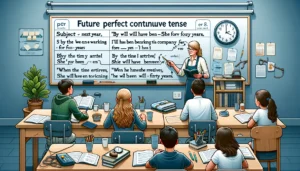
      The Future Perfect Continuous Tense is an advanced aspect of English grammar that combines elements of the future, perfect, and continuous tenses. It is used to describe actions that will have been ongoing for a period of time up to a specific point in the future.

      Definition

      The Future Perfect Continuous Tense describes actions that will continue up until a specific future moment. This tense emphasizes the duration of an activity that will be ongoing and completed at a certain future time.

      Uses

      The Future Perfect Continuous Tense is used in various contexts, including:

      1. Describing the Duration of an Action Up to a Future Point

      This tense highlights how long an action will have been happening by a specific future time.

      Examples:

      • By next year, I will have been working at this company for five years. (The action of working will have continued for five years by next year.)
      • By the time you arrive, she will have been cooking for two hours. (The action of cooking will have been ongoing for two hours by the time you arrive.)
      • When he retires, he will have been teaching for thirty years. (The action of teaching will have lasted for thirty years by the time he retires.)
      1. Expressing Planned Future Actions with Emphasis on Duration

      This tense is used to describe planned activities that focus on the duration up to a future point.

      Examples:

      • By December, they will have been traveling for six months. (The action of traveling will have been ongoing for six months by December.)
      • At the end of this course, you will have been learning English for a year. (The learning process will have continued for a year by the end of the course.)
      • By tomorrow evening, we will have been driving for ten hours. (The action of driving will have been in progress for ten hours by tomorrow evening.)
      1. Predicting Ongoing Actions Up to a Future Point

      It can be used to predict the duration of ongoing actions up to a specific time in the future.

      Examples:

      • When you see me next, I will have been studying for my exams. (The speaker predicts that the action of studying will have been ongoing.)
      • By the time he finishes, he will have been writing the report for a week. (The action of writing the report will have been in progress for a week.)
      • At the end of the day, she will have been waiting for four hours. (The action of waiting will have continued for four hours by the end of the day.)

      Pattern

      The grammatical pattern of the Future Perfect Continuous Tense involves the following structure:

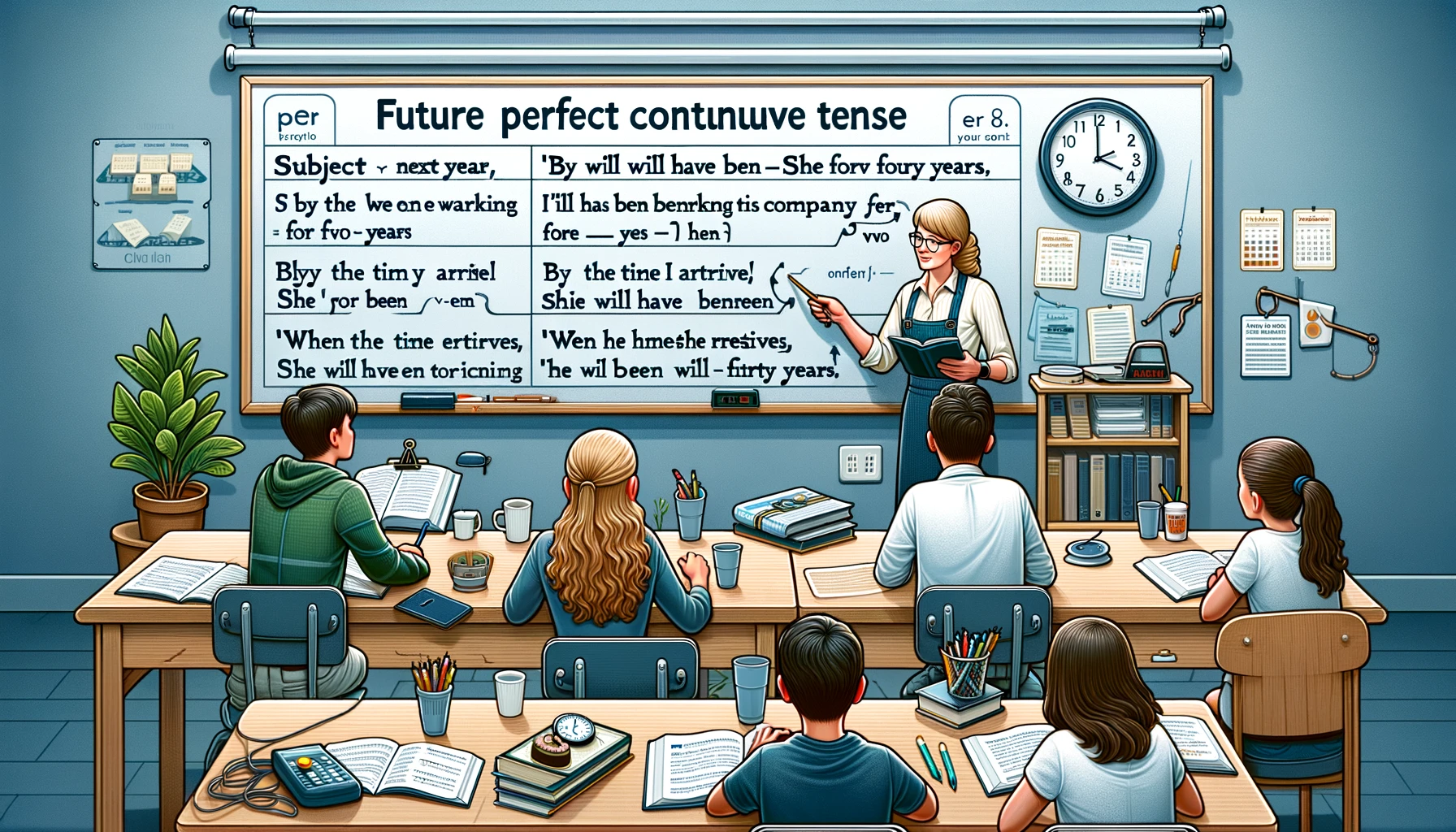
      Subject + will have been + present participle (verb+ing)

      For example:

      • Affirmative: “I will have been studying for three hours.”
      • Negative: “She will not have been working here for long.”
      • Interrogative: “Will they have been traveling for a year?”

      Time Signals

      Common time signals used with the Future Perfect Continuous Tense include:

      • By [future time]
      • By the time
      • For [duration]
      • When

      Common Mistakes and How to Avoid Them

      Learners often make mistakes with the Future Perfect Continuous Tense. Here are some common errors and tips to avoid them:

      1. Incorrect Verb Form
        • Mistake: “I will have be studying.”
        • Correction: Use “been” correctly: “I will have been studying.”
        • Tip: Remember to use “been” after “will have” and before the present participle.
      2. Misplacing Time Signals
        • Mistake: “I will have been for two hours studying.”
        • Correction: Correctly place the time signal: “I will have been studying for two hours.”
        • Tip: Place time signals after the present participle for clarity.
      3. Confusing with Other Future Tenses
        • Mistake: “I will be studying for two hours.”
        • Correction: Use the correct tense for duration: “I will have been studying for two hours.”
        • Tip: Ensure the tense matches the emphasis on the duration up to a future point.

      Conclusion

      The Future Perfect Continuous Tense is a valuable tool for describing actions that will have been ongoing up to a specific point in the future. By understanding its structure, uses, and common time signals, learners can effectively communicate the duration of future activities. Avoiding common mistakes ensures clarity and precision in usage.

      Quiz

      Test your understanding of the Future Perfect Continuous Tense with this 10-question multiple-choice quiz. Choose the correct answer for each question.

      1. Which sentence correctly uses the Future Perfect Continuous Tense?

      2. Identify the correct use of Future Perfect Continuous Tense for a planned event:

      3. Which of these is not a time signal for the Future Perfect Continuous Tense?

      4. By next summer, they __________ (live) in this city for ten years.

      5. Which sentence correctly predicts an ongoing action up to a future point?

      6. What is the correct form to express a future action’s duration?

      7. Choose the sentence with the correct time signal:

      8. By the time he retires, how long will he have been teaching?

      9. Which sentence correctly uses the Future Perfect Continuous Tense?

      10. Identify the error: "By next week, they will have been finish the project."

    • Mastering The Future Continuous Tense: Rules, Examples, and Practice Questions

      Mastering The Future Continuous Tense: Rules, Examples, and Practice Questions

      The Future Continuous Tense

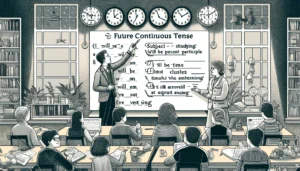
      The Future Continuous Tense is an essential aspect of English grammar that allows speakers to describe actions that will be ongoing at a specific point in the future. This tense is particularly useful for expressing future activities that are planned or expected to occur over a duration of time.

      Definition

      The Future Continuous Tense describes actions that will be happening at a particular moment in the future. It emphasizes the duration or continuity of an activity that will be in progress at a future time.

      Uses

      The Future Continuous Tense is used in various contexts, including:

      1. Actions in Progress at a Specific Future Time

       This tense indicates that an action will be ongoing at a particular future moment.

      Examples:

      • This time next week, I will be traveling to Japan. (The action of traveling will be happening at a specific future time.)
      • At 10 PM tonight, she will be working on her project. (The action of working will be happening at 10 PM.)
      • By tomorrow morning, they will be flying to New York. (The action of flying will be ongoing tomorrow morning.)
      1. Planned Future Activities

      It expresses activities that are already planned or arranged to happen in the future.

      Examples:

      • She will be meeting with the clients tomorrow afternoon. (The meeting is a scheduled activity that will take place in the future.)
      • We will be attending the conference next week. (Attending the conference is a planned activity for next week.)
      • He will be hosting a dinner party on Friday. (Hosting the dinner party is a pre-arranged event for Friday.)
      1. Predicting the Present

      Sometimes, it is used to speculate about what is currently happening, based on future knowledge.

      Examples:

      • They will be arriving at the airport right now. (Based on future plans, the speaker predicts the current activity.)
      • She will be having lunch at this moment. (The speaker assumes that she is currently having lunch based on her usual schedule.)
      • He will be studying for his exams now. (The speaker predicts that he is studying at the present moment, considering his upcoming exams.)

      Pattern

      The grammatical pattern of the Future Continuous Tense involves the following structure:

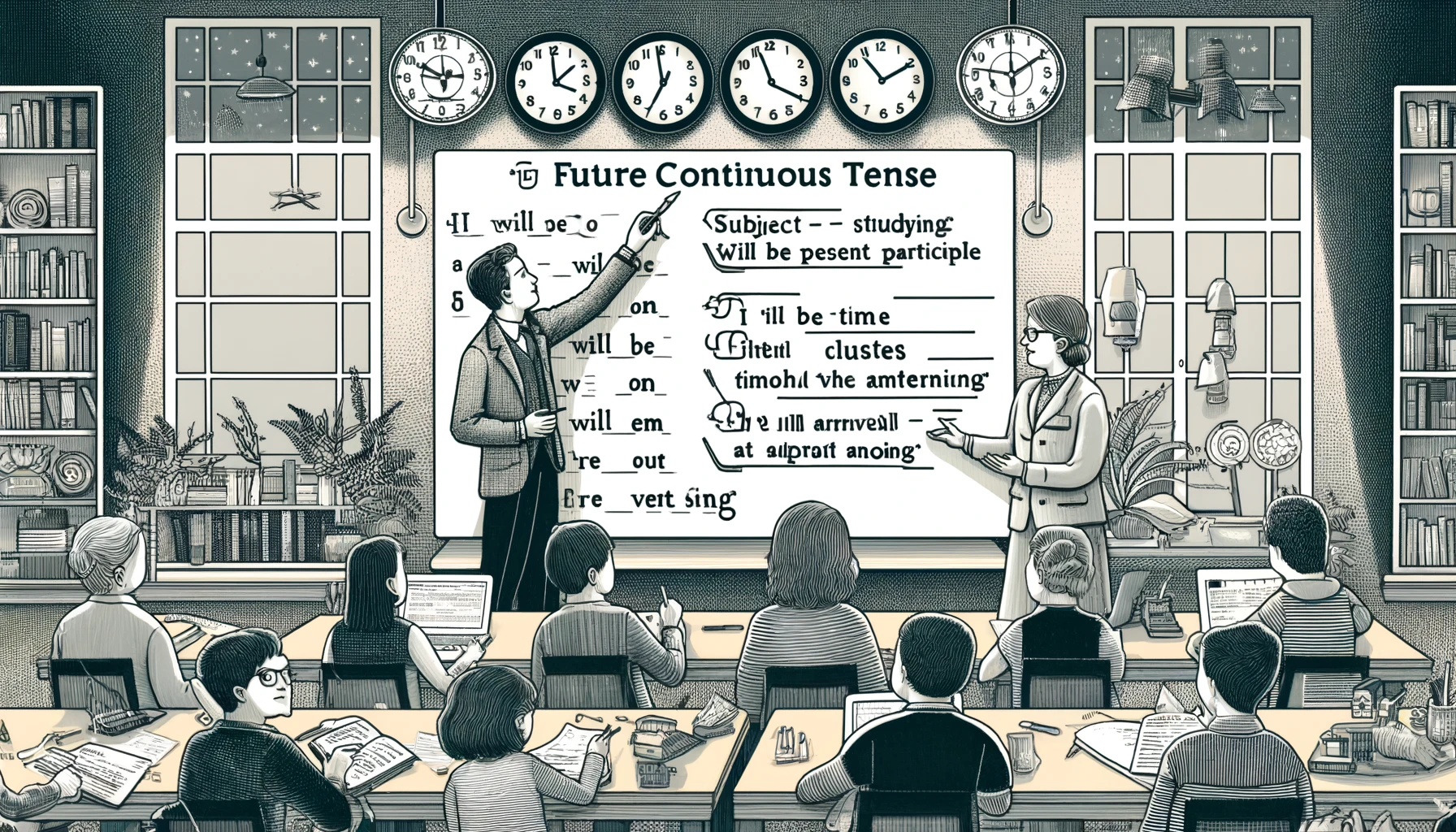
      Subject + will be + present participle (verb+ing)

      For example:

      • Affirmative: “I will be studying at 8 PM.”
      • Negative: “She will not be coming to the party.”
      • Interrogative: “Will they be joining us for dinner?”

      Time Signals

      Common time signals used with the Future Continuous Tense include:

      • At this time next week
      • Tomorrow at [specific time]
      • In the future
      • Next [day/week/month/year]

      Common Mistakes and How to Avoid Them

      Learners often make mistakes with the Future Continuous Tense. Here are some common errors and tips to avoid them:

      1. Incorrect Auxiliary Verb Usage
        • Mistake: “I am will be studying.”
        • Correction: Use “will be” correctly: “I will be studying.”
        • Tip: Remember that “will” is always followed by “be” and then the present participle.
      2. Misplacing Time Signals
        • Mistake: “I will be at this time next week studying.”
        • Correction: Correctly place the time signal: “At this time next week, I will be studying.”
        • Tip: Place time signals at the beginning or end of the sentence for clarity.
      3. Forgetting the Present Participle Form
        • Mistake: “She will be to cook dinner.”
        • Correction: Use the present participle form: “She will be cooking dinner.”
        • Tip: Always use the -ing form of the verb after “will be.”

      Conclusion

      The Future Continuous Tense is a versatile and useful tense for describing actions that will be ongoing at a specific future time, planned future activities, and speculating about the present based on future knowledge. By understanding its structure, uses, and common time signals, learners can effectively use this tense to communicate their future plans and predictions. Avoiding common mistakes ensures clarity and accuracy in usage.

      Test your understanding of the Future Continuous Tense with this 10-question multiple-choice quiz. Choose the correct answer for each question.

      1. Which sentence correctly uses the Future Continuous Tense?

      2. Choose the sentence with the correct time signal:

      3. Identify the correct use of Future Continuous Tense for a scheduled event:

      4. Choose the sentence that predicts a current action:

      5. Which of these is not a time signal for the Future Continuous Tense?

      6. Correct the mistake: "She will be sings in the choir."

      7. Which of the following sentences correctly uses the Future Continuous Tense to indicate an action in progress at a specific future time?

      8. How do you express a planned future activity using the Future Continuous Tense?

      9. Which sentence is predicting a current action based on future knowledge?

      10. Choose the sentence that correctly uses the Future Continuous Tense for a planned activity:

    • Mastering the Past Perfect Continuous Tense: Rules, Examples, and Practice Questions

      Mastering the Past Perfect Continuous Tense: Rules, Examples, and Practice Questions

      Definition

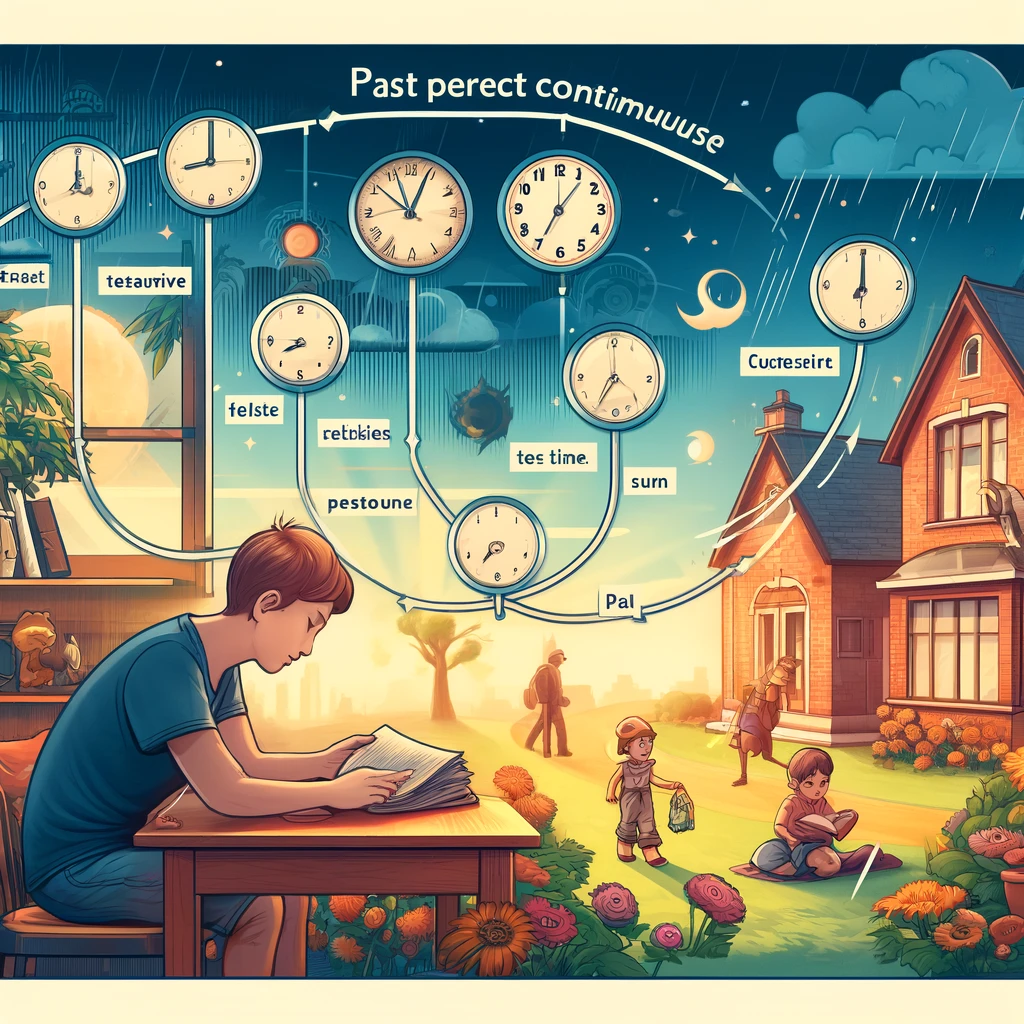
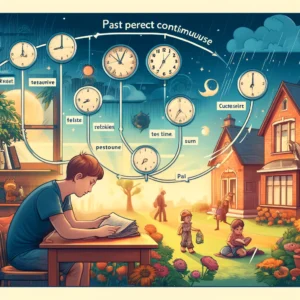
      The Past Perfect Continuous Tense, also known as the past perfect progressive, is used to describe an action that started in the past and continued up to another point in the past. It emphasizes the duration or continuity of an action that was happening before a specific time or another action in the past.
      Uses

      1. To show the duration of an action up to a certain point in the past.

      Examples:

      • They had been waiting for two hours by the time the bus finally came. (This sentence highlights the ongoing action of waiting that lasted for two hours until the bus arrived.)
      • She had been studying for three hours when her friends arrived. (The action of studying continued for three hours up to the point when her friends arrived.)
      • He had been working at the company for ten years before he decided to resign. (This indicates that the action of working at the company lasted for ten years until he made the decision to resign.)

      2. To describe an action that was in progress before another action occurred.

      Examples:

      • He had been working on the project before he fell ill. (This indicates that the work was ongoing and then interrupted by his illness.)
      • They had been planning the event for weeks before it was cancelled. (The planning was an ongoing process that was halted by the cancellation of the event.)
      • She had been cleaning the house when the guests arrived early. (The cleaning was an ongoing action that was interrupted by the early arrival of the guests.)

      3. To set the scene for another past event.

      Examples:

      • The children had been playing outside when it started to rain. (The ongoing action of playing outside sets the context for the sudden event of the rain starting.)
      • He had been reading a book when the phone rang. (The reading was an ongoing activity that was interrupted by the phone ringing.)
      • They had been discussing their plans when the news broke. (The ongoing discussion sets the scene for the interruption caused by breaking news.)

      Pattern

      The following are the grammatical pattern of the Past Perfect Continuous Tense:

      Affirmative: Subject + had + been + present participle (verb+ing)

      • She had been reading.
      • They had been talking.

      Negative: Subject + had + not + been + present participle (verb+ing)

      • She had not (hadn’t) been reading.
      • They had not (hadn’t) been talking.

      Interrogative: Had + subject + been + present participle (verb+ing)

      • Had she been reading?
      • Had they been talking?

      Time Signals

      Common time signals used with the Past Perfect Continuous Tense include:

      • For
      • Since
      • Before
      • By the time
      • Until
      • When

      Common Mistakes and How to Avoid Them

      1. Confusing with the Past Continuous Tense

      Mistake: “She was reading for two hours.” Correction: “She had been reading for two hours.” Tip: Remember, the Past Continuous is used for an action happening at a specific moment in the past, while the Past Perfect Continuous emphasizes the duration of an action up to a point in the past.

      2. Using the wrong auxiliary verb

      Mistake: “They was been playing.” Correction: “They had been playing.” Tip: Always use “had” as the auxiliary verb in the Past Perfect Continuous Tense, regardless of the subject.

      3. Omitting “been”

      Mistake: “He had studying all night.” Correction: “He had been studying all night.” Tip: The word “been” is essential in forming the Past Perfect Continuous Tense.

      Conclusion

      The Past Perfect Continuous Tense is a useful tense for expressing actions that were ongoing up until a specific point in the past. By understanding its definition, uses, pattern, and common time signals, learners can effectively incorporate this tense into their writing and speaking. Avoiding common mistakes will further enhance your proficiency in using the Past Perfect Continuous Tense.

      Quiz

      Test your understanding of the Past Perfect  Continuous Tense with this 10-question multiple-choice quiz. Choose the correct answer for each question.

      1. They ____ for an hour before the train arrived.

      2. She ____ the piano for years before she gave her first concert.

      3. By the time we got home, it ____ snowing for hours.

      4. He ____ to lose weight before his wedding.

      5. The students ____ for the exam until late at night.

      6. They ____ for hours before the manager finally arrived.

      7. I ____ to get tickets for the concert for weeks before they sold out.

      8. We ____ about the trip when he called.

      9. She ____ all afternoon before she took a break.

      10. They ____ for a new house before they found this one.

    • Mastering the Simple Future Tense: Rules, Examples, and Practice Questions

      Mastering the Simple Future Tense: Rules, Examples, and Practice Questions

      Definition

      The Simple Future Tense is a verb tense used to describe actions that will happen at a later time. It is a crucial part of English grammar that helps convey plans, promises, predictions, and spontaneous decisions. The Simple Future Tense is used to express actions or events that will occur in the future. It is formed by using the auxiliary verb “will” followed by the base form of the main verb.
      Uses

      1. Predictions: The Simple Future Tense is often used to make predictions about the future.

      Examples:

      • It will rain tomorrow. (This sentence predicts the weather for the next day.)
      • The stock market will recover by the end of the year. (This sentence predicts the performance of the stock market.)
      • She will become a successful doctor. (This sentence predicts someone’s future career success.)
      1. Spontaneous Decisions: It is used when deciding to do something at the moment of speaking.

      Examples:

      • I will help you with your homework. (The speaker offers help spontaneously.)
      • I will get the door. (The speaker decides to open the door at that moment.)
      • I will buy some snacks. (The speaker decides to purchase snacks immediately.)
      1. Promises or Offers: This tense is commonly used to make promises or offers.

      Examples:

      • I will call you later. (The speaker is making a promise to call in the future.)
      • We will send you the documents tomorrow. (The speaker promises to send documents.)
      • I will take care of your plants while you’re away. (The speaker offers to take care of the plants.)

      Pattern

      The structure of the Simple Future Tense is straightforward. It follows the pattern:

      • Affirmative: Subject + will + base form of the verb.
        • Example: “She will travel to Paris.”
      • Negative: Subject + will not (won’t) + base form of the verb.
        • Example: “They will not (won’t) attend the meeting.”
      • Interrogative: Will + subject + base form of the verb?
        • Example: “Will you join us for dinner?”

      Time Signals

      To indicate that an action will occur in the future, certain time signals are often used:

      • Tomorrow
      • Next week/month/year
      • In a few days
      • Soon
      • Later

      Common Mistakes and How to Avoid Them

      1. Using “will” with another future form:
        • Incorrect: “I will going to the store.”
        • Correct: “I will go to the store.”
        • Tip: Remember that “will” should be followed by the base form of the verb.
      2. Confusion between “will” and “going to”:
        • Incorrect: “I will going to study tonight.”
        • Correct: “I am going to study tonight.”
        • Tip: Use “will” for spontaneous decisions and “going to” for planned actions.
      3. Neglecting subject-verb agreement:
        • Incorrect: “She will goes to school.”
        • Correct: “She will go to school.”
        • Tip: Ensure that the verb following “will” is always in its base form, regardless of the subject.

      Conclusion

      The Simple Future Tense is essential for discussing future events, predictions, spontaneous decisions, and promises. By understanding its uses, patterns, and common mistakes, learners can effectively communicate about the future in English. Remember to use appropriate time signals and ensure proper verb forms to avoid common errors.

      Quiz

      Test your understanding of the Simple Future Tense with this 10-question multiple-choice quiz. Choose the correct answer for each question.

      1. Which sentence is in the Simple Future Tense?

      2. Choose the correct form of the verb: "They ____ (visit) the museum tomorrow."

      3. Which time signal is commonly used with the Simple Future Tense?

      4. Identify the incorrect sentence:

      5. Fill in the blank: "I ____ (not / attend) the meeting."

      6. Which of the following sentences is a prediction?

      7. Form the question: "____ (you / finish) your homework?"

      8. Identify the promise in the following sentences:

      9. Correct the mistake: "He will plays football."

      10. Choose the correct sentence: