Tag: grammar exercises

  • Will vs. Going to: Understanding Future Intentions and Plans

    Will vs. Going to: Understanding Future Intentions and Plans

    Question: What is the difference between Will and Going to?

    Answer:

    Introduction

    When learning English, one of the common areas of confusion is knowing when to use “will” and “going to” for expressing future intentions and plans. While both are used to talk about the future, they are used in different contexts and have distinct meanings. This article will help you understand the differences between “will” and “going to” and provide practical examples to use them correctly.

    Understanding “Will”

    “Will” is a modal verb that is used to express:

    1. Spontaneous Decisions: Decisions made at the moment of speaking.
      • Example: “I’m thirsty. I think I will get a glass of water.”
    2. Predictions: Predictions about the future that are based on opinions or experiences.
      • Example: “I think it will rain tomorrow.”
    3. Promises: Making promises or offers.
      • Example: “I will help you with your homework.”
    4. Offers: Offering help or services.
      • Example: “I will carry your bag for you.”

    Understanding “Going to”

    “Going to” is used to express:

    1. Plans or Intentions: Plans that were decided before the moment of speaking.
      • Example: “I am going to visit my grandparents next weekend.”
    2. Predictions with Evidence: Predictions about the future that are based on current evidence.
      • Example: “Look at those dark clouds. It is going to rain.”

    Key Differences

    1. Decision Time: “Will” is used for decisions made at the moment of speaking, while “going to” is used for decisions made before the moment of speaking.
      • Example:
        • Will: “I will call him now.”
        • Going to: “I am going to call him after dinner.”
    2. Predictions: “Will” is often used for general predictions, while “going to” is used for predictions based on evidence.
      • Example:
        • Will: “You will get better soon.”
        • Going to: “You are going to get better. The doctor said so.”
    3. Plans and Intentions: “Going to” is used for plans or intentions.
      • Example: “She is going to start a new job next month.”

    Practical Exercises

    1. Fill-in-the-Blanks
      • I ____ (will/going to) travel to Japan next summer. (Answer: am going to)
      • It looks like it ____ (will/going to) snow soon. (Answer: is going to)
      • I think they ____ (will/going to) win the match. (Answer: will)
      • She ____ (will/going to) call you when she arrives. (Answer: will)
    2. Correct the Sentences
      • I think I’m going to get a taxi. (Correct: I think I will get a taxi.)
      • Look at the sky. It will rain. (Correct: Look at the sky. It is going to rain.)
    3. Role-Play Activity
      • Pair up with a partner and create dialogues using “will” and “going to” appropriately. Discuss future plans, make spontaneous decisions, and predict the future.

    Conclusion

    Understanding the differences between “will” and “going to” is essential for expressing future plans and intentions correctly in English. Remember, “will” is used for spontaneous decisions, general predictions, promises, and offers, while “going to” is used for pre-decided plans and predictions with evidence. Practice using these forms in different contexts to become more comfortable and confident in your English communication.

  • The Difference Between Simple Past Tense and Present Perfect Tense

    The Difference Between Simple Past Tense and Present Perfect Tense

    Question: What is the Difference Between  Simple Past Tense and Present Perfect Tense?

    Answer:

    Introduction

    English grammar can sometimes be confusing, especially when it comes to understanding the differences between various tenses. Among the most commonly misunderstood tenses are the Simple Past Tense and the Present Perfect Tense. This article aims to clarify the distinctions between these two tenses, providing clear definitions, examples, and illustrations to help learners grasp their proper usage.

    Definition of  Simple Past Tense

    The Simple Past Tense is used to describe actions that were completed at a specific time in the past. It is often accompanied by time expressions like yesterday, last week, in 2010, etc.

    Examples:

    • She visited Paris last summer.
    • They watched a movie yesterday.
    • He finished his homework two hours ago.

    Definition of Present Perfect Tense

    The Present Perfect Tense is used to describe actions that occurred at an unspecified time in the past and are relevant to the present. This tense often uses time expressions like ever, never, already, yet, just, and since/for.

    Examples:

    • She has visited Paris several times.
    • They have watched that movie already.
    • He has finished his homework.

    Key Differences Between Simple Past Tense and Present Perfect Tense

    1. Time Specificity:
      • Simple Past Tense: Refers to actions completed at a specific time in the past.
        • Example: She visited Paris last summer.
      • Present Perfect Tense: Refers to actions that happened at an unspecified time and have relevance to the present.
        • Example: She has visited Paris several times.
    2. Usage of Time Expressions:
      • Simple Past Tense: Uses definite time expressions (yesterday, last week, in 2010).
        • Example: They watched a movie yesterday.
      • Present Perfect Tense: Uses indefinite time expressions (ever, never, already, yet).
        • Example: They have watched that movie already.
    3. Focus on Experience vs. Completed Action:
      • Simple Past Tense: Focuses on the completion of the action.
        • Example: He finished his homework two hours ago.
      • Present Perfect Tense: Focuses on the experience or the result of the action.
        • Example: He has finished his homework.

    Common Mistakes and How to Avoid Them

    1. Mixing Up Time Expressions:
      • Mistake: I have visited Paris last summer.
      • Correction: I visited Paris last summer.
    2. Using Present Perfect Tense with Specific Times:
      • Mistake: He has finished his homework two hours ago.
      • Correction: He finished his homework two hours ago.
    3. Ignoring the Relevance to the Present:
      • Mistake: They watched that movie already.
      • Correction: They have watched that movie already.

    Conclusion

    Understanding the difference between the Simple Past Tense and the Present Perfect Tense is crucial for mastering English grammar. Remember, the Simple Past Tense is used for actions completed at a specific time in the past, while the Present Perfect Tense is used for actions that have relevance to the present without specifying the exact time. Practice using these tenses correctly to improve your fluency and accuracy in English.

  • Mastering The Past Future Perfect Tense: Rules, Examples, and Practice Questions

    Mastering The Past Future Perfect Tense: Rules, Examples, and Practice Questions

    Mastering The Past Future Perfect Tense: Rules, Examples, and Practice Questions

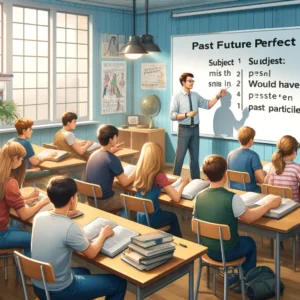
    The Past Future Perfect Tense: A Comprehensive Guide

    Definition

    The Past Future Perfect Tense is a verb form used to describe an action that would have been completed before a certain point in the past. It is used to indicate that an action was expected or intended to happen, but it was also anticipated to be completed before another action in the past.

    Uses

    1. To Express Actions That Would Have Been Completed in the Past

    This tense is used to talk about actions that were supposed to be finished before another past action or time.

    Examples:

    • By the time we arrived, they would have finished dinner. (The sentence means that at the time we arrived, the action of finishing dinner was expected to be already completed.)
    • She would have left by the time you got there. (This means she was expected to leave before you arrived.)
    • They would have completed the project by yesterday if they had started on time. (The project was expected to be finished by yesterday if they had started as planned.)
    1. To Describe Past Expectations

    It can be used to express an expectation or a prediction about what would have happened by a certain time in the past.

    Examples:

    • She would have graduated by last year if she hadn’t taken a gap year. (This indicates that graduation was expected to happen by last year if not for the gap year.)
    • They would have been here by now if they had caught the earlier train. (They were expected to be here by now, assuming they caught the earlier train.)
    • He would have finished his homework by now if he hadn’t gone out. (The homework was expected to be done by now if he hadn’t gone out.)
    1. To Indicate Regret or Assumptions About the Past

    This tense helps to express assumptions or regrets about actions that were expected to be completed in the past.

    Examples:

    • I thought you would have called me by now. (This implies that the speaker expected a call by now, suggesting an assumption or regret about the action not happening.)
    • We assumed they would have arrived by 8 PM. (The expectation was that they would have arrived by 8 PM, indicating an assumption about their arrival time.)
    • She would have apologized by now if she realized her mistake. (There is a regret or assumption that an apology would have happened if she recognized her error.)

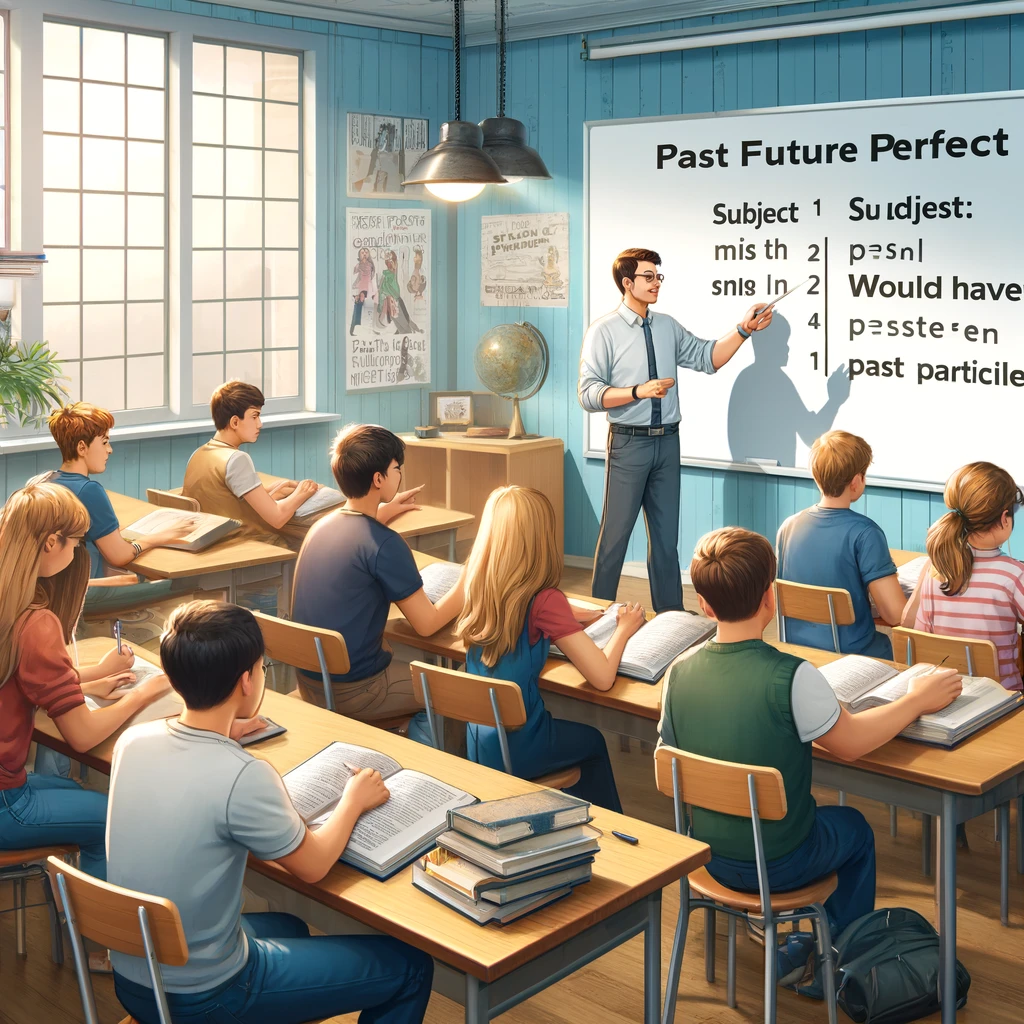
    Pattern

    The grammatical pattern for the Past Future Perfect Tense is:

    1. Positive Form
      • Pattern: Subject + would have + past participle
      • Example: They would have completed the task by now.
    2. Negative Form
      • Pattern: Subject + would not have + past participle
      • Example: She would not have missed the bus if she had left earlier.
    3. Interrogative Form
      • Pattern: Would + subject + have + past participle?
      • Example: Would you have finished the report if you had more time?

    Time Signals

    Common time signals used with the Past Future Perfect Tense include:

    • By the time
    • Before
    • By then
    • By (a specific time)
    • Already

    Common Mistakes and How to Avoid Them

    1. Confusing with Other Tenses
      • Mistake: Using the Past Future Perfect Tense interchangeably with the Future Perfect or Past Perfect tenses.
      • Tip: Remember that the Past Future Perfect Tense specifically deals with actions that were expected to be completed before another action in the past, while the Future Perfect is about actions expected to be completed before a future point, and the Past Perfect deals with actions completed before another past action.
    2. Incorrect Use of “Would Have”
      • Mistake: Using “would have” in clauses where it is not needed.
      • Tip: Ensure that “would have” is only used in the main clause of the sentence when referring to an expected or intended action in the past.
    3. Omitting the Past Participle
      • Mistake: Forgetting to use the past participle form of the verb.
      • Tip: Always use the past participle (e.g., finished, called, seen) after “would have.”

    Conclusion

    The Past Future Perfect Tense is a valuable tool for discussing actions that were expected to be completed before a certain time in the past. Understanding its uses, pattern, and common mistakes can help you use it accurately in your writing and speech.

    Quiz

    Test your understanding of the Past Future Perfect with this 10-question multiple-choice quiz. Choose the correct answer for each question.

    1. By the time the guests arrived, we _______ (decorate) the entire hall.

    2. If he had known about the meeting, he _______ (prepare) a presentation by last week.

    3. She thought that by the end of the month, they _______ (complete) the construction.

    4. By the time you saw the movie, they _______ (release) the sequel.

    5. Had you asked for directions, we _______ (arrive) earlier.

    6. By last winter, the committee _______ (implement) the new policies.

    7. If they had followed the schedule, they _______ (launch) the product by now.

    8. He assumed that by the age of 30, he _______ (achieve) his career goals.

    9. By the time the train arrived, we _______ (wait) for over an hour.

    10. By the time the meeting started, I _______ (read) all the reports.