Tag: Grammar Guide

  • Mastering The Past Future Perfect Tense: Rules, Examples, and Practice Questions

    Mastering The Past Future Perfect Tense: Rules, Examples, and Practice Questions

    Mastering The Past Future Perfect Tense: Rules, Examples, and Practice Questions

    The Past Future Perfect Tense: A Comprehensive Guide
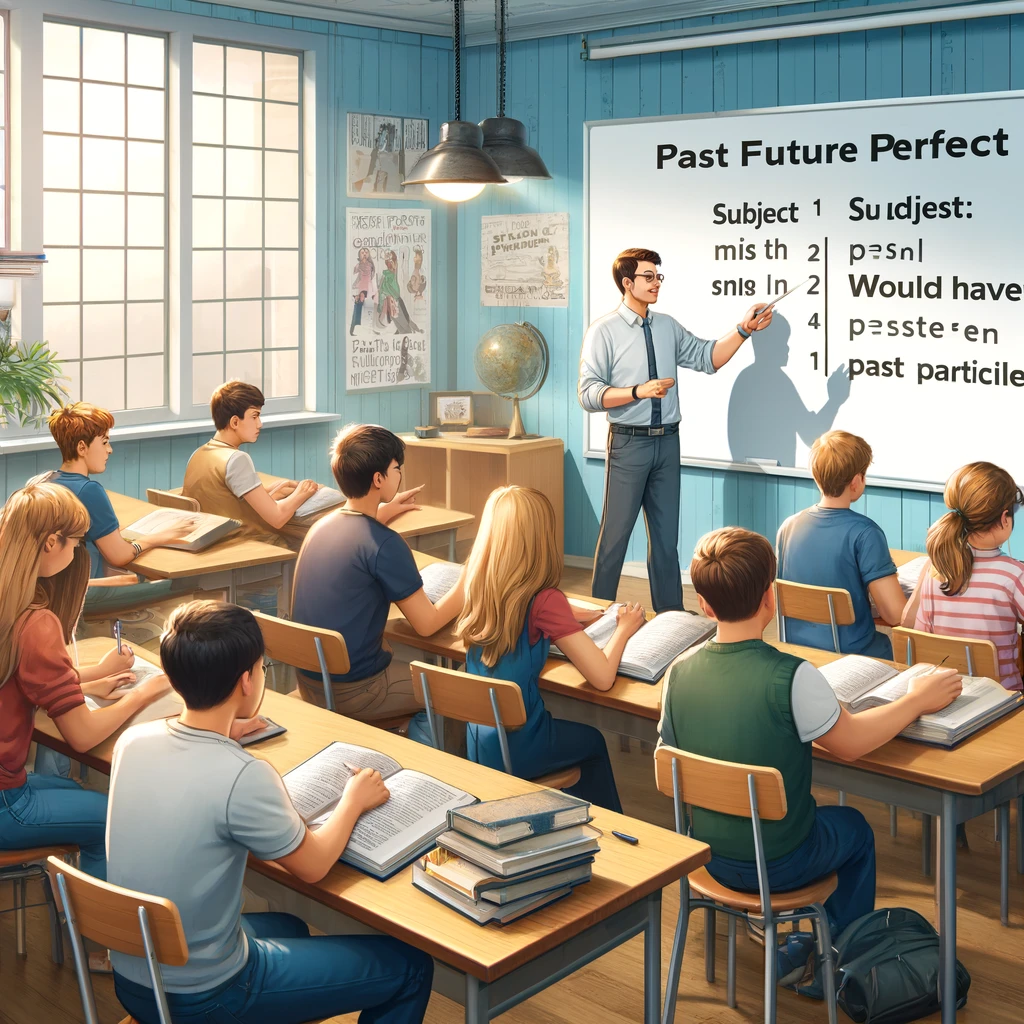
    Definition

    The Past Future Perfect Tense is a verb form used to describe an action that would have been completed before a certain point in the past. It is used to indicate that an action was expected or intended to happen, but it was also anticipated to be completed before another action in the past.

    Uses

    1. To Express Actions That Would Have Been Completed in the Past

    This tense is used to talk about actions that were supposed to be finished before another past action or time.

    Examples:

    • By the time we arrived, they would have finished dinner. (The sentence means that at the time we arrived, the action of finishing dinner was expected to be already completed.)
    • She would have left by the time you got there. (This means she was expected to leave before you arrived.)
    • They would have completed the project by yesterday if they had started on time. (The project was expected to be finished by yesterday if they had started as planned.)
    1. To Describe Past Expectations

    It can be used to express an expectation or a prediction about what would have happened by a certain time in the past.

    Examples:

    • She would have graduated by last year if she hadn’t taken a gap year. (This indicates that graduation was expected to happen by last year if not for the gap year.)
    • They would have been here by now if they had caught the earlier train. (They were expected to be here by now, assuming they caught the earlier train.)
    • He would have finished his homework by now if he hadn’t gone out. (The homework was expected to be done by now if he hadn’t gone out.)
    1. To Indicate Regret or Assumptions About the Past

    This tense helps to express assumptions or regrets about actions that were expected to be completed in the past.

    Examples:

    • I thought you would have called me by now. (This implies that the speaker expected a call by now, suggesting an assumption or regret about the action not happening.)
    • We assumed they would have arrived by 8 PM. (The expectation was that they would have arrived by 8 PM, indicating an assumption about their arrival time.)
    • She would have apologized by now if she realized her mistake. (There is a regret or assumption that an apology would have happened if she recognized her error.)

    Pattern

    The grammatical pattern for the Past Future Perfect Tense is:

    1. Positive Form
      • Pattern: Subject + would have + past participle
      • Example: They would have completed the task by now.
    2. Negative Form
      • Pattern: Subject + would not have + past participle
      • Example: She would not have missed the bus if she had left earlier.
    3. Interrogative Form
      • Pattern: Would + subject + have + past participle?
      • Example: Would you have finished the report if you had more time?

    Time Signals

    Common time signals used with the Past Future Perfect Tense include:

    • By the time
    • Before
    • By then
    • By (a specific time)
    • Already

    Common Mistakes and How to Avoid Them

    1. Confusing with Other Tenses
      • Mistake: Using the Past Future Perfect Tense interchangeably with the Future Perfect or Past Perfect tenses.
      • Tip: Remember that the Past Future Perfect Tense specifically deals with actions that were expected to be completed before another action in the past, while the Future Perfect is about actions expected to be completed before a future point, and the Past Perfect deals with actions completed before another past action.
    2. Incorrect Use of “Would Have”
      • Mistake: Using “would have” in clauses where it is not needed.
      • Tip: Ensure that “would have” is only used in the main clause of the sentence when referring to an expected or intended action in the past.
    3. Omitting the Past Participle
      • Mistake: Forgetting to use the past participle form of the verb.
      • Tip: Always use the past participle (e.g., finished, called, seen) after “would have.”

    Conclusion

    The Past Future Perfect Tense is a valuable tool for discussing actions that were expected to be completed before a certain time in the past. Understanding its uses, pattern, and common mistakes can help you use it accurately in your writing and speech.

    Quiz

    Test your understanding of the Past Future Perfect with this 10-question multiple-choice quiz. Choose the correct answer for each question.

    1. By the time the guests arrived, we _______ (decorate) the entire hall.

    2. If he had known about the meeting, he _______ (prepare) a presentation by last week.

    3. She thought that by the end of the month, they _______ (complete) the construction.

    4. By the time you saw the movie, they _______ (release) the sequel.

    5. Had you asked for directions, we _______ (arrive) earlier.

    6. By last winter, the committee _______ (implement) the new policies.

    7. If they had followed the schedule, they _______ (launch) the product by now.

    8. He assumed that by the age of 30, he _______ (achieve) his career goals.

    9. By the time the train arrived, we _______ (wait) for over an hour.

    10. By the time the meeting started, I _______ (read) all the reports.

  • Mastering The Future Perfect Continuous Tense: Rules, Examples, and Practice Questions

    Mastering The Future Perfect Continuous Tense: Rules, Examples, and Practice Questions

    The Future Perfect Continuous Tense
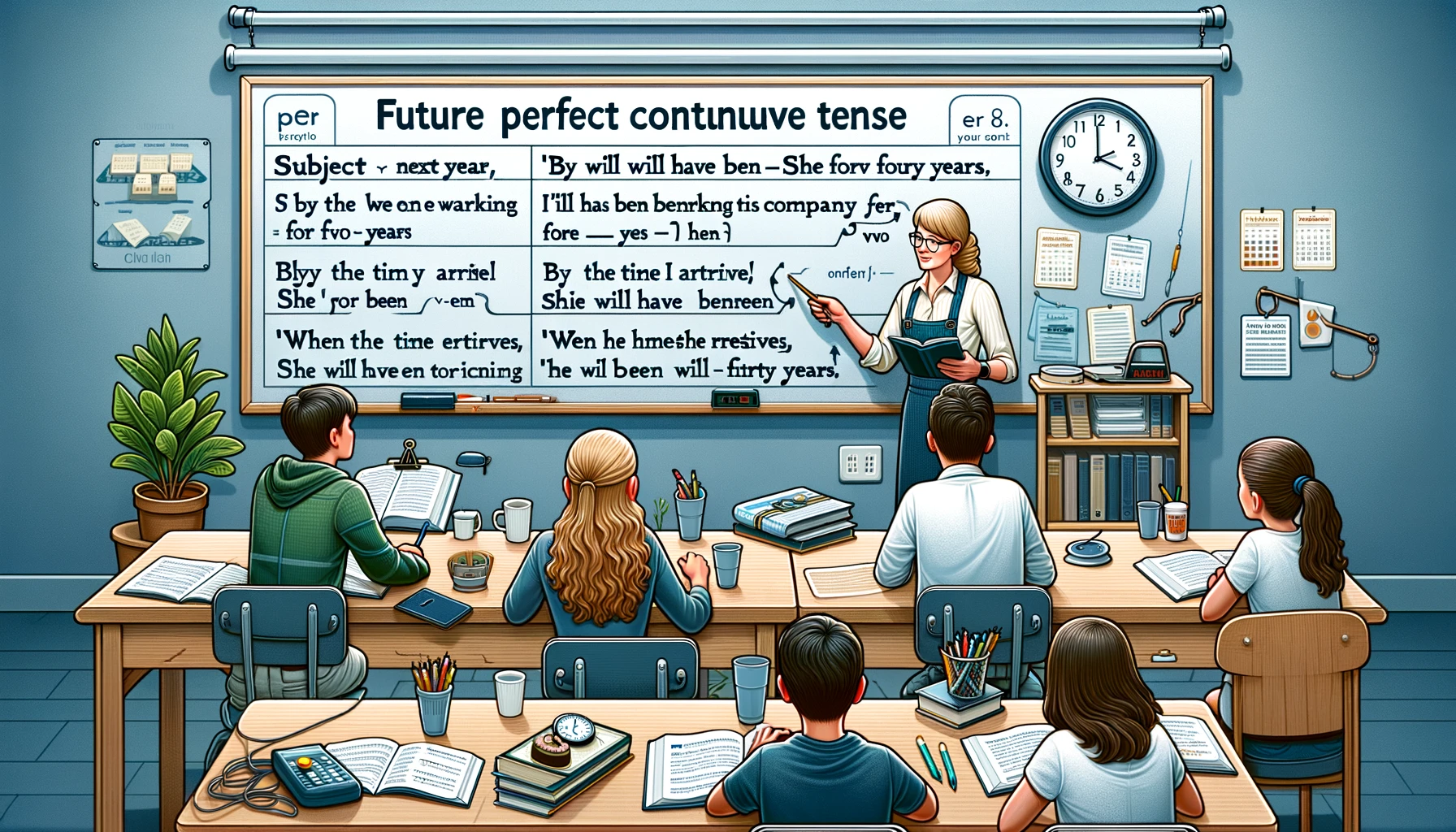
    The Future Perfect Continuous Tense is an advanced aspect of English grammar that combines elements of the future, perfect, and continuous tenses. It is used to describe actions that will have been ongoing for a period of time up to a specific point in the future.

    Definition

    The Future Perfect Continuous Tense describes actions that will continue up until a specific future moment. This tense emphasizes the duration of an activity that will be ongoing and completed at a certain future time.

    Uses

    The Future Perfect Continuous Tense is used in various contexts, including:

    1. Describing the Duration of an Action Up to a Future Point

    This tense highlights how long an action will have been happening by a specific future time.

    Examples:

    • By next year, I will have been working at this company for five years. (The action of working will have continued for five years by next year.)
    • By the time you arrive, she will have been cooking for two hours. (The action of cooking will have been ongoing for two hours by the time you arrive.)
    • When he retires, he will have been teaching for thirty years. (The action of teaching will have lasted for thirty years by the time he retires.)
    1. Expressing Planned Future Actions with Emphasis on Duration

    This tense is used to describe planned activities that focus on the duration up to a future point.

    Examples:

    • By December, they will have been traveling for six months. (The action of traveling will have been ongoing for six months by December.)
    • At the end of this course, you will have been learning English for a year. (The learning process will have continued for a year by the end of the course.)
    • By tomorrow evening, we will have been driving for ten hours. (The action of driving will have been in progress for ten hours by tomorrow evening.)
    1. Predicting Ongoing Actions Up to a Future Point

    It can be used to predict the duration of ongoing actions up to a specific time in the future.

    Examples:

    • When you see me next, I will have been studying for my exams. (The speaker predicts that the action of studying will have been ongoing.)
    • By the time he finishes, he will have been writing the report for a week. (The action of writing the report will have been in progress for a week.)
    • At the end of the day, she will have been waiting for four hours. (The action of waiting will have continued for four hours by the end of the day.)

    Pattern

    The grammatical pattern of the Future Perfect Continuous Tense involves the following structure:

    Subject + will have been + present participle (verb+ing)

    For example:

    • Affirmative: “I will have been studying for three hours.”
    • Negative: “She will not have been working here for long.”
    • Interrogative: “Will they have been traveling for a year?”

    Time Signals

    Common time signals used with the Future Perfect Continuous Tense include:

    • By [future time]
    • By the time
    • For [duration]
    • When

    Common Mistakes and How to Avoid Them

    Learners often make mistakes with the Future Perfect Continuous Tense. Here are some common errors and tips to avoid them:

    1. Incorrect Verb Form
      • Mistake: “I will have be studying.”
      • Correction: Use “been” correctly: “I will have been studying.”
      • Tip: Remember to use “been” after “will have” and before the present participle.
    2. Misplacing Time Signals
      • Mistake: “I will have been for two hours studying.”
      • Correction: Correctly place the time signal: “I will have been studying for two hours.”
      • Tip: Place time signals after the present participle for clarity.
    3. Confusing with Other Future Tenses
      • Mistake: “I will be studying for two hours.”
      • Correction: Use the correct tense for duration: “I will have been studying for two hours.”
      • Tip: Ensure the tense matches the emphasis on the duration up to a future point.

    Conclusion

    The Future Perfect Continuous Tense is a valuable tool for describing actions that will have been ongoing up to a specific point in the future. By understanding its structure, uses, and common time signals, learners can effectively communicate the duration of future activities. Avoiding common mistakes ensures clarity and precision in usage.

    Quiz

    Test your understanding of the Future Perfect Continuous Tense with this 10-question multiple-choice quiz. Choose the correct answer for each question.

    1. Which sentence correctly uses the Future Perfect Continuous Tense?

    2. Identify the correct use of Future Perfect Continuous Tense for a planned event:

    3. Which of these is not a time signal for the Future Perfect Continuous Tense?

    4. By next summer, they __________ (live) in this city for ten years.

    5. Which sentence correctly predicts an ongoing action up to a future point?

    6. What is the correct form to express a future action’s duration?

    7. Choose the sentence with the correct time signal:

    8. By the time he retires, how long will he have been teaching?

    9. Which sentence correctly uses the Future Perfect Continuous Tense?

    10. Identify the error: "By next week, they will have been finish the project."

  • Mastering The Future Continuous Tense: Rules, Examples, and Practice Questions

    Mastering The Future Continuous Tense: Rules, Examples, and Practice Questions

    The Future Continuous Tense
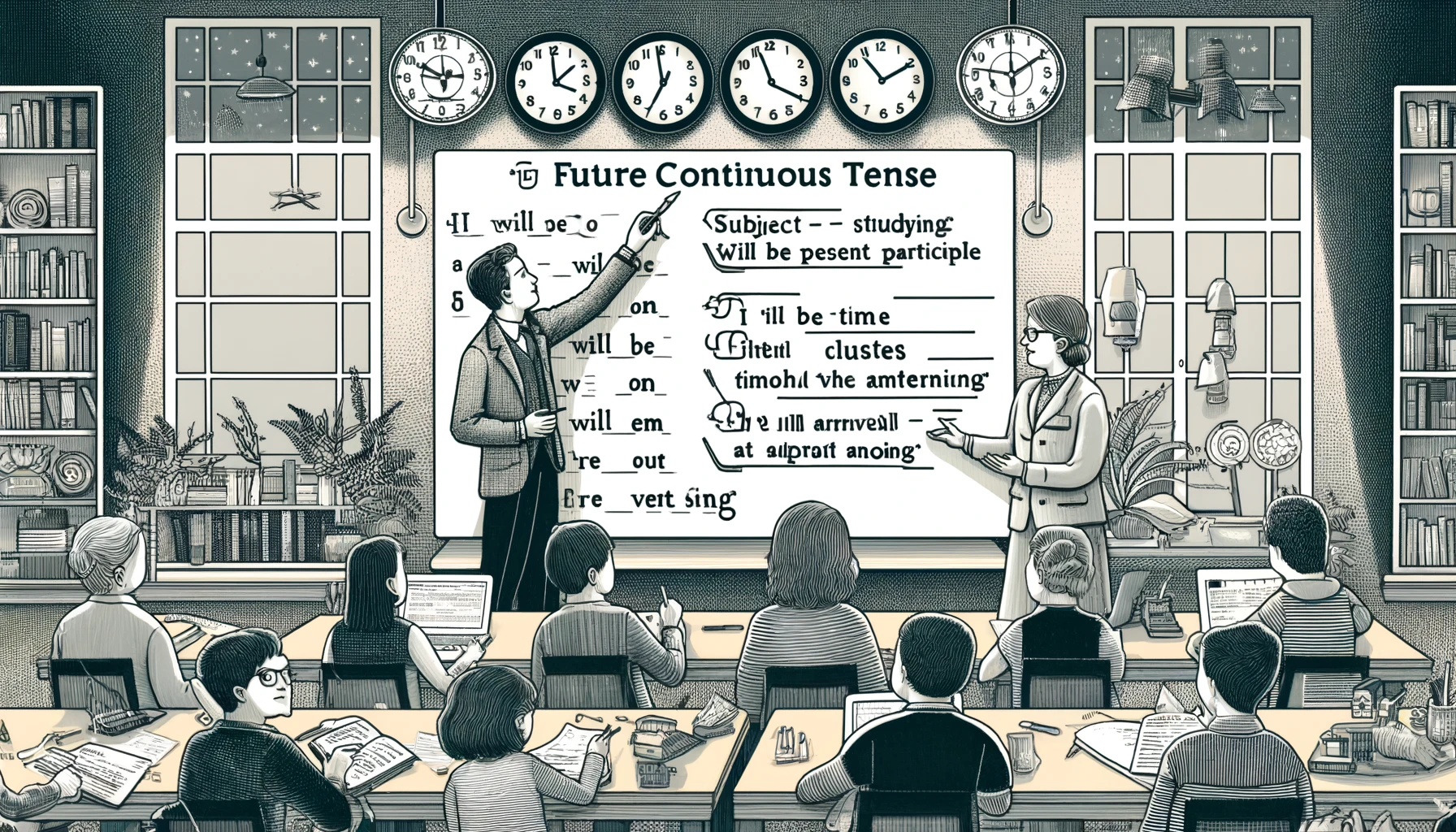
    The Future Continuous Tense is an essential aspect of English grammar that allows speakers to describe actions that will be ongoing at a specific point in the future. This tense is particularly useful for expressing future activities that are planned or expected to occur over a duration of time.

    Definition

    The Future Continuous Tense describes actions that will be happening at a particular moment in the future. It emphasizes the duration or continuity of an activity that will be in progress at a future time.

    Uses

    The Future Continuous Tense is used in various contexts, including:

    1. Actions in Progress at a Specific Future Time

     This tense indicates that an action will be ongoing at a particular future moment.

    Examples:

    • This time next week, I will be traveling to Japan. (The action of traveling will be happening at a specific future time.)
    • At 10 PM tonight, she will be working on her project. (The action of working will be happening at 10 PM.)
    • By tomorrow morning, they will be flying to New York. (The action of flying will be ongoing tomorrow morning.)
    1. Planned Future Activities

    It expresses activities that are already planned or arranged to happen in the future.

    Examples:

    • She will be meeting with the clients tomorrow afternoon. (The meeting is a scheduled activity that will take place in the future.)
    • We will be attending the conference next week. (Attending the conference is a planned activity for next week.)
    • He will be hosting a dinner party on Friday. (Hosting the dinner party is a pre-arranged event for Friday.)
    1. Predicting the Present

    Sometimes, it is used to speculate about what is currently happening, based on future knowledge.

    Examples:

    • They will be arriving at the airport right now. (Based on future plans, the speaker predicts the current activity.)
    • She will be having lunch at this moment. (The speaker assumes that she is currently having lunch based on her usual schedule.)
    • He will be studying for his exams now. (The speaker predicts that he is studying at the present moment, considering his upcoming exams.)

    Pattern

    The grammatical pattern of the Future Continuous Tense involves the following structure:

    Subject + will be + present participle (verb+ing)

    For example:

    • Affirmative: “I will be studying at 8 PM.”
    • Negative: “She will not be coming to the party.”
    • Interrogative: “Will they be joining us for dinner?”

    Time Signals

    Common time signals used with the Future Continuous Tense include:

    • At this time next week
    • Tomorrow at [specific time]
    • In the future
    • Next [day/week/month/year]

    Common Mistakes and How to Avoid Them

    Learners often make mistakes with the Future Continuous Tense. Here are some common errors and tips to avoid them:

    1. Incorrect Auxiliary Verb Usage
      • Mistake: “I am will be studying.”
      • Correction: Use “will be” correctly: “I will be studying.”
      • Tip: Remember that “will” is always followed by “be” and then the present participle.
    2. Misplacing Time Signals
      • Mistake: “I will be at this time next week studying.”
      • Correction: Correctly place the time signal: “At this time next week, I will be studying.”
      • Tip: Place time signals at the beginning or end of the sentence for clarity.
    3. Forgetting the Present Participle Form
      • Mistake: “She will be to cook dinner.”
      • Correction: Use the present participle form: “She will be cooking dinner.”
      • Tip: Always use the -ing form of the verb after “will be.”

    Conclusion

    The Future Continuous Tense is a versatile and useful tense for describing actions that will be ongoing at a specific future time, planned future activities, and speculating about the present based on future knowledge. By understanding its structure, uses, and common time signals, learners can effectively use this tense to communicate their future plans and predictions. Avoiding common mistakes ensures clarity and accuracy in usage.

    Test your understanding of the Future Continuous Tense with this 10-question multiple-choice quiz. Choose the correct answer for each question.

    1. Which sentence correctly uses the Future Continuous Tense?

    2. Choose the sentence with the correct time signal:

    3. Identify the correct use of Future Continuous Tense for a scheduled event:

    4. Choose the sentence that predicts a current action:

    5. Which of these is not a time signal for the Future Continuous Tense?

    6. Correct the mistake: "She will be sings in the choir."

    7. Which of the following sentences correctly uses the Future Continuous Tense to indicate an action in progress at a specific future time?

    8. How do you express a planned future activity using the Future Continuous Tense?

    9. Which sentence is predicting a current action based on future knowledge?

    10. Choose the sentence that correctly uses the Future Continuous Tense for a planned activity:

  • Mastering the Present Perfect Tense: Rules, Examples, and Practice Questions

    Mastering the Present Perfect Tense: Rules, Examples, and Practice Questions

    Definition

    The Present Perfect Tense is used to describe actions that have occurred at an unspecified time before now. The exact time is not important. This tense is also used to describe actions that began in the past and continue to the present.

    Uses

    1. Actions That Occurred at an Unspecified Time in the Past
      The Present Perfect Tense is used to express actions that happened at some point in the past, but the exact time is not mentioned.
      Examples:
      -I have visited Paris. (The speaker has visited Paris at some time in the past, but the specific time is not mentioned.)
      -They have read the book. (The action of reading the book happened at some point in the past, without specifying when.)
      -She has gone to the store. (She went to the store at an unspecified time in the past.)
    2. Actions That Started in the Past and Continue to the Present
      This tense is used to describe actions that began in the past and are still happening now or have an effect on the present moment.
      Examples:
      -She has lived here for ten years. (She started living here ten years ago and still lives here.)
      -We have known each other since childhood. (The relationship began in childhood and continues to the present.)
      -He has worked at this company since 2015. (He started working at the company in 2015 and still works there.)
    3. Completed Actions with Relevance to the Present
      The Present Perfect Tense is also used to describe past actions that have a connection to the present moment.
      Examples:
      -He has finished his homework. (He completed his homework at some point in the past, and now the homework is done.)
      -I have cleaned the house. (The house was cleaned at some point in the past, and it is now clean.)
      -They have made dinner. (Dinner was prepared at some point in the past, and it is now ready to be eaten.)

    Pattern

    The grammatical pattern of the Present Perfect Tense is as follows:

    • Affirmative: Subject + has/have + past participle
      • Example: “She has eaten.”
    • Negative: Subject + has/have + not + past participle
      • Example: “They have not seen.”
    • Interrogative: Has/Have + subject + past participle?
      • Example: “Have you been?”

    Time Signals

    Common time signals used with the Present Perfect Tense include:

    • Ever
    • Never
    • Already
    • Yet
    • Just
    • Recently
    • So far
    • Until now
    • For
    • Since

    Common Mistakes and How to Avoid Them

    1. Using the Simple Past Instead of Present Perfect
      • Mistake: “I visited Paris last year.”
      • Correction: “I have visited Paris.”
      • Tip: Use the Present Perfect when the time is not specified or is not important.
    2. Forgetting to Use ‘Has’ or ‘Have’
      • Mistake: “She eaten her lunch.”
      • Correction: “She has eaten her lunch.”
      • Tip: Always include ‘has’ or ‘have’ before the past participle.
    3. Confusing ‘For’ and ‘Since’
      • Mistake: “I have lived here since ten years.”
      • Correction: “I have lived here for ten years.”
      • Tip: Use ‘for’ to indicate the duration of time and ‘since’ to indicate the starting point.

    Conclusion

    The Present Perfect Tense is a versatile and essential part of English grammar. It is used to describe actions without specifying the exact time, actions that continue to the present, and completed actions with relevance to now. Remember the pattern, time signals, and common mistakes to master the Present Perfect Tense.

    Quiz

    Test your understanding of the Present Perfect Tense with this 10-question multiple-choice quiz. Choose the correct answer for each question.

    1. Which sentence is in the Present Perfect Tense?

    2. Choose the correct form: "She ___ (to be) to the new restaurant."

    3. Which time signal is commonly used with the Present Perfect Tense?

    4. Fill in the blank: "They ___ (to finish) their project."

    5. Identify the error: "I has visited London."

    6. Which sentence is correct?

    7. Choose the correct form: "We ___ (to not see) that film."

    8. Which sentence uses ‘since’ correctly?

    9. Fill in the blank: "___ you ever ___ (to try) sushi?"

    10. Identify the error: "They has just arrived."