Category: ASMR

  • Report Text

    Report Text

    What is it?

    If you want to share the result of systematic observation or analysis then report text is the suitable choice for you. The topic may range from natural, man-made to social phenomena.

    Social Function

    The social function of report text is to presents information about something, as it is.

    Generic Structure

    General classification
    It states classification of general aspect of thing; animal, public place, plant, etc which will be discussed in general.
    Description
    It describes the thing being discussed in detail; part per part, customs or deed for living creature and usage for materials.

    Language Features

    Introducing group or general aspect
    Using conditional logical connection e.g. when, so, etc
    Using simple present tense
    Using technical term e.g. water contains oxygen and hydrogen.
  • Explanation Text

    Explanation Text

    What is it?

    Explanation is a kind of text that informs the process relating to forming of natural, social, scientific and cultural phenomena. It explains ‘why’ or ‘how’ the phenomena happen or why things are similar or different. This text is frequently found in science, geography and history text books. You may often get confused between explanation text and procedure text. Explanation text says about how or why something occurs; while procedure text comes with the instruction on how something is accomplished.

    Social Function

    Shortly it can be said that an explanation text is used to tell how or why something happens or explains the process involved in the formation or working of natural or socio-cultural phenomena.

    Generic Structure

    General statement
    It states the phenomenon issue which will be explained.
    Sequenced explanation
    It is the main part of the text which explains a series of steps or events which interrelate to form the thing or a sequenced explanation of why or how the phenomenon issue occurs.

    Language Features

    Using chronological connection e.g.: first, next, then etc.
    Using simple present tense e.g. Seasons come to us regularly
    Using technical terms e.g.: evaporation, degradation
    Using action verbs e.g.: runs, develops, becomes
    Using Passive voice e.g. The greenhouse effect can be used to designate two different things Using conjunction which shows cause and effect e.g.: because of, due to, therefore, as a result, etc.
  • Procedure Text

    Procedure Text

    What is it?

    Procedure text is a text which guides you on how to make something entirely. The main structure of this text imperative sentence because it is actually a kind of instruction text. Procedure text typically mentions the ingredients or materials which are required, although sometimes they are omitted.

    Social Function

    The social function of this text is to describe how something is accomplished through a sequence of actions or steps.

    Generic Structure

    Goal/Aim
    Materials/Equipments
    Steps/Methods

    Language Features

    Using imperative sentences e.g. plug the cable into the socket and turn on your computer.
    Using action verb e.g. cut, put, dry, etc.
    Using temporal conjunction; firstly, secondly, next, finally, etc.
    Using simple present tense e.g. Having a kite flying is interesting and make it by self is easy
    Using adverb e.g. neatly, carefully, slowly, etc

    Learning the Language Skills and Components

    A. Listening

    B. Speaking

    Pair up, choose roles, and practice the dialogue with clear pronunciation and natural expression in front of the class!

    Stevy: Hey, Michelle, I tried a new recipe yesterday. Want to hear it?

    Michelle: Sure, Stevy! What did you make?

    Stevy: It’s a simple omelet. First, I cracked two eggs into a bowl and whisked them with a pinch of salt and pepper. Then, I heated a pan with a little bit of oil.

    Michelle: Sounds good so far. What’s next?

    Stevy: Once the pan was hot, I poured in the eggs. I let them cook for a minute, and then I added some chopped tomatoes, onions, and cheese on top. I folded the omelet in half and cooked it for another minute.

    Michelle: That’s easy! I think I can do that. I made something too—fried rice. I just cooked some rice, then sautéed garlic and onions in a pan. I added some chopped carrots and peas, and once they were soft, I mixed in the rice with a bit of soy sauce.

    Stevy: That sounds delicious, Michelle! How long did it take?

    Michelle: About 20 minutes. It’s quick and perfect for a busy day. We should cook together sometime!

    Stevy: Definitely! That will be fun trying out each other’s recipes.

  • Analytical Exposition Text

    Analytical Exposition Text

    What is it?

    An analytical exposition is a sort text which is meant to persuade the readers or listeners that something is the case or important. In persuading the readers or listeners, some supporting ideas or arguments on why the writer’s opinion is important, are presented. Since analytical exposition is popular among scientists, academic community and educated people then you can find this type of text in scientific books, journals, magazines, newspaper articles, academic speech or lectures, research report etc.

    You certainly know that both analytical exposition and hortatory exposition are grouped as argumentative essay. Both present argument to support the thesis. But actually you can see the difference by seeing the generic structure. Analytical exposition ends with paragraph to strengthen the thesis or reiteration while hortatory makes a recommendation for the readers.

    Social Function

    The social function of analytical exposition text is to persuade the readers or listeners that something is the case or important.

    Generic Structure

    Thesis
    It states the writer’s point of view about the topic being discussed.
    Arguments
    It consists of point and elaboration. The arguments to support the thesis are developed here.
    Arguments are actually the core an analytical exposition. Their absence will just talk nothing, as a thesis must be evaluated.
    Reiteration
    In this part the writer restates the thesis, just like a conclusive paragraph from the previous statement.
    Language Features
    Using mental processes to state what the writer or speaker thinks or feels about something e.g.: realize, feel etc.
    Using Simple Present Tense e.g. About 50 thousands people die every year in Britain as direct result of smoking.
    Using enumeration is sometimes necessary to show the list of given arguments e.g.: firstly, secondly, finally, etc.
    Using evaluative language is important to persuade people to agree with the writer’s opinion e.g. valuable, important, better, worst, true, important, clear, believe, obvious etc.
    Using emotive words e.g.: worried, alarmed etc.
    Using causal conjunction e.g.: because, therefore, consequently, etc.
    Using modal verb e.g. We must preserve, etc.
    Using passive voice e.g. Ninety percent of lung cancers are caused by smoking

    Example

    Deforestation and Its Impact on Our Environment

    Deforestation is one of the most serious environmental problems in the world today. It refers to the large-scale cutting down of forests for human activities such as farming, housing, and industry. This issue needs serious attention because forests play an important role in keeping the environment balanced and supporting life on Earth.

    Firstly, deforestation causes serious damage to natural ecosystems. Forests are home to many animals and plants that depend on trees for food and shelter. When forests are destroyed, these living things lose their habitats and may not survive. For example, many wild animals are forced to move closer to human areas, which often leads to conflict and danger for both animals and people.

    Moreover, deforestation contributes to climate change. Trees help absorb carbon dioxide from the air and produce oxygen. When trees are cut down, more carbon dioxide stays in the atmosphere, which increases global warming. In addition, fewer trees mean higher temperatures and less fresh air. As a result, the weather becomes more extreme, with more floods, droughts, and heat waves.

    In addition, deforestation affects human life directly. Forests help prevent floods by absorbing rainwater and keeping the soil strong. However, when trees are removed, the soil becomes weak and easy to wash away. Therefore, areas without forests are more likely to experience floods and landslides, especially during heavy rain. This situation can destroy homes, farms, and roads.

    However, deforestation often continues because people focus only on short-term benefits, such as economic growth and land use. While development is important, ignoring environmental damage can create bigger problems in the future. Protecting forests does not mean stopping progress, but it means managing natural resources wisely.

    In conclusion, deforestation is a serious environmental issue because it harms ecosystems, increases climate problems, and threatens human safety. For these reasons, it deserves careful attention and responsible action to ensure a healthier environment for present and future generations.

    Analysis of the Text

    Title: Deforestation and Its Impact on Our Environment


    1. Thesis

    Paragraph 1

    “Deforestation is one of the most serious environmental problems in the world today… supporting life on Earth.”

    Analysis:
    In this part, the writer:

    • Introduces the topic of deforestation

    • States the writer’s position/opinion that deforestation is a serious environmental problem

    • Briefly explains why this issue is important

    ➡️ This paragraph functions as the thesis, which is the main opinion that will be supported in the following paragraphs.

    2. Arguments

    Argument 1

    Paragraph 2

    “Firstly, deforestation causes serious damage to natural ecosystems…”

    Analysis:

    • Explains the impact of deforestation on animals and plants

    • Is supported by a simple example about the loss of habitats

    • Uses the logical connector firstly

    ➡️ This paragraph is the first argument.

    Argument 2

    Paragraph 3

    “Moreover, deforestation contributes to climate change…”

    Analysis:

    • Explains the relationship between deforestation and global warming

    • Provides logical reasons about the role of trees in absorbing carbon dioxide

    • Uses the connectors moreover and in addition

    ➡️ This paragraph functions as the second argument.

    Argument 3

    Paragraph 4

    “In addition, deforestation affects human life directly…”

    Analysis:

    • Explains the direct impact of deforestation on human life

    • Is supported by examples of floods and landslides

    • Uses the logical connectors in addition and therefore

    ➡️ This paragraph is the third argument.

    Counter-Argument (Optional)

    Paragraph 5

    “However, deforestation often continues because people focus only on short-term benefits…”

    Analysis:

    • Shows another point of view (economic reasons)

    • Still maintains the writer’s position

    • Uses the connector however

    ➡️ This paragraph strengthens the argument by showing an opposing view.

    Note:

    In an analytical exposition text, an opposing view is included to show that the writer recognizes different opinions on the issue. It helps make the argument more balanced and logical. In this text, paragraph 5 explains why some people support deforestation for economic reasons, but the writer does not agree with this view. Instead, it is used to strengthen the main argument by responding to the opposite side.

    3. Reiteration

    Paragraph 6

    “In conclusion, deforestation is a serious environmental issue…”

    Analysis:

    • Restates the writer’s opinion

    • Summarizes the arguments without adding new ideas

    • Uses the connector in conclusion

    ➡️ This paragraph functions as the reiteration, which restates the thesis.

    ✅ Structure Summary

    Generic Structure Paragraph
    Thesis Paragraph 1
    Arguments Paragraphs 2–5
    Reiteration Paragraph 6

    Quiz

  • Discussion Text

    Discussion Text

    What is it?

    Discussion is a kind of text which presents a problematic discourse. Discussion text will see and elaborate the problem or issue from at least two different points of view. It presents pro and contra opinion on the issue, one side agrees with the issue while the other disagrees. The different point of views on the generic structure is actually the core of the discussion text which differentiates from the other text types. The two different points of view not only must be treated fairly but also be supported with reasons and evidence. If the writer chooses to support one particular view in the conclusion, plausible reasons must be given then.

    We can discover various perspectives to get the meet point between two different ideas before coming to the conclusion. Therefore discussion is the effective method to calm down any friction and different thought and perception in many social activities.

    Social Function

    The function of discussion text is to present at least two points of views about an issue or controversial topic.

    Generic Structure

    Issue
    It contains an opening statement presenting the issue which is going to be discussed. The issue must drive problematic discussion.
    Arguments for (pro)
    It provides arguments to support the pro opinion. It is completed with supporting evidence/examples.
    Arguments Against (cons)
    It states the arguments which disagree or con to the stated issue. These contradictive arguments are also supported with evidence/examples.
    Conclusion or Recommendation

    Language Features

    Using thinking verb e.g.: feel, hope, believe, etc.
    Using additive, contrastive and causal This paragraph says the writer’ conclusion or recommendation for the discussed issue on how people should concern with it.
    connection e.g.: in addition, similarly, on the hand, however, therefore, consequently, etc.
    Using modal e.g.: must, should, could, may, etc.
    Using adverb of manner e.g.: deliberately, hopefully, etc
    Using simple present tense e.g. Like all animals, we need clean air and water, food and shelter for survival.
  • Review Text

    Review Text

    What is it?

     Review text is actually opinion about events or art works. It presents critical analysis on the art work, film, book, song, exhibition, etc. for readers or public audiences.

    The social function certainly goes along with its definition that is to criticize or evaluate an art work or event for a public audience.

    Social Function
    The social function certainly goes along with its definition that is to criticize or evaluate an art work or event for a public audience.

    Generic Structure

    1. Orientation
    It contains the background information on the text.
    2. Interpretative Recount
    In presents the summary of the art work (including the characters and the plot).
    3. Evaluation
    It is the concluding statement about the art work: judgment, opinion or recommendation.
    4. Evaluative Summation
    It is the last opinion which contains the appraisal or punch line of the art work being reviewed.

    Language Features

    1. Focusing on specific participants
    2. Using compound and complex sentences
    3. Using adjectives/phrases of appraisal e.g.: bad, good, etc .
    4. Using metaphorical expressions
  • How to Master English Writing Skill Easily

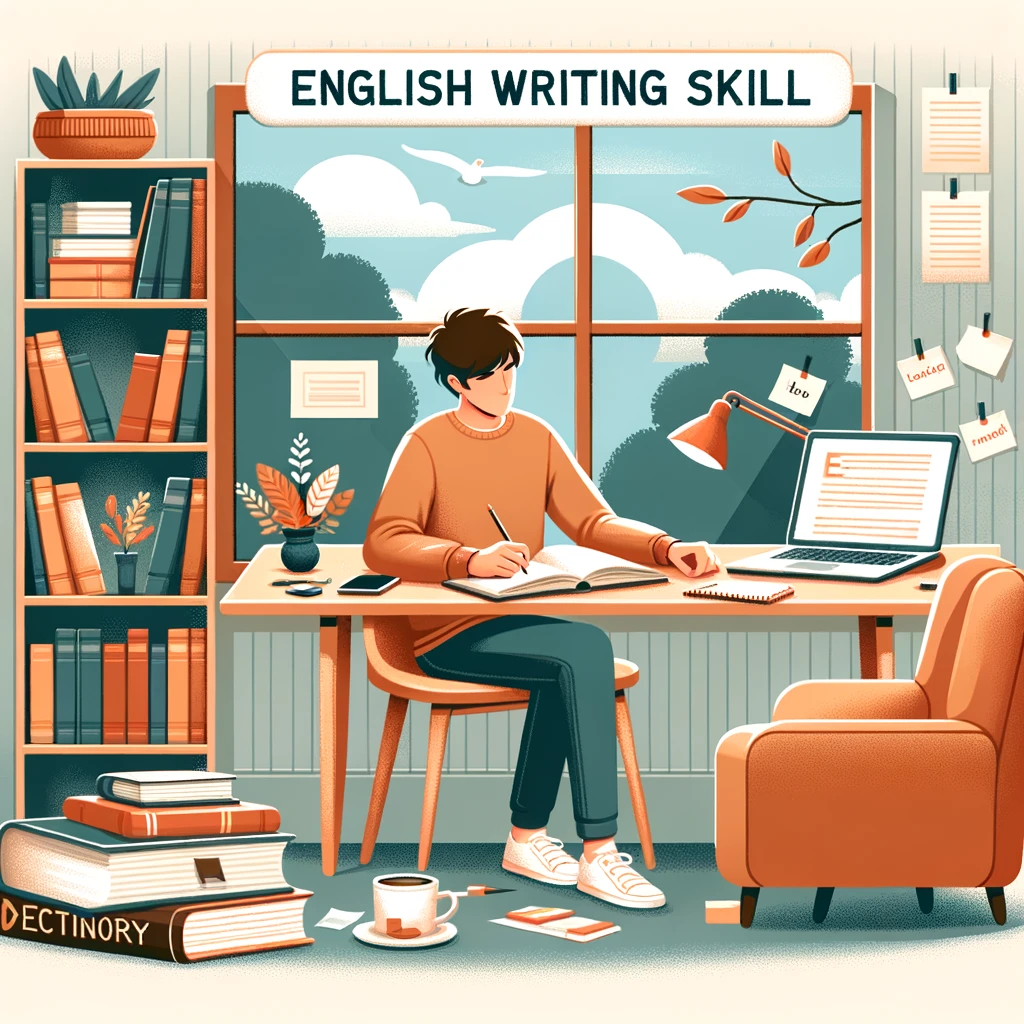
    How to Master English Writing Skill Easily

    How to Master English Writing Skill Easily

    Mastering English writing skills is essential for effective communication in both personal and professional settings. Whether you’re writing essays, reports, emails, or creative pieces, improving your writing can open up new opportunities and help you express yourself more clearly. This article provides practical tips to help you enhance your English writing skills effortlessly.

    1. Set Clear Writing Goals

    Establishing clear goals is the first step towards improving your writing skills. Determine why you want to enhance your writing. Are you preparing for exams, aiming to publish articles, or looking to improve your professional communication? Having clear objectives will help you stay focused and motivated.

    2. Read Regularly

    Reading regularly exposes you to different writing styles, vocabulary, and structures. It can inspire your writing and provide you with new ideas. Read a variety of genres, including fiction, non-fiction, newspapers, and academic journals, to broaden your understanding of different writing techniques.

    3. Expand Your Vocabulary

    A rich vocabulary allows you to express yourself more precisely and creatively. Make it a habit to learn new words daily. Use flashcards, vocabulary apps, or word lists to reinforce your learning. Practice using new words in sentences to better retain them.

    4. Practice Writing Daily

    Like any skill, regular practice is crucial for improvement. Set aside time each day for writing. Start with short paragraphs and gradually increase the length and complexity of your pieces. Write about topics that interest you to make the practice more enjoyable.

    5. Develop a Writing Routine

    Establishing a writing routine helps you develop discipline and consistency. Find a time of day when you’re most productive and make it your designated writing time. Create a comfortable and distraction-free writing environment to enhance your focus and creativity.

    6. Use Writing Prompts

    Writing prompts can stimulate your creativity and help you overcome writer’s block. Use prompts to practice different writing styles and genres. You can find writing prompts online or create your own based on current events, personal experiences, or fictional scenarios.

    7. Outline Your Ideas

    Before you start writing, outline your ideas to organize your thoughts and structure your piece. An outline helps you stay on track and ensures that your writing is coherent and logical. Include key points, sub-points, and examples in your outline.

    8. Write Multiple Drafts

    Writing multiple drafts allows you to refine your ideas and improve the clarity and flow of your writing. Don’t be afraid to make significant changes between drafts. Focus on content in the first draft, then refine the structure, language, and grammar in subsequent drafts.

    9. Seek Feedback

    Feedback from others can provide valuable insights into your writing strengths and areas for improvement. Share your work with teachers, peers, or writing groups. Be open to constructive criticism and use it to enhance your writing skills.

    10. Edit and Proofread

    Editing and proofreading are essential steps in the writing process. After completing a draft, take a break before revising to approach your work with fresh eyes. Check for grammar, punctuation, and spelling errors, and ensure that your writing is clear and concise.

    11. Study Grammar and Style

    A strong grasp of grammar and writing style enhances the readability and professionalism of your writing. Review grammar rules and practice using them correctly. Study different writing styles and learn how to adapt your writing to suit various purposes and audiences.

    12. Use Writing Tools

    Leverage writing tools and resources to improve your writing. Grammar checkers, style guides, and thesauruses can help you identify errors and enhance your language use. Writing apps and software can also provide writing prompts, templates, and organizational tools.

    13. Join a Writing Group

    Joining a writing group can provide support, motivation, and constructive feedback. Writing groups offer opportunities to share your work, receive feedback, and learn from others. Online writing communities and forums can also be valuable resources.

    14. Read Aloud

    Reading your writing aloud helps you identify awkward sentences, errors, and areas that need improvement. It also allows you to hear the flow and rhythm of your writing. Make a habit of reading your drafts aloud during the revision process.

    15. Be Patient and Persistent

    Mastering writing skills takes time and effort. Be patient with yourself and stay persistent. Celebrate small achievements along the way and keep practicing regularly. Remember that every writer faces challenges, and improvement comes with consistent effort.

    Conclusion

    Improving your English writing skills can be a rewarding journey that enhances your ability to communicate effectively. By setting clear goals, practicing regularly, and seeking feedback, you can master this essential skill with ease. Remember, the key to improvement is consistency and dedication. Start writing today and watch your skills grow!
  • How to Master English Reading Skill Easily

    How to Master English Reading Skill Easily

    How to Master English Reading Skill Easily

    Reading is a fundamental skill that can significantly enhance your understanding and use of the English language. Whether you’re reading for pleasure, academic purposes, or professional development, mastering English reading skills can open up a world of opportunities. This article will guide you through practical steps to improve your reading skills effortlessly.

    1. Set Clear Goals

    Setting clear goals is crucial for mastering any skill. Determine why you want to improve your reading skills. Are you preparing for an exam, aiming to read English literature, or looking to enhance your professional communication? Your goals will guide your reading choices and keep you motivated.

    2. Build a Reading Habit

    Consistency is key to improvement. Set aside a specific time each day for reading. It could be 20 minutes in the morning, during lunch breaks, or before bed. Regular reading will gradually improve your vocabulary, comprehension, and speed.

    3. Choose the Right Materials

    Select reading materials that interest you and are appropriate for your level. If you’re a beginner, start with simple texts like children’s books or graded readers. As you progress, move on to more complex materials like newspapers, novels, and academic articles.

    4. Expand Your Vocabulary

    A rich vocabulary is essential for understanding and enjoying English texts. Make a habit of noting down unfamiliar words and looking them up. Use flashcards, vocabulary apps, or word lists to reinforce your learning. Try to use new words in your writing and speaking to better retain them.

    5. Practice Active Reading

    Active reading involves engaging with the text. Ask questions, make predictions, and summarize what you’ve read. Highlight key points and take notes. This will help you understand and remember the material better.

    6. Improve Your Comprehension Skills

    To enhance comprehension, practice reading various types of texts, including fiction, non-fiction, and academic articles. Summarize paragraphs or chapters in your own words. Discuss what you’ve read with others or write about it to deepen your understanding.

    7. Use Reading Strategies

    Employ reading strategies like skimming and scanning. Skimming helps you get the gist of the text quickly, while scanning allows you to find specific information. These techniques are particularly useful for exams and professional reading.

    8. Read Aloud

    Reading aloud can improve your pronunciation, fluency, and comprehension. It also helps you become more comfortable with the rhythm and intonation of English. Pair this with listening to native speakers to mimic their accents and speech patterns.

    9. Join a Reading Group

    Joining a reading group or book club can provide motivation and make reading more enjoyable. It offers opportunities to discuss books, share insights, and get different perspectives on the material. Online forums and social media groups can also be great resources.

    10. Use Technology

    Leverage technology to enhance your reading skills. E-readers, audiobooks, and reading apps can make reading more accessible and enjoyable. Many apps offer features like instant definitions, translations, and personalized reading plans.

    11. Take Notes

    While reading, jot down important points, new words, and your thoughts about the text. This helps reinforce what you’ve learned and makes it easier to review later. Digital note-taking apps can be particularly useful for organizing your notes.

    12. Read a Variety of Genres

    Expose yourself to different genres, such as fiction, non-fiction, poetry, and technical writing. Each genre offers unique vocabulary and structures that can broaden your understanding of the language.

    13. Practice Regularly

    Like any skill, regular practice is essential for improvement. Challenge yourself with different types of texts and gradually increase the difficulty level. Track your progress and celebrate your achievements to stay motivated.

    14. Seek Feedback

    Ask for feedback from teachers, peers, or language exchange partners. Constructive criticism can help you identify areas for improvement and refine your reading strategies.

    15. Be Patient and Persistent

    Mastering English reading skills takes time and effort. Be patient with yourself and stay persistent. Celebrate small victories along the way and keep pushing forward.

    Conclusion

    Improving your English reading skills can be a rewarding and enjoyable journey. By setting clear goals, building a reading habit, and using effective strategies, you can master this essential skill with ease. Remember, the key is consistency and practice. So, pick up a book, start reading, and watch your skills grow!

  • How to Master English Speaking Skill Easily

    How to Master English Speaking Skill Easily

    How to Master English Speaking Skill Easily

    Mastering English speaking skills is a crucial aspect of becoming fluent in the language. Being able to speak confidently and clearly can open up numerous opportunities in both personal and professional spheres. Here are some effective strategies to help you master English speaking skills easily.

    1. Practice Regularly

    Consistency is Key

    The most effective way to improve your speaking skills is to practice regularly. Consistency helps in reinforcing what you’ve learned and building your confidence. Set aside time each day to practice speaking, even if it’s just for a few minutes.

    Tips:

    • Practice speaking aloud to yourself.
    • Record your speech and listen to it to identify areas for improvement.
    • Set daily or weekly goals for your speaking practice.

    2. Engage in Conversations

    Real-life Practice

    Engaging in conversations with native speakers or fellow learners is one of the best ways to improve your speaking skills. Real-life practice allows you to use new vocabulary and grammatical structures in a meaningful context, making them easier to remember.

    Tips:

    • Join language exchange programs or conversation clubs.
    • Find a speaking partner who is also learning English.
    • Participate in group discussions or debates.

    3. Use Language Learning Apps

    Leverage Technology

    Language learning apps can be a great resource for improving your speaking skills. Many apps offer interactive speaking exercises, pronunciation guides, and instant feedback, which can help you improve quickly.

    Tips:

    • Use apps like Duolingo, Babbel, or Rosetta Stone.
    • Take advantage of speech recognition features to improve your pronunciation.
    • Use apps consistently to track your progress.

    4. Watch Movies and TV Shows

    Learn Through Entertainment

    Watching movies and TV shows in English can help you improve your speaking skills by exposing you to natural speech patterns, intonation, and pronunciation. Pay attention to how native speakers use expressions and idioms in different contexts.

    Tips:

    • Choose movies or shows with clear dialogue.
    • Mimic the speech of characters to practice pronunciation and intonation.
    • Use subtitles to understand the context and meaning of new words.

    5. Listen to Podcasts and Audiobooks

    Enhance Listening and Speaking

    Listening to podcasts and audiobooks can improve your speaking skills by exposing you to different accents, speech speeds, and conversational styles. Repeat phrases and sentences you hear to practice your pronunciation and fluency.

    Tips:

    • Choose podcasts and audiobooks on topics that interest you.
    • Pause and repeat difficult sections to practice speaking.
    • Try to mimic the speech patterns of the speakers.

    6. Read Aloud

    Practice Pronunciation

    Reading aloud is an excellent way to practice your pronunciation and improve your fluency. It helps you get used to the rhythm and flow of the English language, making it easier to speak naturally.

    Tips:

    • Read a variety of texts, including books, articles, and dialogues.
    • Focus on your pronunciation and intonation.
    • Record yourself reading aloud and listen for areas to improve.

    7. Learn and Use New Vocabulary

    Expand Your Lexicon

    Expanding your vocabulary is essential for effective communication. Make a habit of learning new words and phrases daily, and try to use them in your conversations.

    Tips:

    • Keep a vocabulary journal to track new words.
    • Learn words in context to understand their usage.
    • Use new vocabulary in sentences to reinforce your memory.

    8. Focus on Pronunciation and Accent

    Master the Sounds

    Good pronunciation is crucial for clear communication. Focus on mastering the sounds of English and practicing difficult words and phrases. Understanding different accents can also help you become a more effective communicator.

    Tips:

    • Use online resources to learn about phonetics and pronunciation.
    • Practice difficult sounds and words regularly.
    • Listen to speakers from different English-speaking countries.

    9. Join Public Speaking Groups

    Build Confidence

    Joining public speaking groups such as Toastmasters can help you build confidence and improve your speaking skills. These groups provide a supportive environment where you can practice speaking in front of others and receive constructive feedback.

    Tips:

    • Attend regular meetings and participate actively.
    • Take on speaking roles and challenges.
    • Learn from the feedback and experiences of other members.

    10. Practice with Language Tutors

    Personalized Guidance

    Working with a language tutor can provide personalized guidance and help you focus on specific areas of improvement. Tutors can offer tailored exercises, feedback, and support to help you achieve your speaking goals.

    Tips:

    • Choose a tutor who is a native speaker or highly proficient in English.
    • Set clear goals and communicate them to your tutor.
    • Take advantage of one-on-one sessions to practice speaking extensively.

    By incorporating these strategies into your daily routine, you can master English speaking skills with ease and confidence. Remember, practice and consistency are key to becoming a fluent and effective speaker. Happy learning!

  • How to Enlarge and Reduce the Appearance of a Website Page on a Computer/Laptop Screen

    The following is a way to enlarge and reduce the appearance of website pages on a computer/laptop screen. If you want to enlarge the display, you just press the CTRL+ button on your computer/laptop keyboard and if you want to reduce, press CTRL- on your computer/laptop keyboard. Hope it is useful.