


Early Childhood Development: Essential Skills Every Child Needs to Grow
To listen to the audio version of this article, simply press the audio button below.
The early years of a child’s life are truly extraordinary. During this time, the brain develops faster than at any other stage, creating millions of neural connections every second. While parents often celebrate big milestones like a child’s first word or first step, real growth happens quietly—through small, everyday experiences that shape a child’s future.
Early childhood development is not about rushing children to read, write, or count as quickly as possible. Instead, it is about helping them build essential life skills that allow them to explore the world with confidence and curiosity. These skills include physical development, cognitive abilities, social-emotional growth, and language skills. Together, they form the foundation for lifelong learning.
As children grow, one of the first things we notice is their physical development. From crawling and walking to running and jumping, children learn to control their bodies and explore their surroundings. These movements, known as gross motor skills, help build strength, balance, and coordination. At the same time, children develop fine motor skills, which involve smaller movements like holding a crayon, picking up small objects, or buttoning clothes. These skills are important for daily activities and later academic tasks such as writing.
Alongside physical growth, children are constantly learning how to think and solve problems. Cognitive development begins with curiosity. Young children naturally explore their environment by asking questions and experimenting with different objects. Simple activities like stacking blocks, sorting toys, or playing puzzles help them understand patterns, relationships, and basic math concepts. Through these experiences, children learn how to think logically and solve problems step by step.
Equally important is social-emotional development, which shapes how children understand themselves and interact with others. Young children often experience strong emotions but may not know how to manage them. By learning to name their feelings, such as “happy,” “sad,” or “frustrated,” they begin to develop self-control and emotional awareness. Over time, they also learn empathy—the ability to understand and care about others’ feelings. Skills like sharing, taking turns, and resolving conflicts help children build positive relationships and succeed in social environments.
Language and communication also play a vital role in early development. Before children can speak, they first learn to understand language. This is known as receptive language. Later, they begin to express their thoughts through words, known as expressive language. Reading books, telling stories, and having daily conversations help children build vocabulary and communication skills. Simple interactions, such as responding when a child points or speaks, strengthen brain connections and teach them how communication works.
As children continue to grow, they develop executive function skills—mental abilities that help them focus, remember, and control their behavior. For example, when a child follows instructions or completes a task, they are using working memory and concentration. When they wait their turn or think before acting, they are practicing self-control. These skills are essential for success in school and everyday life.
All of these areas of development are naturally supported through play. For children, play is not just fun—it is how they learn best. When children engage in pretend play, they use imagination, language, and social skills. When they build with blocks or solve puzzles, they practice problem-solving and coordination. Play allows children to explore, make mistakes, and learn in a safe and enjoyable way.
In the end, early childhood development is a journey made up of many small steps. Each new experience helps shape a child’s brain and builds a strong foundation for the future. By supporting all areas of development, parents and caregivers help children grow into confident, curious, and capable individuals.
Every child develops at their own pace, and that is perfectly normal. What matters most is providing a safe, supportive, and stimulating environment where children feel encouraged to learn and grow. With love, patience, and guidance, parents can give their children the best possible start in life.
Simple Tips for Parents to Support Early Childhood Development
🧸 1. Use Daily Activities as Learning Moments
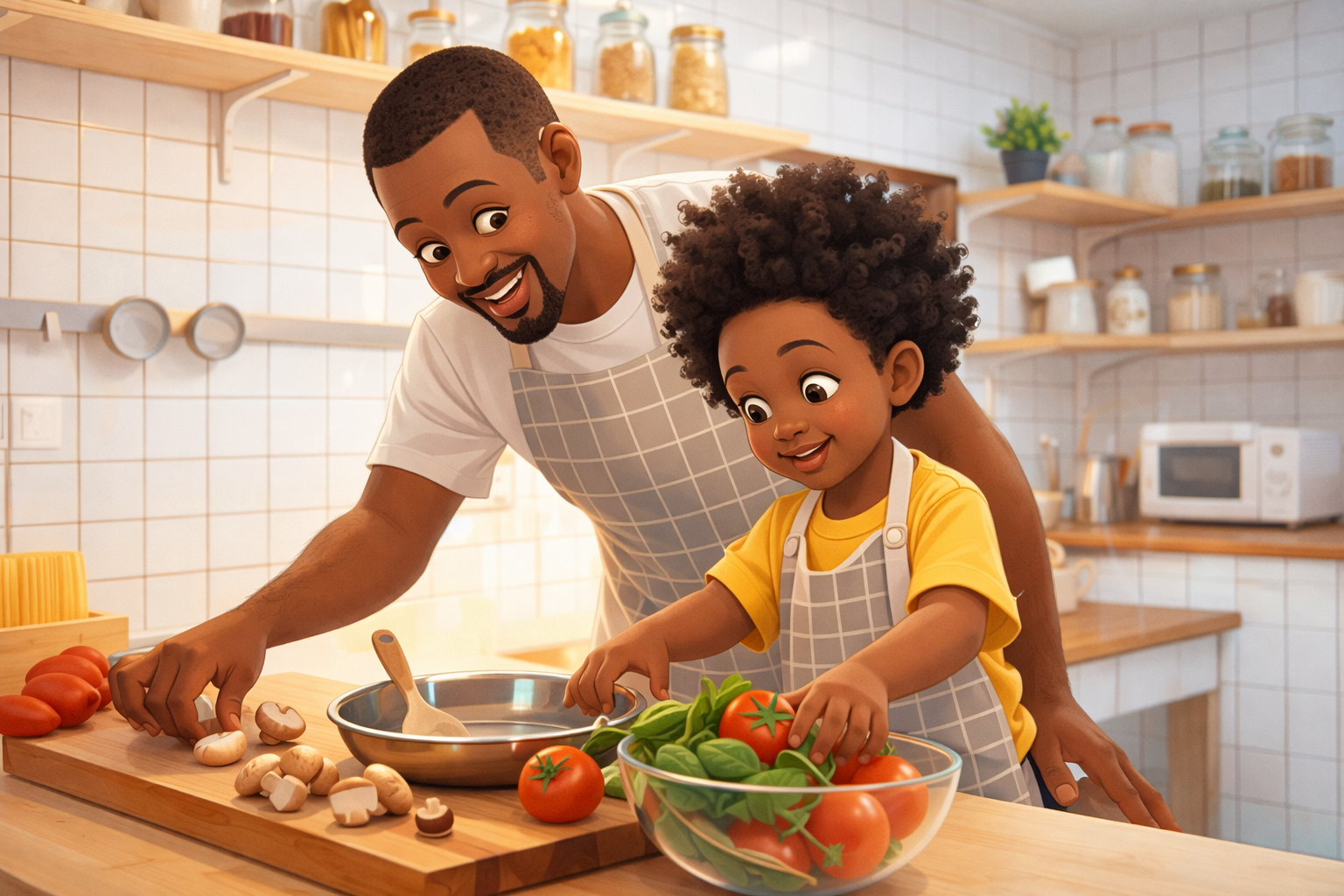
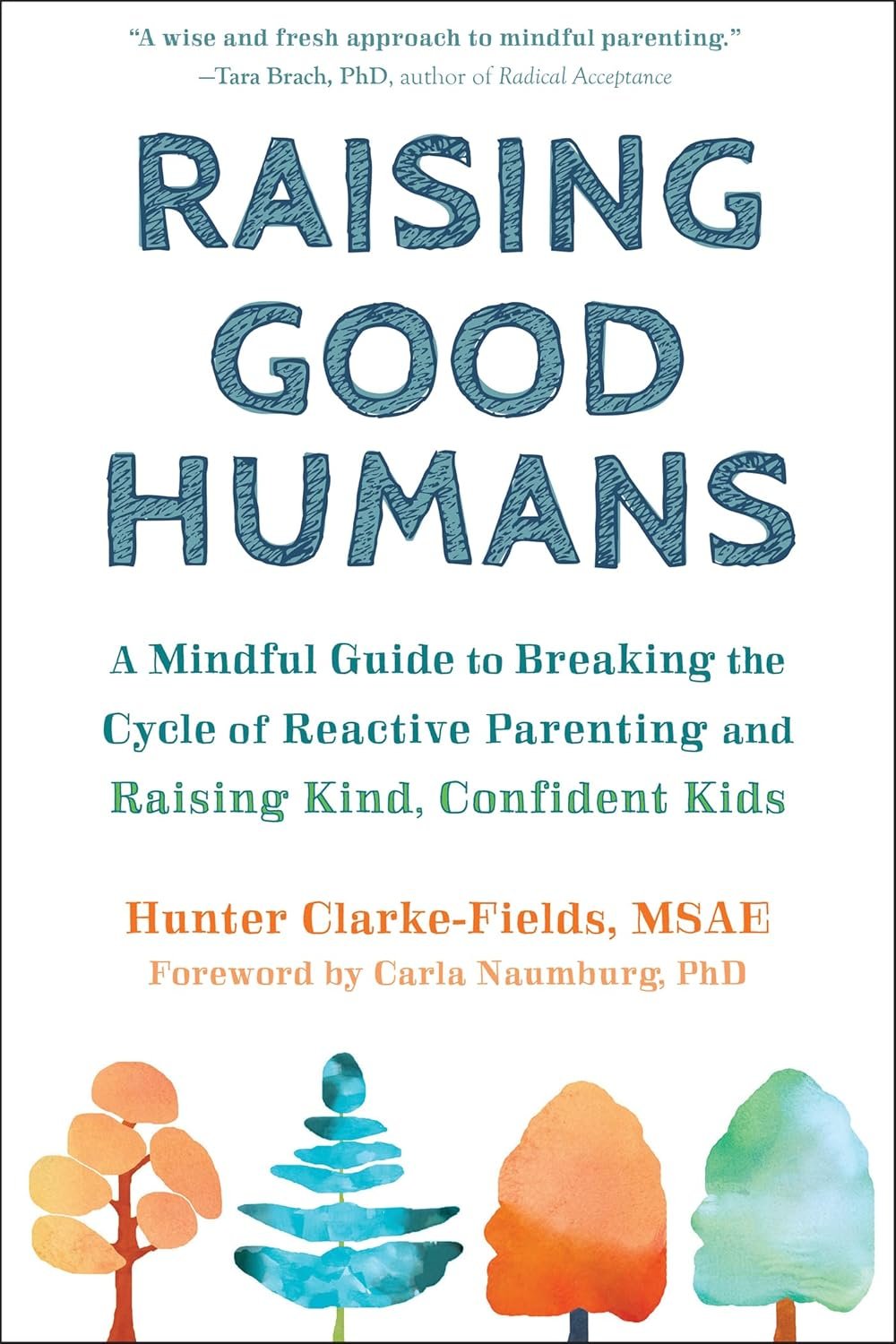
Parent-child cooking activity (Click on the picture to get related products.)
Turn simple daily routines like cooking, cleaning, or shopping into valuable learning opportunities for your child. Instead of doing everything yourself, invite your child to join and give them small, simple tasks they can handle. Talk to them about what you are doing, name objects, and ask easy questions to keep them engaged. These interactions help build language skills, thinking ability, and confidence in a natural way. By involving your child in everyday activities, you help them learn while spending meaningful time together.
📖 2. Read Together Every Day

Bedtime storytelling activity (Click on the picture to get related products)
Reading together every day is a simple but powerful way to support your child’s development. It helps build language skills, expand vocabulary, and spark imagination through stories and pictures. Even just a few minutes of reading each day can make a big difference in your child’s learning. Make reading a fun and relaxed activity by using expressions, pointing at pictures, and asking simple questions. Over time, this daily habit strengthens your child’s focus and creates a special bonding moment between you and your child.
🗣️ 3. Talk and Listen to Your Child

Emotional bonding activity (Click on the picture to get related products)
Have real conversations with your child every day, even about simple things. Listen carefully to what they say and show genuine interest in their thoughts and feelings. Respond in a supportive way to help them feel heard and valued. These interactions help build strong communication skills and boost your child’s confidence. Over time, your child will feel more comfortable expressing ideas, asking questions, and connecting with others.
🎨 4. Encourage Play and Creativity
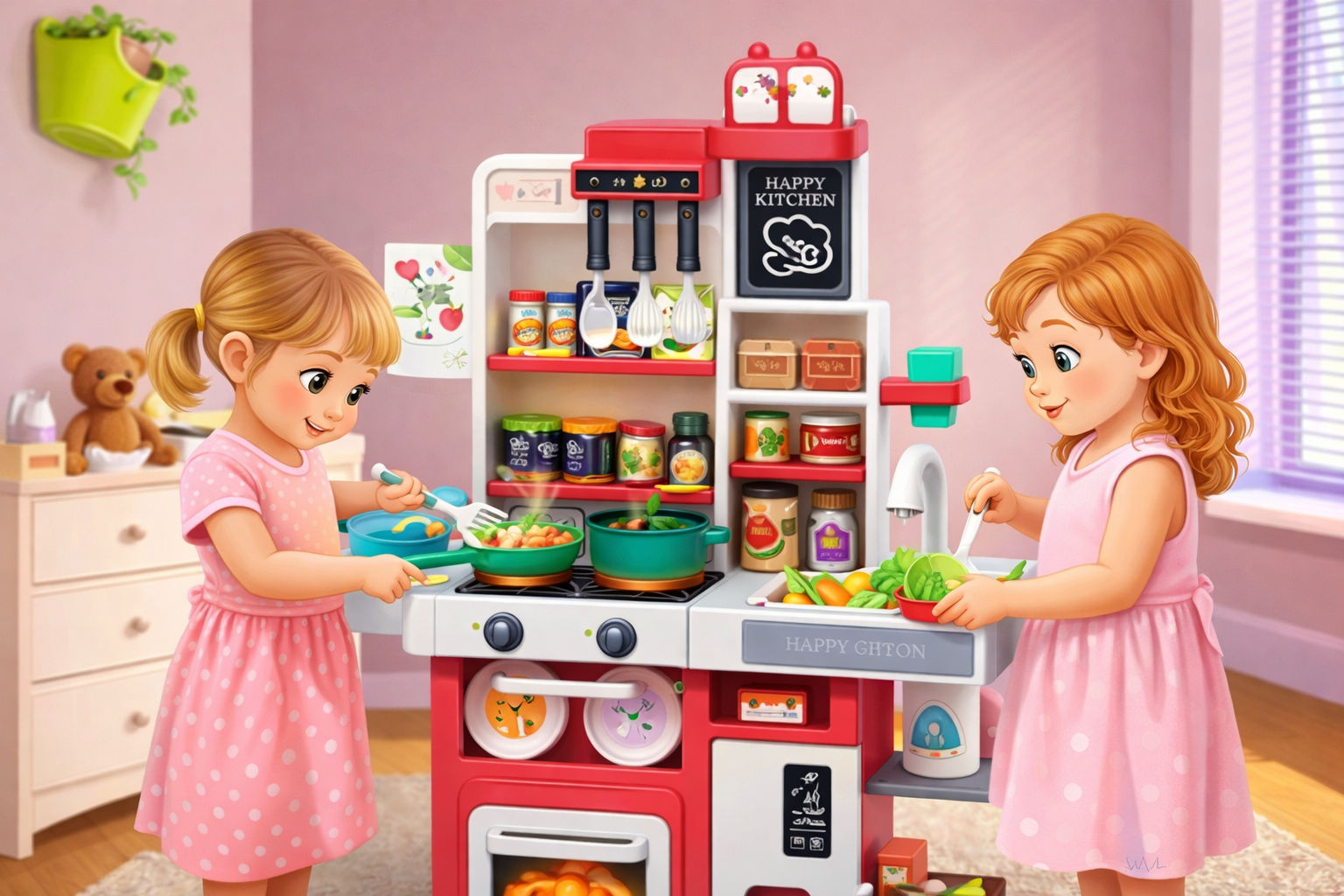
Pretend Cooking Play for Kids (Click on the picture to get related products)
Give your child enough time and space to play freely every day. Provide simple toys like blocks, crayons, playdough, or even cooking games to support their creativity. Let your child explore, imagine, and create without too many rules or interruptions. Activities like pretend cooking help develop social skills, imagination, and problem-solving abilities. Through play, children learn naturally while having fun and building important life skills.
❤️ 5. Teach Emotions with Patience

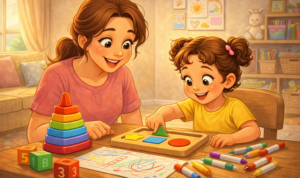
Comforting and cuddling time (Click on the picture to get related products)
Help your child understand their feelings by gently naming their emotions, such as happy, sad, or angry. Stay calm and patient, especially when your child is upset or overwhelmed. Show them how to express their feelings in a safe and appropriate way. Guide them with simple words and comforting actions so they feel supported. Over time, your child will learn to manage emotions better and build strong emotional skills.
⏳ 6. Be Patient and Support Their Pace

Follow Your Child’s Pace Activity (Click on the picture to get related products)
Every child grows and learns at their own unique pace. Avoid comparing your child to others, as each child has different strengths and timing. Focus on their progress, even small improvements, and celebrate each achievement. Offer gentle guidance and encouragement instead of pressure or strict expectations. By being patient and supportive, you help your child build confidence and enjoy the learning process.
✨ Final Thought
You don’t need perfect methods or expensive tools. The most important thing is your time, attention, and love. These are the strongest foundations for your child’s growth and success.