


10 Learning Activities for Toddlers at Home That Boost Development
To listen to the audio version of this article, please play the audio button below.
Struggling to find simple and effective learning activities for toddlers at home? The early years of a child’s life are a period of rapid and almost magical development. From birth to around age eight, the brain is highly flexible and ready to absorb new information. During this time, millions of neural connections are formed every second, shaping a child’s future language, thinking skills, and emotional well-being. While this may sound complex, the best way to support early childhood development is surprisingly simple: through play.
For toddlers, play is not just fun—it is how they learn and explore the world. The most effective learning activities for toddlers at home are those that feel natural and enjoyable rather than structured lessons. When children are engaged and having fun, their brains release chemicals that help them learn faster and remember better. That’s why choosing the right activities matters. Below are ten fun and easy learning activities designed to support toddlers’ physical, cognitive, and social-emotional development.
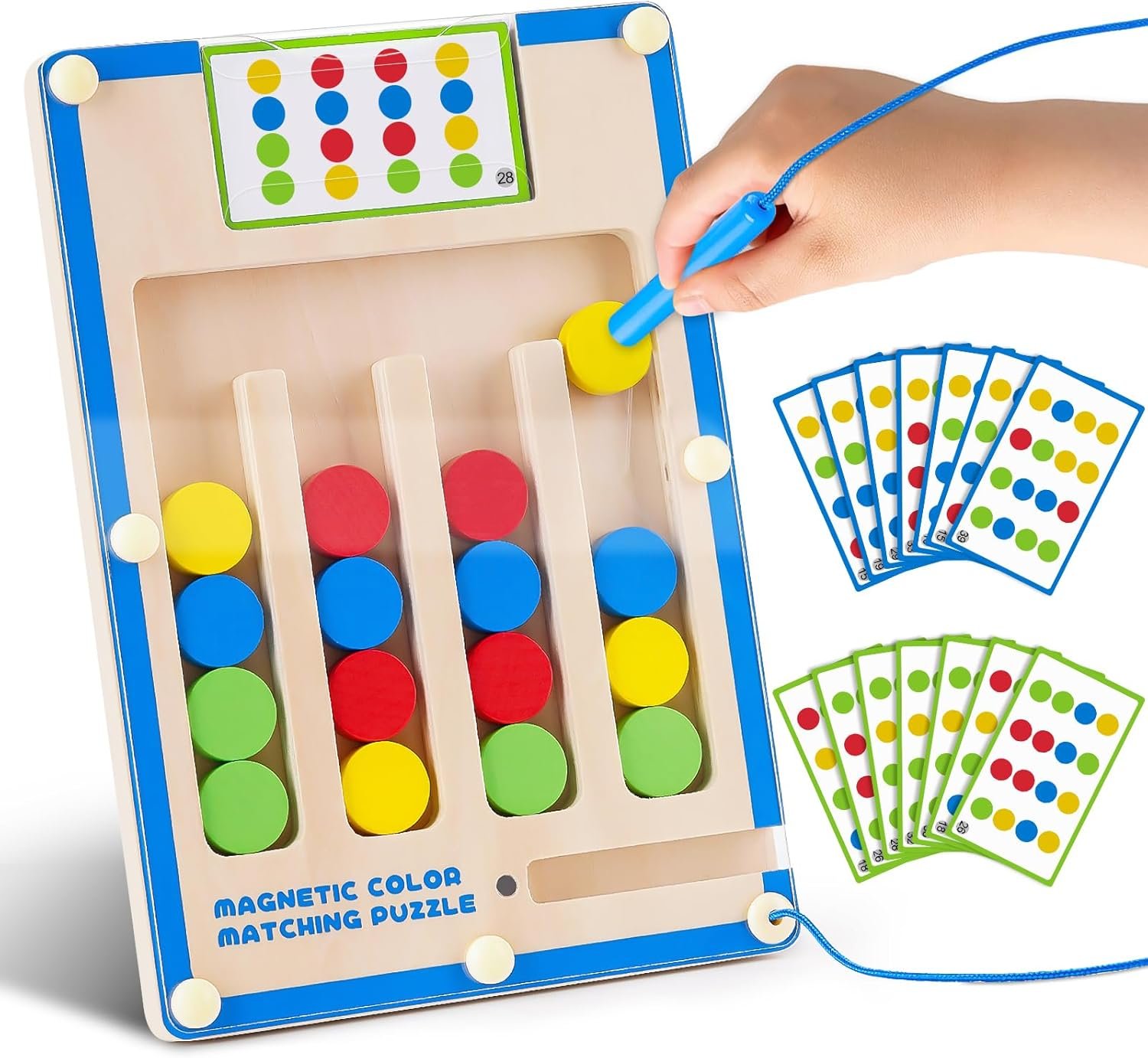
GET Montessori Magnetic Wooden Puzzle-Educational Maze Toy for Kids HERE
1. Sensory Bin (Sensory Play for Kids)
A sensory bin is one of the simplest yet most powerful activities for young children. It engages a child’s senses, especially touch, by using a container filled with materials such as rice, sand, water, or beans. Through this activity, children can explore different textures and sensations directly. Instead of just seeing, they actively feel, move, and interact with the materials, making learning more meaningful and hands-on.
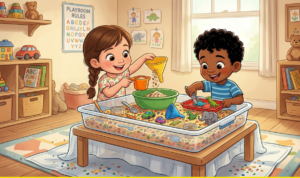
As children play with a sensory bin, they begin to understand basic concepts like heavy and light, wet and dry, and full and empty. For example, when they pour rice from one container to another, they start to see how quantity and volume work. At the same time, they are developing hand-eye coordination, which is essential for fine motor skills.
Simple actions such as grabbing, pinching, pouring, and stirring help strengthen the small muscles in their hands. These muscles are important for everyday tasks like writing, drawing, and using tools. Because of this, sensory play supports long-term development in ways that may not always be obvious at first.
Beyond physical and cognitive benefits, sensory bins also have a calming effect. Repetitive movements, like scooping or pouring, can help children feel more relaxed. Many children become more focused and settled after this type of play, especially when they feel overwhelmed or tired.
One of the best things about sensory bins is their flexibility. You can easily adjust them based on your child’s interests. For example, you can create an ocean theme with sand and toy fish, a garden theme with soil and leaves, or a kitchen theme with pasta and spoons. These small changes can make the activity feel new and exciting every time.
Parental involvement also plays an important role. When you make simple comments like, “This feels rough,” or “The water is cold,” children begin to connect their sensory experiences with language. This natural interaction helps expand their vocabulary without any pressure.
In addition, sensory bins can help children build patience and concentration. They learn to stay engaged in one activity and focus for a period of time. This skill is very important as they prepare for more structured learning in the future.
This activity also encourages curiosity and exploration. Children are free to experiment in their own way—pouring faster, mixing materials, or moving objects around. Through these small experiments, they learn by doing and discovering.
To keep things manageable, you can place a mat or cloth under the bin to reduce mess. With a little preparation, this activity can be both fun and easy to set up at home.
With all these benefits, a sensory bin is much more than just a simple game. It becomes a meaningful way for children to explore the world through touch while building essential skills that will support their growth for years to come.
Quick Tips for Parents
- Start with simple materials like rice or beans before trying more complex setups
- Use a tray or mat to make cleanup easier
- Let your child explore freely without too many rules
- Talk about textures and actions to build vocabulary
- Change themes regularly to keep the activity exciting
2. Activity Narration (Sportscasting for Kids)
Activity narration, often called sportscasting, is a simple technique where parents describe what is happening in real time. You can talk about what you are doing or what your child is doing, just like a commentator explaining events as they happen. Even though it sounds very simple, this method has a powerful impact on helping children understand the connection between words and actions.

When children hear repeated explanations, they begin to build vocabulary naturally. They learn that every object, movement, and activity has a name. For example, when you say, “I’m pouring water into the cup,” or “You’re stacking the blocks,” your child starts connecting words with real-life experiences they can see and feel.
One of the biggest advantages of this technique is that it feels natural and pressure-free. Children do not feel like they are being tested or asked to perform. Instead, they simply listen and absorb language at their own pace. This relaxed environment makes learning more enjoyable and effective.
In addition to building vocabulary, activity narration helps children understand sequences. When you describe steps in daily routines—like cooking, cleaning up, or getting dressed—children begin to see that actions follow a certain order. This supports the development of logical thinking and helps them understand cause and effect.
This technique also strengthens listening skills. Children learn to pay attention to sounds, tone, and meaning. These early listening abilities are essential for strong communication skills later in life.
Beyond language development, activity narration also supports emotional bonding. When parents actively talk and respond to what their child is doing, the child feels seen and valued. This kind of interaction builds a sense of security and strengthens the parent-child relationship.
Over time, children who regularly hear this kind of narration often start speaking earlier and more clearly. They develop a larger “word bank” and become familiar with sentence patterns, making it easier for them to express themselves.
To make this technique more effective, use simple and clear sentences. There is no need for complex language—short and direct phrases work best. You can also add expressive sounds or excitement in your voice to capture your child’s attention.
It is also important to follow your child’s focus. If your child is interested in something—like a cat, a toy, or a moving object—use that moment to describe it. This keeps them engaged because the topic matches their curiosity.
The best part is that activity narration can be done anytime, anywhere. Whether you are cooking, bathing your child, walking outside, or playing together, every moment can become a learning opportunity without needing any special tools.
With consistent practice and warm interaction, this simple technique can naturally support your child’s language and communication development. What may seem like ordinary conversation can become a powerful way for children to understand the world through words.
Quick Tips for Parents
- Use short, simple sentences your child can easily understand
- Describe both your actions and your child’s actions
- Add fun sounds like “splash,” “zoom,” or “pop” to keep it engaging
- Follow your child’s interests to keep them focused
- Repeat key words often to strengthen vocabulary
3. Indoor Obstacle Course (Fun Physical Activity for Kids at Home)
An indoor obstacle course is a creative way to turn an ordinary space into an exciting adventure zone. By using simple household items like pillows, chairs, blankets, or even tape on the floor, you can create a fun and safe course for your child. This activity keeps children active and engaged without needing to go outside.
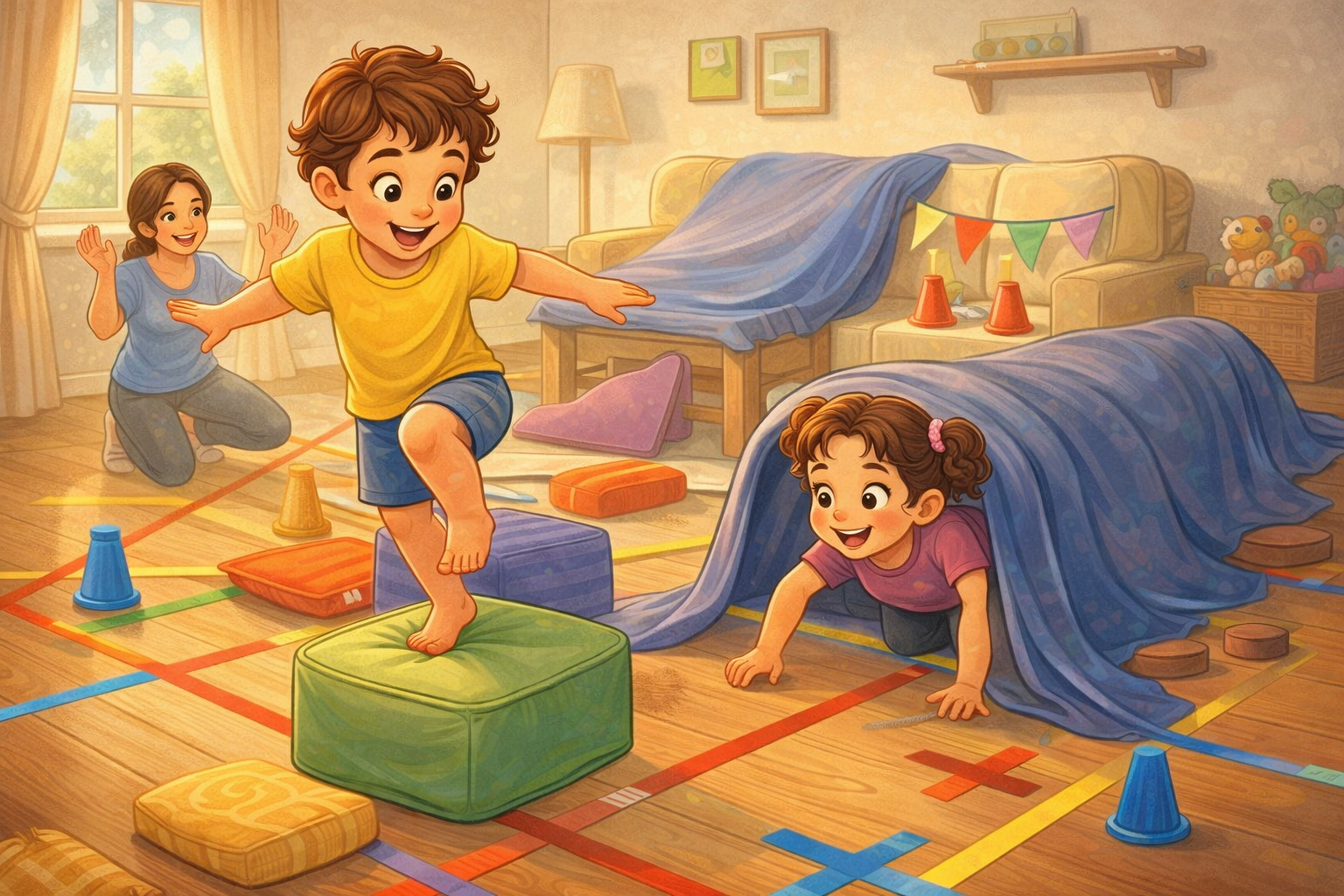
As children move through the course, they use different types of movements such as climbing, jumping, crawling, and balancing. These movements help build muscle strength, especially in the arms, legs, and core. At the same time, children improve their coordination because they need to adjust their movements based on their surroundings.
Each obstacle in the course becomes a small challenge to solve. Children need to think about how to step over a pillow without falling or how to crawl through a “tunnel” made from chairs and blankets. This process naturally develops problem-solving skills through physical play.
This activity also helps children understand their body limits. They learn when to move quickly and when to slow down and be careful. This awareness is important for building self-control and reducing the risk of injury during play.
Adding a story element can make the game even more exciting. For example, you can pretend your child is exploring a jungle, climbing a mountain, or crossing a river. This kind of imagination makes the activity more engaging and encourages children to complete the course with enthusiasm.
In addition to physical and cognitive benefits, an indoor obstacle course helps children manage their energy. Children with a lot of energy often become restless if they do not have a chance to move. This activity gives them a healthy and positive outlet.
After playing, children usually feel calmer and more ready for other activities such as eating, learning, or sleeping. This shows how important physical activity is for maintaining emotional balance.
Parents can also adjust the level of difficulty based on the child’s age. For younger children, keep the course simple and safe. For older children, you can add more challenging elements to keep them interested and motivated.
Parental involvement adds even more value to this activity. When you join the game or offer encouragement, children feel more confident and supported. It also becomes a fun bonding moment for the whole family.
With a little creativity, your home can become an active and engaging learning space. This activity not only supports physical development but also helps children build confidence, courage, and problem-solving skills in everyday situations.
Quick Tips for Parents
- Use soft and safe materials like pillows and blankets
- Keep the area clear of sharp or breakable objects
- Start simple and increase difficulty gradually
- Add a fun story to make the activity more exciting
- Encourage your child, but let them explore independently
4. Sorting and Categorizing (Developing Observation and Organization Skills)
Sorting and categorizing objects may seem like a simple activity, but it plays a big role in a child’s cognitive development. Through this activity, children learn that every object has certain characteristics, such as color, shape, size, or function. Over time, they begin to understand that the world around them can be organized and understood through simple patterns.
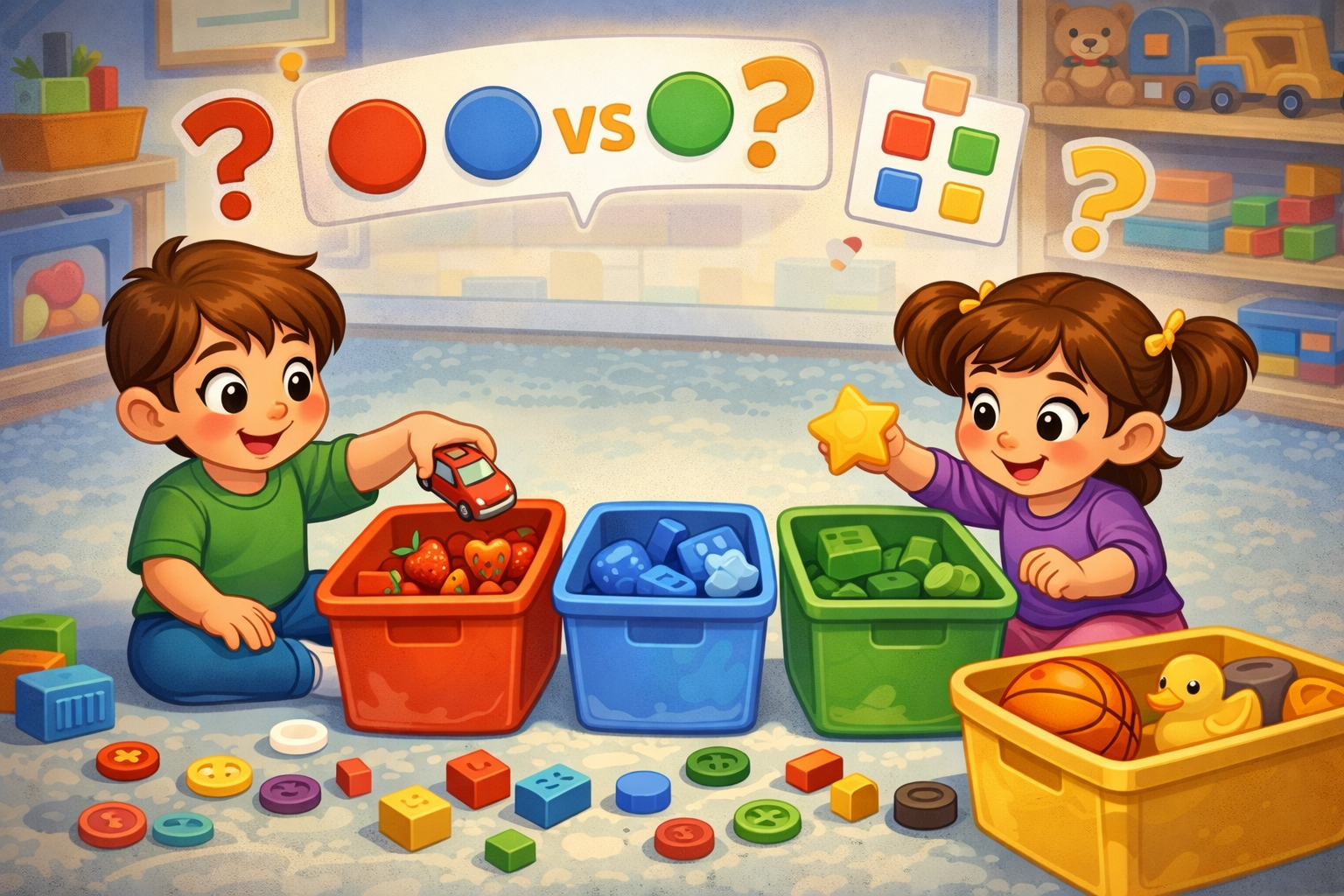
When children start grouping objects based on specific categories, they are training their observation skills. They learn to notice small details, such as slight differences in color or size. This ability is very important because it becomes the foundation for future skills like reading, writing, and understanding information.
This activity also introduces early math concepts in a natural way. Without using numbers or formulas, children begin to learn about classification, patterns, and grouping. For example, when they separate red and blue objects, they are learning about similarities and differences, which are key ideas in mathematics.
Sorting also helps children develop logical thinking. They learn to follow simple rules, such as placing only round objects in one container. At the same time, they begin to compare, analyze, and make decisions based on certain criteria. These are important thinking skills that will support their learning in many areas.
Beyond cognitive development, this activity also builds organization skills. Children learn how to arrange objects neatly and systematically. This habit can help them become more organized in daily life, including when they start school.
One of the best things about sorting and categorizing is that it can be done with everyday items at home. You can use buttons, toys, spoons, bottle caps, or even clothes. For example, children can separate small and large socks or group toys by color. These simple activities can easily become fun learning moments.
To make the activity more effective, parents can guide gently instead of giving direct answers. You can ask questions like, “Why did you put this here?” or “What is the same about these objects?” These questions encourage children to think and explain their ideas.
It is also important to start simple. For younger children, begin with just two categories, such as “red and not red” or “big and small.” As they grow, you can slowly increase the difficulty by adding more categories or rules.
You can also turn this activity into a fun game. For example, create a “toy shop” where your child needs to sort items before “selling” them, or build a “color rainbow” using objects from around the house. This playful approach keeps children engaged and excited to learn.
In the bigger picture, sorting and categorizing is more than just moving objects from one place to another. It helps children develop structured, logical, and organized thinking. With consistent practice, they will be better prepared to handle more complex learning tasks in the future.
Quick Tips for Parents
- Start with simple categories like color or size
- Use everyday household items to keep it practical
- Ask questions instead of giving answers directly
- Keep the activity fun and flexible, not strict
- Gradually increase difficulty as your child improves
5. The “Emotion Mirror” Game (Helping Kids Understand Feelings)
The Emotion Mirror is a simple yet powerful activity that helps children recognize and understand different feelings. In this activity, children look at their own facial expressions in a mirror and try to copy or observe emotions such as happiness, sadness, anger, or surprise. This makes emotions—something abstract—feel more real and easier to understand.

Through visual observation, children begin to learn that each emotion has clear signs on the face. For example, when someone is happy, they smile and their eyes look bright. When they are sad, their face may look down and their eyes may tear up. This process helps children connect what they feel inside with what they see outside.
This activity is especially important because emotions can be difficult to explain using words alone, especially for young children. With the help of a mirror, children do not just hear explanations—they see and experience the changes themselves. This makes learning more concrete and easier to understand.
Over time, children also learn how to manage their emotions better. When they can recognize what they are feeling, they are more likely to calm themselves. For example, a child who understands they are feeling angry can start learning ways to cope, such as taking deep breaths or asking for help.
The Emotion Mirror also teaches children that all feelings are normal. They learn that being sad, angry, or disappointed is part of life. What matters is not avoiding these emotions, but learning how to express them in a healthy way.
In addition, this activity helps children learn to read other people’s facial expressions. As they become familiar with their own expressions, they become more aware of how others feel. This is the beginning of empathy—the ability to understand and share the feelings of others.
With regular practice, children become more comfortable naming their emotions. Instead of crying or reacting strongly right away, they may begin to say, “I feel sad,” or “I’m upset.” This skill is very important for reducing tantrums and improving communication.
To make the activity more fun, parents can turn it into a game. You can take turns guessing each other’s expressions or making funny faces. You can also connect emotions to real-life situations by asking questions like, “When do you feel happy?” or “What makes you feel upset?”
It is important to remember that this activity does not need to take a long time. Just a few minutes each day can make a big difference. Consistency is more important than duration.
In the long run, the Emotion Mirror does more than help children recognize feelings. It builds the foundation of emotional intelligence, helping children grow into individuals who are more aware, expressive, and ready to handle social situations with confidence.
Quick Tips for Parents
- Use clear and exaggerated facial expressions to make emotions easier to see
- Practice both positive and negative emotions, not just “happy”
- Keep sessions short and fun—just a few minutes is enough
- Connect emotions to real-life experiences
- Encourage your child to name their feelings out loud
6. Kitchen Experiments (Learning Science and Math Through Cooking)
The kitchen is one of the best places for children to learn because it is full of real-life activities they can see, touch, and experience directly. When children are involved in cooking, they are not just helping—they are learning many important skills in a fun and natural way.
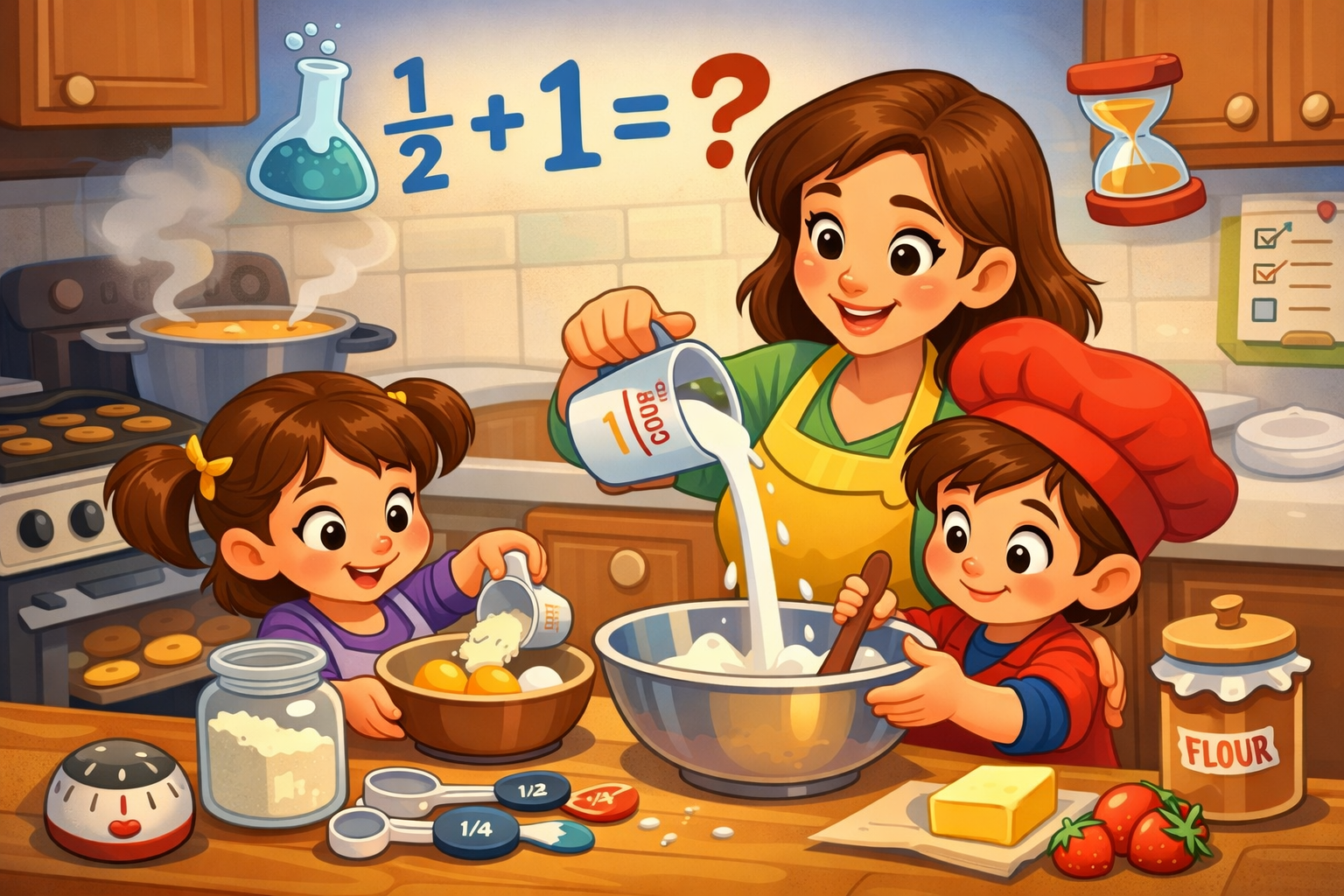
Through simple actions like pouring, stirring, and mixing ingredients, children begin to understand how things change. They can see how separate ingredients turn into one mixture, or how a liquid can become solid after cooking. These hands-on experiences help them understand basic science concepts without needing complex explanations.
Cooking is also a great way to introduce early math skills. When children count ingredients or measure things like half a cup and one cup, they begin to understand numbers and comparisons in a real and meaningful way. Learning becomes easier because they can see and practice it at the same time.
In addition, kitchen activities help improve hand coordination and focus. Children learn to pour carefully, stir slowly, and follow steps in order. These skills are important for developing fine motor abilities, which are needed later for writing and other daily tasks.
Cooking also teaches children about process and patience. They learn that results do not happen instantly. Ingredients need to be prepared, mixed, and cooked step by step. This helps children understand the value of waiting and following instructions carefully.
Being involved in the kitchen also makes children feel valued. Even small tasks can make them feel like an important part of the process. This builds confidence and encourages independence.
Beyond cognitive and motor skills, cooking also creates positive emotional experiences. Children enjoy spending time with their parents, and these shared moments help strengthen family bonds and create happy memories.
The final result—food—becomes a real reward. When children see or taste something they helped make, they feel proud and satisfied. This sense of achievement motivates them to try new things in the future.
To make this activity successful, it is important to give tasks that match your child’s age. Younger children can help with simple tasks like stirring or pouring, while older children can follow more detailed steps. This keeps the activity challenging but not overwhelming.
Safety should always come first. Make sure children stay away from hot surfaces and sharp tools, and always supervise them closely. With proper guidance, the kitchen can be a safe and exciting place to learn.
More than just cooking, kitchen experiments help children build understanding, skills, and confidence. Through these simple activities, they learn that learning itself can be fun, meaningful, and part of everyday life.
Quick Tips for Parents
- Give simple tasks based on your child’s age and ability
- Let your child help, even if it gets a little messy
- Talk through each step to build understanding
- Use measuring and counting to introduce math concepts
- Always supervise and keep safety a top priority
7. Pretend Play (Boosting Imagination and Social Skills in Kids)
Pretend play is one of the most loved activities for children because it gives them the freedom to imagine without limits. In this type of play, children can become anyone they want—a doctor, a teacher, a chef, or even a superhero. With their imagination, simple objects around them can turn into something exciting and meaningful.

Through pretend play, children begin to understand the world around them in a deeper way. They often copy what they see in everyday life, such as how adults talk, work, and interact with others. This helps them learn about different social roles and how each role works in real life.
This activity also helps develop communication skills. Children practice speaking, explaining ideas, and even negotiating when they play with others. They use language to express their thoughts, feelings, and the stories they create during play.
More than just fun, pretend play helps children see things from different perspectives. When a child pretends to be a doctor or a teacher, they begin to understand how that person might feel and what responsibilities they have. This is an early step in developing empathy—the ability to understand other people’s emotions.
Pretend play also provides a safe space for children to express their feelings. Experiences from daily life, whether happy or confusing, often appear again in their play. In this way, children can process their emotions naturally and without pressure.
In addition, this activity supports creativity. Children are free to create stories, decide what happens next, and use simple objects as symbols. For example, a spoon can become a microphone, or a cardboard box can turn into a house. This kind of symbolic thinking is very important for cognitive development.
Pretend play also strengthens problem-solving skills. When something “goes wrong” in their story, children think of ways to fix it so the play can continue. This helps them become flexible and creative thinkers.
To support pretend play, parents do not need expensive toys. Simple items like old clothes, hats, cardboard boxes, or toy kitchen tools are more than enough. In fact, simple materials often encourage more imagination than complex toys.
The role of parents in this activity is to support, not control. Let your child lead the play and decide the storyline. You can join in by following their ideas instead of changing them. This helps children feel confident and valued.
With the freedom to imagine and the right support, children can grow into creative and confident individuals who understand others. Pretend play is not just a game—it is an important foundation for social and emotional development.
Quick Tips for Parents
- Let your child lead the play and create their own story
- Use simple household items to spark imagination
- Ask open-ended questions like “What happens next?”
- Join the play, but follow your child’s ideas
- Encourage creativity without correcting their imagination
8. Freeze Dance (Building Self-Control and Focus Through Play)
Freeze Dance is a simple game that combines music and movement, yet it offers powerful benefits for a child’s development. In this activity, children dance freely while the music is playing, then must immediately stop and “freeze” when the music stops. Although it looks easy, this game requires strong coordination between the body and the brain.

While the music is playing, children can move freely and express themselves. They may jump, spin, or dance in their own creative way. However, when the music suddenly stops, they must quickly control their bodies and hold their position. This moment becomes the main challenge of the game.
Freeze Dance is very effective for building self-control. Children learn to stop their actions even when they are having fun. This ability to pause and follow rules is an important life skill, especially when they begin school and need to listen, wait, and follow instructions.
In addition, this game helps improve focus and attention. Children must listen carefully to the music and be ready to respond at any moment. They learn to stay alert and pay attention to changes in their environment, not just enjoy the movement.
This activity also supports balance and coordination. When children freeze in different positions—such as standing on one foot or stopping mid-spin—they practice controlling their bodies. These skills are important for developing strong gross motor abilities.
Another benefit is quick thinking. Children must process information fast (the music stops) and immediately change their behavior. This helps train their brain to respond quickly and accurately.
Freeze Dance is also a great way to release energy. Active children often need space to move, and this game allows them to do so in a fun and controlled way. It helps them stay active while also learning self-regulation.
To keep the game exciting, parents can add variations. For example, when the music stops, children can freeze like an animal or make a funny face. These small changes keep the activity fresh and engaging.
You can also let your child take turns controlling the music. This gives them a sense of responsibility and helps them understand the rules from a different perspective.
One of the best things about Freeze Dance is how easy it is to set up. You do not need any special equipment—just music and a little space to move. It can be played anytime, whether at home or outdoors.
Because the activity is fun, children learn discipline naturally. They do not feel like they are being taught, yet they still develop important skills.
More than just a music game, Freeze Dance is a playful way to build self-control, focus, and coordination. It shows children that they can enjoy freedom while still following rules in a positive and balanced way.
Quick Tips for Parents
- Use upbeat music to keep your child excited and engaged
- Start with short freeze times, then increase gradually
- Add fun variations like animal poses or funny expressions
- Let your child take turns controlling the music
- Play in a safe, open space to avoid accidents
9. Nature Scavenger Hunts (Exploring Nature and Building Observation Skills)
A nature scavenger hunt is a fun activity that encourages children to explore the world around them. In this game, children look for different objects in nature based on colors, shapes, or textures. What may seem like a simple walk can turn into a meaningful little adventure full of discovery.

As children search for leaves, stones, or other natural items, they are developing their observation skills. They learn to notice small details that they might have ignored before. For example, they begin to see that not all leaves have the same shape, and that even the color green can appear in many different shades.
This activity also helps expand a child’s vocabulary. When children find something, parents can introduce new descriptive words like “rough,” “smooth,” “dry,” or “soft.” Because children experience these textures directly, they understand the meaning of the words more easily than just hearing them.
A nature scavenger hunt is also a great way to build a love for the environment. When children interact directly with nature, they begin to appreciate its beauty and uniqueness. This early connection can help develop a sense of care and responsibility for the environment as they grow.
Being outdoors also provides rich sensory experiences that are different from indoor play. Children can feel the wind on their skin, the ground under their feet, and a variety of natural textures. These experiences support overall learning and development.
This activity also has strong emotional benefits. Nature has a calming effect, helping children feel more relaxed and refreshed. Children who feel restless or easily bored often become more focused and peaceful after spending time outside.
In addition, a nature scavenger hunt allows children to follow their own curiosity. They can choose what they want to explore, touch, or collect. This freedom helps build independence and confidence.
Parents can support this activity by giving simple directions, such as asking children to find specific items. However, it is important to leave enough space for free exploration so children do not feel restricted.
To make the activity more exciting, you can create small “missions,” such as finding something yellow or something that feels smooth. You can also give your child a small container or bag to collect their discoveries, making the experience feel more like a real adventure.
Beyond learning and fun, this activity also supports physical development. Walking on uneven ground, bending down to pick up objects, or stepping over small obstacles helps improve balance and coordination.
More than just a search game, a nature scavenger hunt gives children a chance to explore, feel, and connect with the world around them. Through this simple experience, they learn that nature is full of wonder and worth discovering.
Quick Tips for Parents
- Choose a safe and child-friendly outdoor location
- Give simple tasks like finding colors or textures
- Let your child explore freely without rushing them
- Introduce new descriptive words during the activity
- Bring a small bag or container for collecting items
10. Water Play (Learning Science Through Fun Water Experiments)
Water play is one of the most loved activities for children, and it is also a powerful way to support learning. Water has unique properties—it flows, changes shape, and reacts to different objects—making it a fun and engaging learning tool for kids.
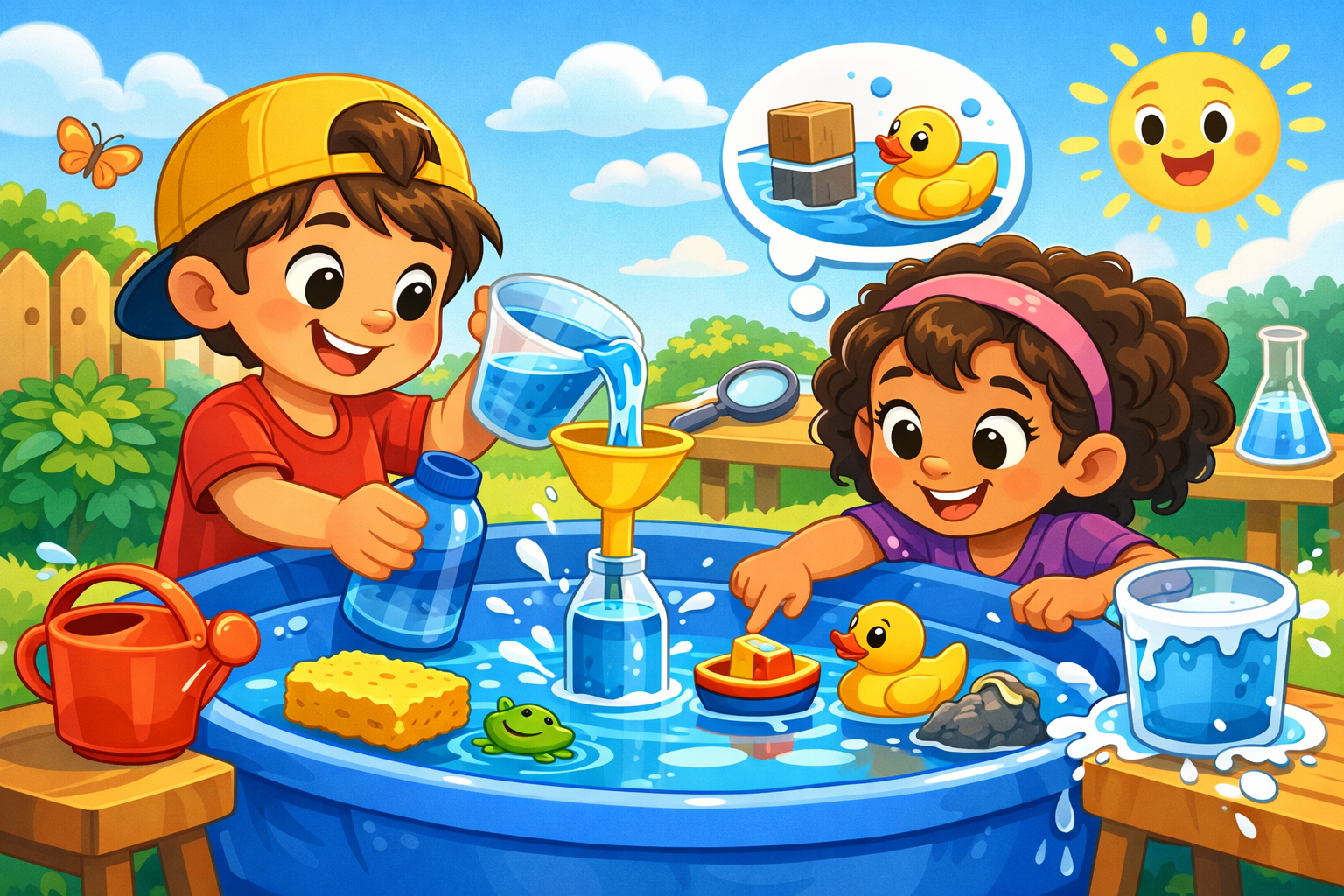
Through simple activities like pouring water from one container to another, children begin to understand basic concepts such as full and empty. When they use containers of different sizes, they also learn about volume in a natural way, without needing complex explanations. These ideas become easier to understand because children experience them directly.
Water play is also a great way to introduce basic science concepts like sinking and floating. Children can test different objects by placing them in water and observing what happens. Through this process, they begin to understand that different materials behave in different ways.
One of the biggest advantages of water play is that it provides immediate feedback. Children can instantly see the results of their actions. If they pour too quickly, the water spills. If a container is full, it overflows. These direct experiences help children understand cause and effect clearly.
This activity also supports hand-eye coordination. Children learn to pour carefully, transfer water without spilling, and control their movements. These skills are important for developing fine motor abilities.
In addition to cognitive benefits, water play also has a calming effect. Many children feel more relaxed when playing with water. The sound, movement, and sensation of water can reduce stress and help children stay focused.
Water play also encourages free exploration. There is no single “right” way to play, so children feel free to try different approaches and discover new outcomes. This helps build curiosity, confidence, and a love for learning.
To make the activity more engaging, parents can add simple tools such as cups, spoons, funnels, or sponges. These tools allow children to explore new ways of playing and experimenting with water.
Safety is very important during water play. Always supervise your child and make sure the play area is safe to prevent slipping or accidents. Avoid using small objects that could be swallowed.
Parents can also use this time to interact with their child. Asking simple questions like, “Why do you think this object sank?” or “What happens if we add more water?” encourages children to think more deeply.
With its combination of fun and discovery, water play becomes more than just a simple activity. It offers children a chance to explore, experiment, and understand the world in a natural and enjoyable way.
Quick Tips for Parents
- Use a safe, non-slip area for water play
- Provide simple tools like cups, funnels, and sponges
- Let your child explore freely without strict rules
- Ask simple questions to encourage thinking
- Always supervise your child for safety
The Role of the Caregiver: “Serve and Return”
Throughout all these activities, the most important element is not the toy or the specific task, but the interaction. Developmental scientists use the term “serve and return” to describe the back-and-forth between a child and an adult.
When a child “serves” an interaction by pointing or babbling, and the adult “returns” the ball by responding, a neural connection is forged. You don’t need a perfectly organized playroom or a strict schedule to support early growth. What you need is the willingness to follow your child’s lead and stay present in the moment. When you join them in their play, you are telling them that their ideas are important and their world is worth exploring.
Early childhood development is a marathon of patience and connection. By integrating these simple, fun activities into your daily life, you are providing the building blocks for a strong and healthy brain. Every shared laugh, every built tower, and every splashed puddle is a step toward a bright and capable tomorrow. Encouraging their natural desire to learn ensures they will approach the world with confidence and joy for years to come.
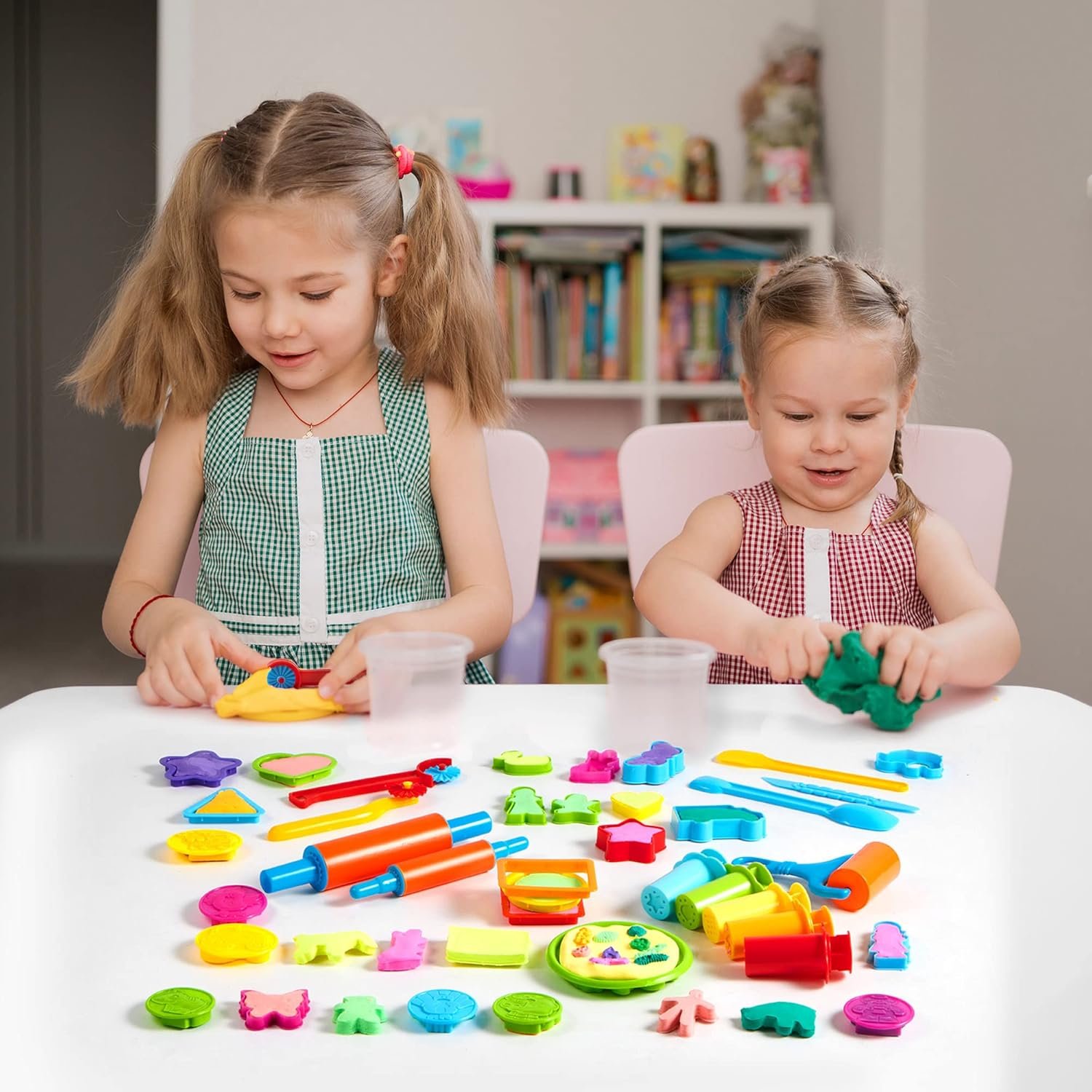
GET the Kids Clay Tool Set – 44PCS Molds, Rollers & Cutters HERE