



How Talking to Your Child Boosts Early Development Skills
Did you know that simple daily conversations can shape how your child thinks, learns, and feels for the rest of their life? The early years of a child’s life are full of incredible growth and change. While parents often notice visible milestones like first steps or first words, the most important development is happening inside the brain. During this time, a child’s brain forms millions of neural connections every second, shaping how they think, feel, and learn. One of the most powerful ways to support this development is something simple, free, and always available—talking to your child.
Talking is not only about teaching children how to speak. It also helps them understand the world around them, express their emotions, and build strong relationships with others. When parents talk regularly with their children, they create a strong foundation for learning, communication, and confidence. These everyday conversations may seem small, but they have a lasting impact on a child’s future development.
To understand this better, let’s explore how talking to your child supports early development skills.
❤️ Building Emotional Intelligence and Confidence

A joyful moment of connection—where simple conversations help build a child’s brain, confidence, and emotional bond (Click on the picture to get related products)
Talking to your child plays a key role in developing emotional intelligence, which is the ability to understand, express, and manage feelings. Young children often experience strong emotions, but they do not yet have the language or skills to explain what they feel. As a result, they may cry, become frustrated, or act out because they are overwhelmed. This is why guidance from parents is very important during this stage.
When parents talk about emotions, they help children make sense of what is happening inside them. For example, saying “You look sad” or “I see you are frustrated because the toy broke” helps connect feelings with words. This process allows children to recognize their emotions instead of feeling confused by them. It also teaches them that their feelings are normal and accepted.
Over time, these conversations help children learn how to express their emotions in a calmer and more controlled way. Instead of reacting immediately, they begin to pause, understand, and communicate what they feel. This ability is an important part of self-regulation, which supports behavior, focus, and social interaction.
As children become more confident in understanding and expressing their emotions, they also develop stronger self-confidence. They feel safe, heard, and supported, which encourages them to communicate openly. In the long term, these skills help children build healthy relationships and handle challenges more effectively.
👫 Teaching Empathy Through Everyday Conversations
 Through gentle conversations, children learn to understand others’ feelings and respond with kindness and empathy (Click on the picture to get related products)
Talking to your child is a powerful way to develop empathy, which is the ability to understand and care about other people’s feelings. Young children are naturally focused on their own experiences, so they need guidance to recognize that others may feel differently. Through everyday conversations, parents help children become more aware of the emotions and perspectives of people around them. This awareness is an important step in social and emotional development.
One effective way to build empathy is by describing what others might be feeling in real-life situations. For example, you can say, “That child looks sad because he dropped his toy,” or “She looks happy because she is playing with her friends.” These simple explanations help children connect actions with emotions. Over time, they begin to understand that feelings have causes and that everyone experiences emotions in different ways.
Parents can also encourage children to think further by asking gentle questions, such as “What do you think we can do to help?” or “How would you feel if that happened to you?” This helps children move from simply recognizing emotions to responding with care and understanding. It also builds perspective-taking, which is a key part of empathy.
As children practice these skills, they start to show empathy in their own behavior, such as sharing, helping, or comforting others. They become more aware of how their actions affect people around them. In the long term, empathy helps children build strong relationships, cooperate with others, and interact positively in social settings.
🚗 Turn Everyday Moments into Learning Opportunities

Everyday moments like grocery shopping become powerful learning experiences when parents talk, guide, and engage their children (Click on the picture to get related products)
Many parents feel they don’t have enough time to teach their children, but learning does not always require special activities or structured lessons. In fact, some of the most effective learning happens during simple, everyday moments. When parents talk and interact with their children throughout the day, they turn ordinary routines into meaningful learning experiences. These natural interactions are often more effective because they are connected to real-life situations that children can easily understand.
Talking during daily activities helps children make sense of the world around them. When you describe what you are doing or ask simple questions, you are helping your child build language, thinking skills, and awareness at the same time. For example, you might say, “These apples are red and round,” or “Let’s count how many bananas we have.” This kind of conversation helps children connect words with objects, actions, and ideas in a practical way.
Everyday routines also create repeated opportunities for learning, which is important for memory and understanding. At the grocery store, children learn about categories, colors, and numbers. During bath time, they explore concepts like temperature, floating, and texture. In the car, songs and simple games can improve listening skills, memory, and attention. These experiences may seem small, but they are repeated often, which strengthens learning over time.
Most importantly, these moments feel natural and enjoyable rather than forced. Children learn best when they feel relaxed, curious, and engaged. By turning daily routines into learning opportunities, parents can support their child’s development consistently without adding extra pressure. Over time, this approach helps children become active learners who are curious about the world around them.
📖 The Role of Reading in Communication Development

Reading together becomes a meaningful conversation that builds language, understanding, and a strong emotional bond between parent and child (Click on the picture to get related products)
Reading together is not separate from talking—it is actually one of the most powerful forms of conversation between a parent and a child. When you read with your child, you are not just telling a story, but also creating opportunities to talk, ask questions, and respond to each other. This interaction supports early development because it combines language exposure with real communication.
Through reading, children hear new words, sentence patterns, and ideas that may not appear in daily conversations. However, the real benefit comes when parents actively talk about the story. By asking questions like, “What do you see?” or “What do you think will happen next?”, parents turn reading into a two-way conversation. This helps children practice thinking, expressing ideas, and understanding language more deeply.
Reading also strengthens important communication skills such as listening, turn-taking, and responding. When children are encouraged to answer questions or share their thoughts, they learn that communication is not just about hearing words, but also about interaction. This reflects the same “serve and return” process that is essential in early brain development.
In addition, reading creates a calm and supportive space where children feel safe to communicate. This emotional connection encourages them to speak more, ask questions, and express themselves confidently. Over time, these experiences help children develop stronger communication skills, which is exactly how talking to your child boosts early development skills.
🌱 Encouraging a Growth Mindset Through Words
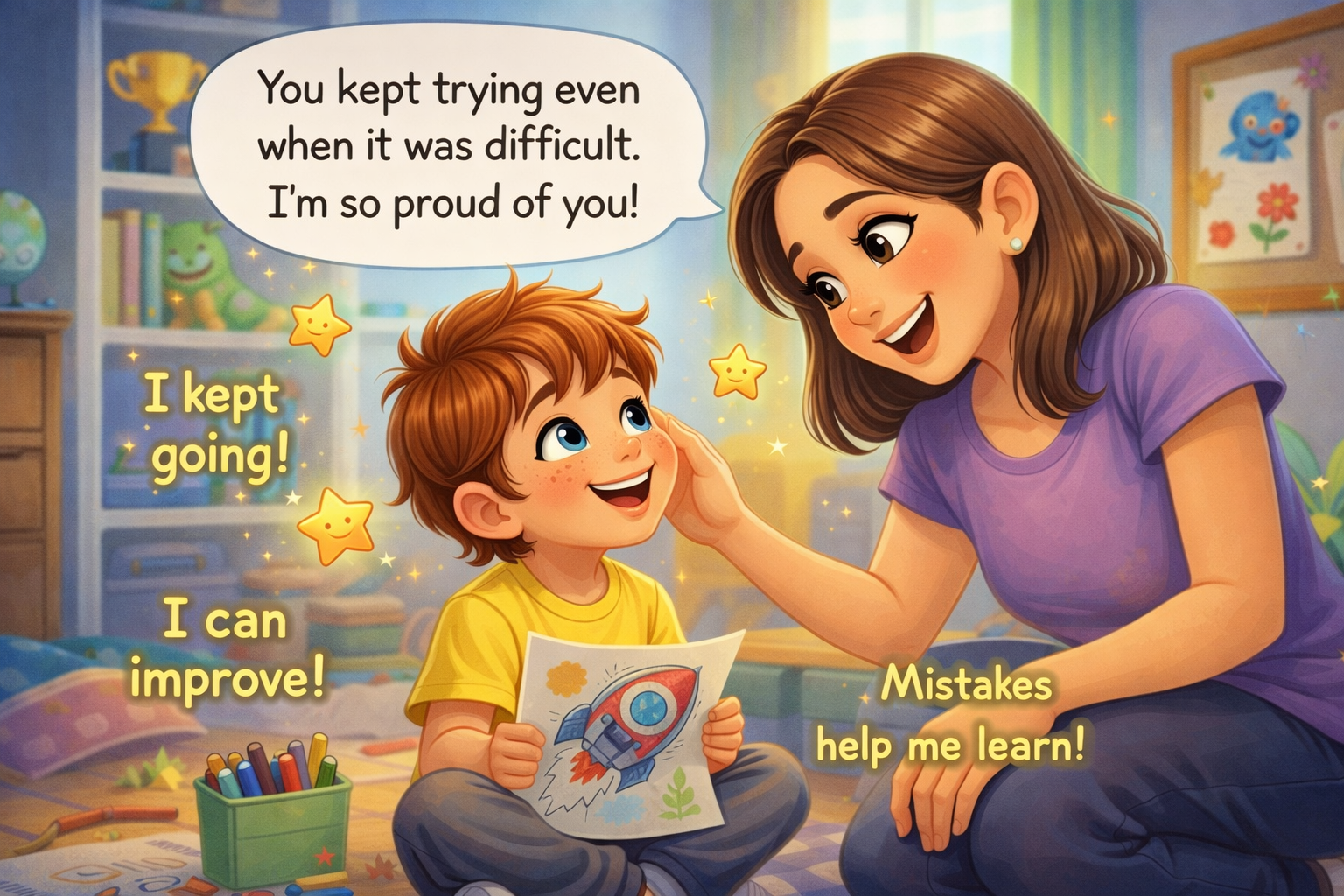
Encouraging words help children believe in themselves, turning effort and mistakes into confidence and growth (Click on the picture to get related products)
The way you speak to your child shapes how they see themselves and how they approach challenges. Children naturally pay attention to the words and reactions of their parents, and over time, these messages become their inner voice. When parents use positive and supportive language, they help children develop confidence and a belief that they are capable of learning and improving. This is the foundation of a growth mindset.
A growth mindset means understanding that abilities are not fixed, but can develop through effort, practice, and persistence. When parents focus only on results—such as saying “You’re so smart”—children may begin to avoid challenges for fear of failure. However, when parents praise effort and the learning process, children begin to see mistakes as part of growth rather than something negative.
For example, saying “You tried really hard,” “You kept going even when it was difficult,” or “Let’s try again together” helps children focus on effort instead of perfection. These words encourage them to stay motivated, even when something feels challenging. Over time, children learn to be more patient with themselves and more willing to try new things.
This kind of communication also supports resilience, which is the ability to recover from difficulties. Children who hear supportive language are more likely to keep trying after making mistakes instead of giving up. They begin to understand that learning takes time and that progress happens step by step.
In the long term, this mindset helps children become more confident, independent, and open to learning. They are not afraid of challenges because they believe they can improve with effort. By choosing your words carefully, you are not only encouraging your child in the moment, but also shaping how they will think, learn, and face challenges in the future.
🌟 A Strong Foundation for the Future
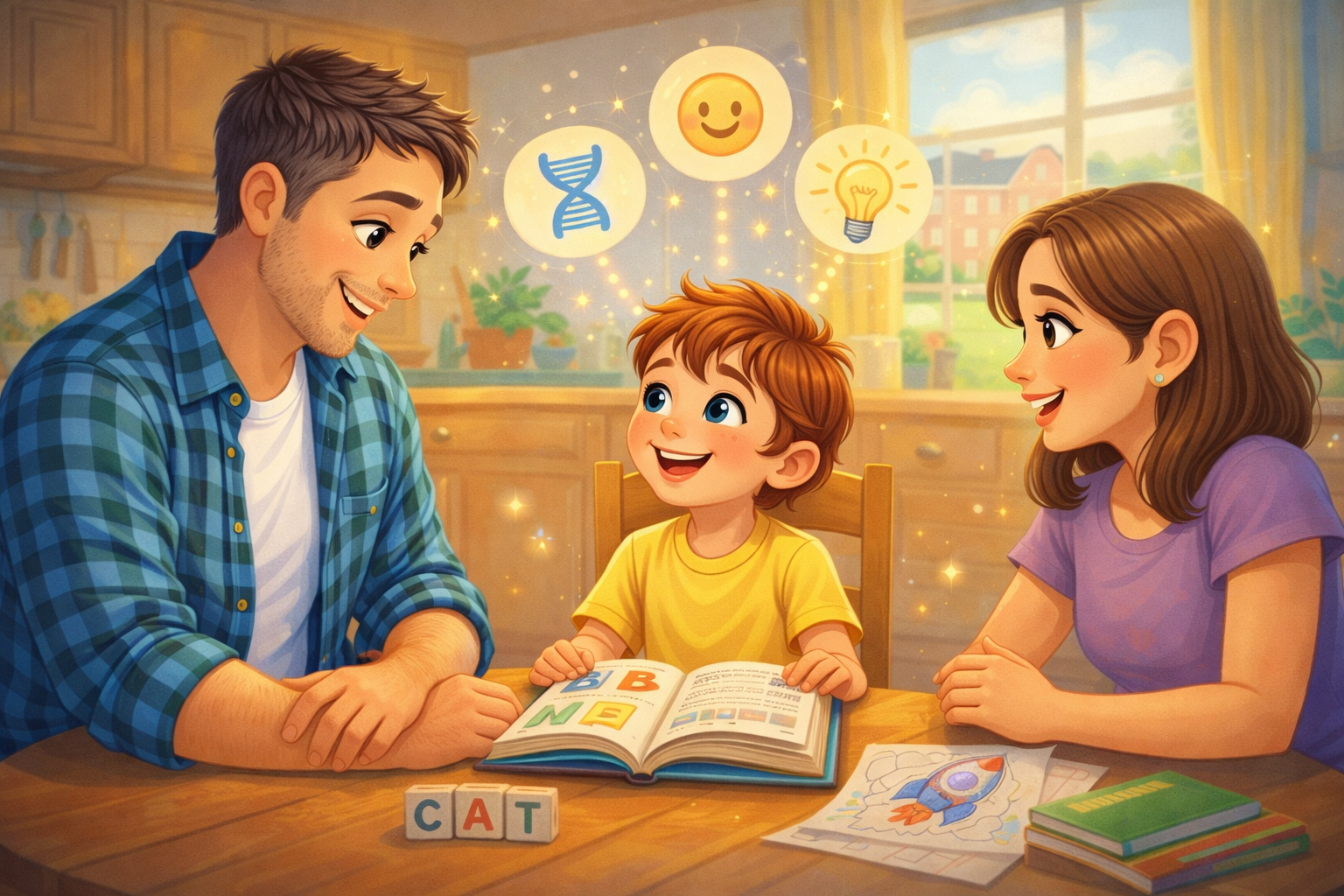
Simple daily conversations at home build strong foundations for language, thinking, and lifelong learning (Click on the picture to get related products)
Talking to your child is one of the simplest yet most powerful ways to support early childhood development. Through everyday conversations, children build essential skills such as language, thinking, emotional understanding, and confidence. These skills do not develop separately—they are connected and grow together through interaction. When children are regularly engaged in meaningful conversations, they learn not only how to speak, but also how to think, express themselves, and understand the world around them.
More importantly, talking creates a strong foundation for lifelong learning. Children who are used to communicating with others tend to be more curious, more confident in asking questions, and better prepared to participate in school. They develop the ability to listen, respond, and share ideas—skills that are essential not only for academic success but also for building relationships and solving problems in everyday life.
The good news is that supporting your child’s development does not require special tools, expensive programs, or complicated methods. What matters most is your presence, attention, and willingness to communicate. Simple moments—like talking during meals, playtime, or daily routines—can have a lasting impact when they are consistent and meaningful. These small interactions may seem ordinary, but they are actually shaping how your child learns and grows over time.
By making conversation a natural and regular part of daily life, you are giving your child more than just words—you are giving them the tools to think, connect, and succeed. Over time, these early experiences become a strong and lasting foundation that supports their confidence, resilience, and ability to face future challenges.
In the end, supporting your child’s development does not have to be complicated. The most meaningful impact often comes from the simplest actions—talking, listening, and being present in everyday moments. Whether you are reading a story, playing together, or just having a small conversation, each interaction helps shape how your child thinks, feels, and grows. By making communication a daily habit, you are not only supporting early development skills but also building a strong, lasting connection with your child. And as your child grows, these small conversations will continue to guide them, helping them become confident, capable, and ready to face the world.
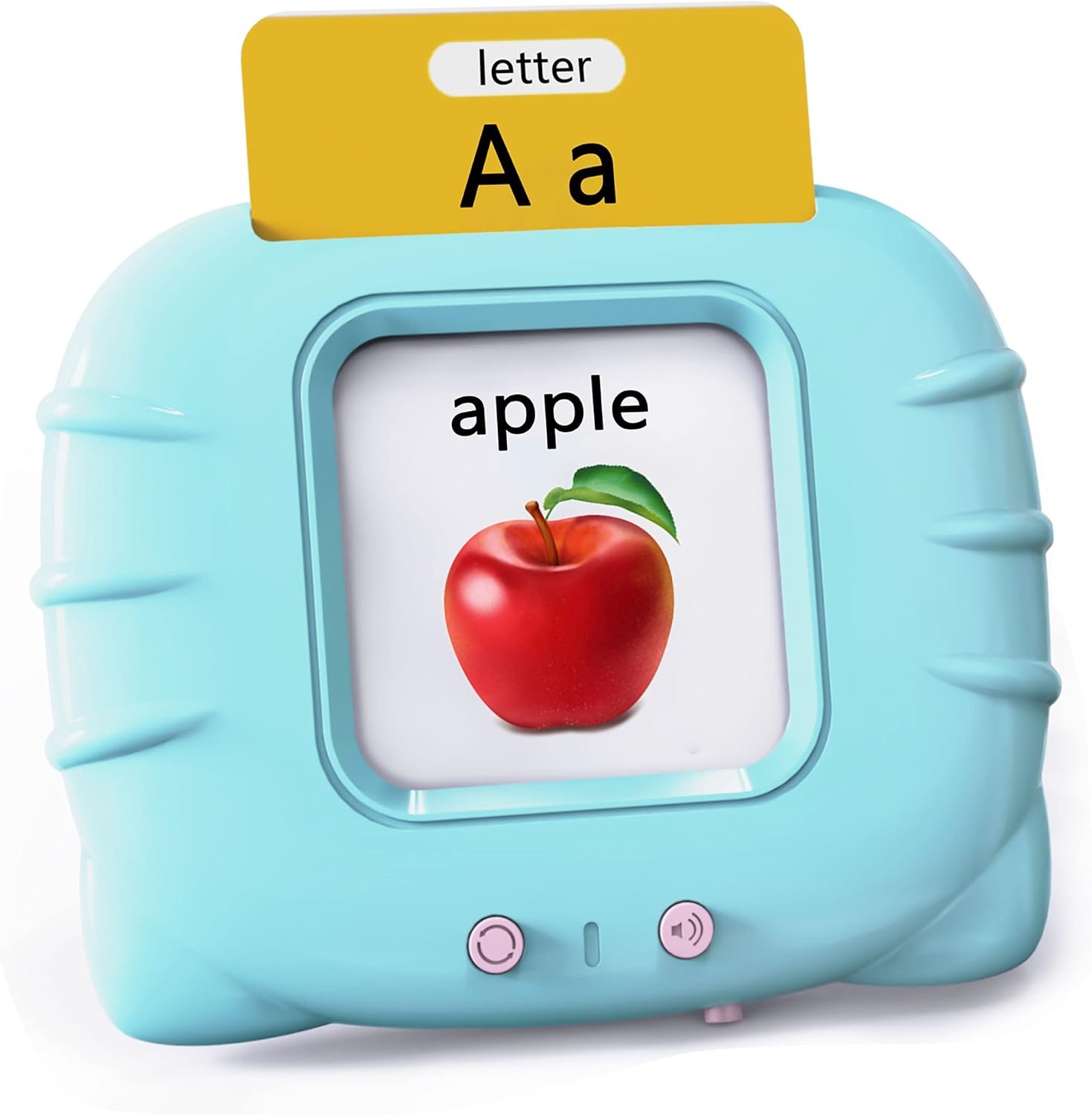
520 Educational Talking Flash Cards Toy– Learn Words, Colors & Shapes (Click on the picture to get related products)