Tag: practical English dialogue

  • Expressing Compliments in English and How to Respond

    Expressing Compliments in English and How to Respond

    Expressing Compliments in English and How to Respond

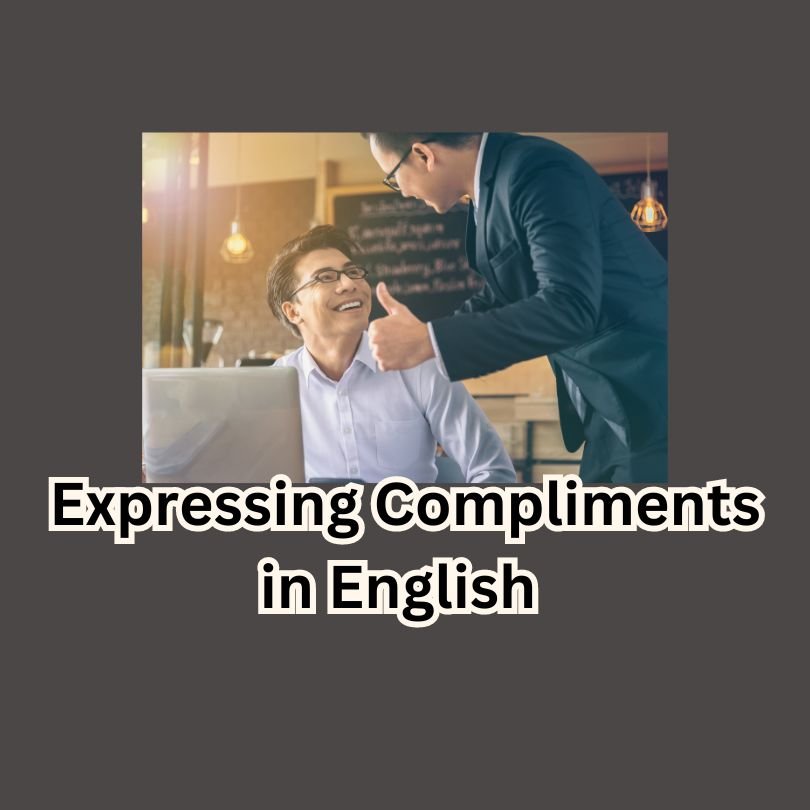
    Compliments are a wonderful way to express admiration, appreciation, or praise. They can brighten someone’s day and strengthen relationships. Knowing how to give and respond to compliments in English can enhance your communication skills and social interactions. This article will guide you through the process of expressing compliments, responding to them, provide examples, and offer practical dialogues to illustrate their use in daily life.

    Expressing Compliments

    When giving compliments, it’s important to be sincere and specific. Here are some common phrases and examples of how to express compliments in various contexts:

    1. Complimenting Appearance
      • Phrases:
        • “You look great today!”
        • “I love your outfit.”
      • Examples:
        • “You look amazing in that dress.”
        • “Your hairstyle really suits you.”
    2. Complimenting Abilities and Skills
      • Phrases:
        • “You did a fantastic job!”
        • “You’re very talented.”
      • Examples:
        • “Your presentation was excellent.”
        • “You play the piano beautifully.”
    3. Complimenting Character and Personality
      • Phrases:
        • “You’re so kind.”
        • “You have a great sense of humor.”
      • Examples:
        • “You’re always so helpful and considerate.”
        • “I love how positive you are.”
    4. Complimenting Achievements
      • Phrases:
        • “Congratulations on your success!”
        • “You’ve done an amazing job.”
      • Examples:
        • “Well done on your promotion!”
        • “You’ve worked really hard, and it shows.”

    Responding to Compliments

    When responding to compliments, it’s important to be gracious and appreciative. Here are some common responses:

    1. Simple Thank You
      • Phrase: “Thank you.”
      • Example:
        • Compliment: “You look great today!”
        • Response: “Thank you.”
    2. Expressing Appreciation
      • Phrases:
        • “Thank you, that means a lot.”
        • “I appreciate that.”
      • Examples:
        • Compliment: “Your presentation was excellent.”
        • Response: “Thank you, that means a lot.”
    3. Reciprocating the Compliment
      • Phrases:
        • “Thank you! You too!”
        • “Thanks! I like your style as well.”
      • Examples:
        • Compliment: “I love your outfit.”
        • Response: “Thanks! I like your style as well.”
    4. Acknowledging the Compliment and Adding Humility
      • Phrases:
        • “Thank you, I’ve been practicing a lot.”
        • “I appreciate it, it wasn’t easy.”
      • Examples:
        • Compliment: “You play the piano beautifully.”
        • Response: “Thank you, I’ve been practicing a lot.”

    Examples of Compliments and Responses

    Example 1: Complimenting Appearance

    • Person A: “You look great today!”
    • Person B: “Thank you so much!”

    Example 2: Complimenting Skills

    • Person A: “You did a fantastic job on that project.”
    • Person B: “Thanks! I worked really hard on it.”

    Practical Dialogue

    Here’s a sample dialogue demonstrating how to use compliments and responses in daily conversation.

    Dialogue:

    • Alice: I love your new haircut. It looks really nice on you!
    • Bob: Thank you, Alice. I appreciate it.
    • Alice: And your presentation today was fantastic. You really nailed it.
    • Bob: Thanks a lot! I put a lot of effort into it.

    By mastering the art of giving and responding to compliments, you’ll be able to build stronger relationships and communicate more effectively in English.

  • Life-Saving Expressions in English

    Life-Saving Expressions in English

    Life-Saving Expressions in English

    When traveling or living in an English-speaking country, knowing a few key expressions can make a significant difference in navigating daily life, especially if you’re not fluent in English. These expressions can help you ask for help, find directions, and communicate basic needs. This article will detail these essential phrases, provide examples, and include practical dialogues to help you feel more confident in various situations.

    Essential Survival Expressions

    1. Help!
      • Meaning: Used in emergencies to get immediate assistance.
      • Example: “Help! I need help!”
    2. I Don’t Speak English Well
      • Meaning: Used to inform others about your limited English skills.
      • Example: “I don’t speak English well. Can you speak slowly?”
    3. Do You Speak [Your Language]?
      • Meaning: Used to find someone who might understand your language.
      • Example: “Do you speak Spanish?”
    4. Where is…?
      • Meaning: Used to ask for directions.
      • Examples:
        • “Where is the nearest hospital?”
        • “Where is the bus station?”
    5. How Much?
      • Meaning: Used to ask about prices.
      • Example: “How much is this?”
    6. I Need a Doctor
      • Meaning: Used to indicate a medical need.
      • Example: “I need a doctor. It’s an emergency.”
    7. Can You Help Me?
      • Meaning: Used to ask for assistance.
      • Example: “Can you help me find my hotel?”
    8. Thank You
      • Meaning: Used to express gratitude.
      • Example: “Thank you for your help.”
    9. Please
      • Meaning: Used to make requests more polite.
      • Example: “Please call a taxi for me.”
    10. I’m Lost
      • Meaning: Used to indicate that you need directions or help finding your way.
      • Example: “I’m lost. Can you help me?”

    Examples of Using Survival Expressions

    Example 1: Asking for Directions

    • Person A: “Excuse me, where is the nearest pharmacy?”
    • Person B: “It’s two blocks down the street on the left.”

    Example 2: Seeking Medical Help

    • Person A: “I need a doctor. It’s an emergency.”
    • Person B: “There is a clinic nearby. Let me show you the way.”

    Practical Dialogue

    Here’s a sample dialogue demonstrating how to use these survival expressions in daily life.

    Dialogue:

    • Maria: Excuse me, do you speak Spanish?
    • John: A little. How can I help you?
    • Maria: I don’t speak English well. I’m lost. Where is the train station?
    • John: The train station is this way. Follow me, please.
    • Maria: Thank you so much!
    • John: You’re welcome. Have a safe trip!

    By mastering these essential survival expressions, you’ll be better prepared to handle everyday situations and emergencies in an English-speaking country, ensuring a smoother and safer experience.