


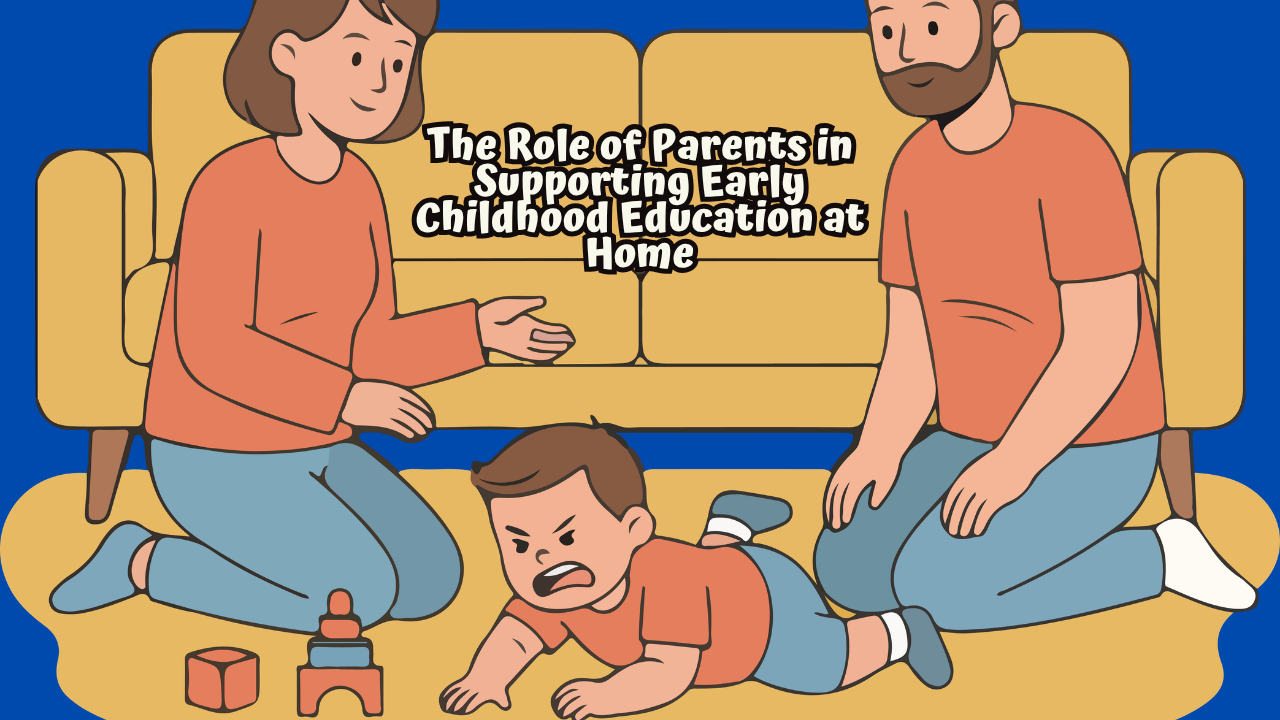
The Role of Parents in Supporting Early Childhood Education at Home
Early childhood is a very important stage in a child’s life. During this time, children grow quickly and learn many basic skills that shape their future. While schools and teachers play an important role, parents are the first and most influential teachers in a child’s life. The home is the child’s first learning environment, and parents have a key role in supporting early childhood education every day.
To begin with, parents help create a positive learning environment at home. A child learns best in a place that feels safe, comfortable, and supportive. Parents can provide a simple space for learning, such as a small table for drawing or a corner for reading. It is not necessary to have expensive tools. What matters most is that the child feels relaxed and ready to learn. When the environment is positive, children are more willing to explore and try new things.
In addition, parents play an important role in building daily routines. Consistent routines help children feel secure and understand what to expect each day. For example, having regular times for meals, play, learning, and sleep can help children develop discipline and responsibility. A simple routine that includes reading time or learning activities can support early education in a natural way.

Click in the Picture to Get Educational Hedgehog Toy, Fine Motor Skills Toy for Toddlers
Another important role of parents is encouraging curiosity. Young children are naturally curious and often ask many questions. Instead of ignoring these questions, parents should respond with patience and interest. When a child asks, “Why is the sky blue?” or “How does this work?” it is a good opportunity to explore and learn together. By supporting curiosity, parents help children develop a love for learning.
Furthermore, parents support language development through daily communication. Talking with children regularly helps them learn new words and improve their speaking skills. Simple conversations during daily activities, such as cooking or shopping, can be very meaningful. Reading stories aloud is also a powerful way to build language skills. It introduces children to new vocabulary and helps them understand sentence structure.
Parents also play a role in developing social and emotional skills. At home, children learn how to express their feelings and interact with others. Parents can teach children to share, take turns, and show kindness. For example, guiding children to say “please” and “thank you” helps them learn polite behavior. In addition, when parents listen to their children’s feelings and respond calmly, children learn how to manage their emotions.
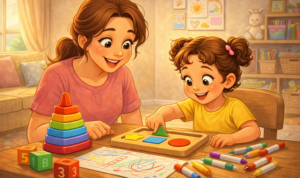
Play is another important part of early childhood education, and parents should support play-based learning. Through play, children develop many skills, including problem-solving, creativity, and cooperation. Parents can join their children in simple games, such as building blocks, drawing, or role-playing. These activities not only support learning but also strengthen the bond between parent and child.
Moreover, parents can introduce basic concepts such as numbers, colors, and shapes during daily activities. For example, they can count objects, name colors, or point out shapes in the environment. These simple actions help children learn without feeling pressure. Learning becomes a natural part of everyday life.
It is also important for parents to give encouragement and positive feedback. Children need to feel appreciated for their efforts, not only for their results. When a child tries something new, parents can say, “Good job” or “You did your best.” This kind of support builds confidence and motivates children to keep learning. On the other hand, too much pressure or criticism can make children feel afraid to try.
In today’s world, technology is also part of children’s lives. Parents should guide the use of technology in a balanced way. Educational videos and apps can support learning, but they should not replace real interaction. It is important to limit screen time and ensure that children also spend time playing, talking, and exploring the real world.
Another key role of parents is working together with teachers. Good communication between parents and teachers helps support the child’s development. Parents can stay informed about what children are learning at school and continue similar activities at home. This connection creates a consistent learning experience for the child.
Parents should also understand that every child is different. Some children learn quickly, while others need more time. It is important to be patient and avoid comparing children with others. Supporting a child according to their needs helps them grow in a healthy and confident way.
Finally, parents act as role models. Children learn by watching what adults do. When parents show positive attitudes toward learning, such as reading books or asking questions, children are more likely to do the same. Simple actions like reading at home, speaking politely, and showing curiosity can have a strong influence on children.
In the end, the role of parents in supporting early childhood education at home is very important. Parents help create a positive environment, build routines, encourage curiosity, and support language, social, and emotional development. Through play, daily activities, and positive guidance, parents can make learning a natural and enjoyable part of a child’s life. With patience, love, and consistency, parents can help their children build a strong foundation for future learning and success.