10 Fun Learning Activities for Early Childhood Development
The early years of a child’s life are a period of nearly miraculous transformation. Between birth and the age of eight, the human brain is more flexible, active, and ready to soak up information than it will ever be again. During this window, millions of neural connections are formed every second, creating the literal “wiring” for future language, logic, and emotional health. While this science sounds serious and complex, the most effective way to support this growth is through something simple: play.
For a young child, play is their work. It is the primary way they experiment with the world and discover their own capabilities. The best developmental activities are those that don’t feel like “lessons” at all. When a child is genuinely having fun, their brain releases chemicals like dopamine that actually make learning easier and more permanent. Here are ten fun learning activities that support early childhood development across physical, cognitive, and social-emotional domains.


1. The Magic of Sensory Bins
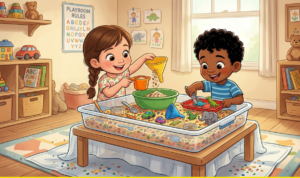
Sensory bins are essentially a “mini-playground” in a box. They provide a safe space for children to explore, mess around, and discover how the physical world works through their five senses.
Here is a deeper look at how this activity works and why it is so effective for young learners.

What is a Sensory Bin?
Think of a sensory bin as a contained treasure chest. It is usually a shallow plastic tub or tray filled with “filler” materials (like rice or sand) and a few toys. Instead of being told what to do, the child is free to touch, scoop, and pour however they like.
How to Set It Up
You don’t need expensive toys to make this work. In fact, items from your kitchen often work best!
-
The Container: A clear plastic storage bin or a large baking tray.
-
The Filler: Choose one main material. Popular choices include:
-
Dry: Uncooked rice, dried beans, pasta shapes, or birdseed.
-
Wet: Water (add bubbles or food coloring!), shaving cream, or “oobleck” (cornstarch and water).
-
Natural: Sand, soil, smooth stones, or dried leaves.
-
-
The Tools: Give them things to move the filler around.
-
Measuring cups, spoons, and whisks.
-
Funnels and empty yogurt containers.
-
Tongs or tweezers (to pick up specific items).
-
-
The Theme: Drop in a few “surprises” like plastic dinosaurs, toy cars, or colorful buttons.
How the “Magic” Happens
While it looks like the child is just making a mess, their brain is actually working overtime. Here is a breakdown of what they are learning:
a. Building “Hand Power”
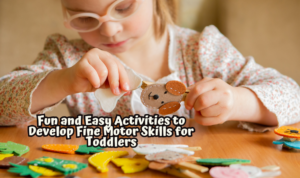
When a child uses tongs to pick up a single bean or squeezes a sponge full of water, they are exercising the tiny muscles in their fingers and wrists.
-
Why it matters: These are the exact same muscles they will need later to hold a pencil, use scissors, and button their own clothes.
b. Early Math & Science
Children don’t understand the word “volume” yet, but they understand the feeling of it.
-
The Discovery: They see that a large cup of rice won’t fit into a tiny cup. They feel how heavy a bucket gets when it is full versus when it is empty. This is functional math in action.
c. Language Skills
Sensory play is a great time to talk. As you play with them, you can use “descriptive words” that they might not hear in everyday conversation.
-
Examples: “Is the rice crunchy?” “Does the water feel slippery?” “The sand is very gritty.”
d. Emotional Calm
Much like adults find gardening or kneading dough relaxing, children find sensory play very soothing. Sifting sand or pouring water can help a child “reset” if they are feeling overwhelmed or anxious.
Quick Tip for Parents: To keep the mess contained, place a large towel or a cheap shower curtain liner under the bin before you start. When playtime is over, you can just shake the “escaped” rice back into the bin!
2. Interactive “Sportscasting”
Interactive “Sportscasting” is essentially giving your child a play-by-play narration of their day.
Imagine you are a radio announcer or a sports commentator. Since babies and toddlers can’t always “see” what you are thinking, you use your voice to turn every ordinary moment into a live story. This helps them connect the things they see and do with the words we use to describe them.
How to Do It
You don’t need any special equipment—just your own voice! There are two main ways to “sportscast”:
a. Narrate Your Own Actions
Talk about what you are doing while your child watches.
-
Instead of: Making dinner in silence.
-
Try this: “Now, I’m taking the big, cold milk out of the fridge. I’m pouring it into the blue bowl. Splash! Look at those bubbles.”
b. Narrate Your Child’s Actions
This is like being their personal cheerleader. Talk about what they are doing, feeling, or seeing.
-
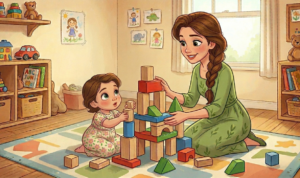
Instead of: Just watching them play with blocks.
-
Try this: “You’re picking up the red block. Oh, you’re putting it right on top of the yellow one! Wiggle, wiggle… crash! It fell down.”
Why It Works Like Magic
While it might feel a little silly to talk to yourself at first, here is what is actually happening in your child’s brain:
a. Building a “Word Bank”
Before a child can say a word, they have to hear it hundreds of times. By sportscasting, you are filling their “internal dictionary” with names for colors, shapes, textures, and actions.
b. No-Pressure Learning
When we ask a child, “What color is this?” it can sometimes feel like a test. Sportscasting is stress-free. They are learning the names of things naturally while they are relaxed and having fun.
c. Making Connections
It helps them understand cause and effect. When you say, “I’m turning the knob, and now the water is coming out,” they begin to understand how the world works through your description.
d. Emotional Bonding
Hearing your voice consistently makes a child feel seen and important. It shows them that you are paying attention to their world, which builds a strong sense of security and “belonging.”
Quick Tips for Success
-
Keep it Simple: Use short sentences. Instead of “I am currently utilizing the serrated knife to bisect the sandwich,” say, “I’m cutting the sandwich in half!”
-
Use “Sound” Words: Kids love “BEEP,” “WHOOSH,” or “SPLAT.” It grabs their attention and makes the “broadcast” more exciting.
-
Follow Their Eyes: If your child is staring at a dog in the park, start sportscasting about the dog. “Look at that doggie! He has a long tail. Wag, wag, wag!”
Do you have a specific daily routine, like bath time or grocery shopping, where you’d like to try this out?
3. Indoor Obstacle Courses
Physical development is divided into two categories: gross motor skills (large muscles) and fine motor skills (small muscles). Both are essential for a child’s confidence and neurological coordination.
-
How to do it: Use sofa cushions, pillows, and blankets to create a “mountain range” in the living room. Tape a line on the floor to act as a “balance beam” or use a cardboard box as a tunnel.
-
The Benefit: Navigating these obstacles requires the two sides of the brain to communicate, which improves balance and spatial awareness. It also teaches children how to solve physical problems, such as “How do I get over this pillow without falling?”
4. Sorting and Categorizing
Sorting is a fundamental mathematical skill. You don’t need special toys for this; everyday household items work perfectly to help children recognize patterns and logic.
-
How to do it: Empty a basket of clean laundry and ask your child to find all the socks, or have them organize a bin of plastic containers by size. You can also sort buttons by color or dried pasta by shape.
-
The Benefit: Sorting teaches children to observe attributes like color, shape, and size. Categorization is the first step toward understanding complex data organization and logical reasoning.
5. The “Emotion Mirror” Game
Social-emotional intelligence is the foundation for all other types of learning. A child who can manage their emotions is much better equipped to focus on cognitive tasks.
-
How to do it: Sit with your child in front of a mirror. Take turns making “sad faces,” “happy faces,” or “surprised faces.” Talk about what might make someone feel that way.
-
The Benefit: This helps children develop empathy and “emotional literacy.” When a child can name a feeling, they are less likely to act it out through a tantrum, leading to better self-regulation as they grow.
6. Kitchen Chemistry and Baking
The kitchen is a laboratory of physics, chemistry, and math. It is perhaps the most overlooked developmental space in the house.
-
How to do it: Let your child help you measure flour, crack an egg, or watch how water changes from a liquid to steam. Ask them to count the number of scoops needed for a recipe.
-
The Benefit: Measuring ingredients introduces basic fractions and counting. Watching dough rise or ingredients change color during mixing provides a direct lesson in cause-and-effect and the properties of matter.
7. Dramatic and Pretend Play
Around age two or three, children enter the “golden age” of imagination. They begin to understand that one thing can represent another—a symbolic leap that is essential for reading and math.
-
How to do it: Provide a “prop box” filled with old hats, scarves, discarded keyboards, and plastic bowls. Let the child take the lead in creating a story, whether they are a doctor, a chef, or a space explorer.
-
The Benefit: When children pretend, they are practicing empathy and social negotiation. They have to imagine what another person is thinking, which builds the “social brain” and complex problem-solving abilities.
8. “Freeze Dance” for Self-Control
Self-control, or “inhibitory control,” is a part of executive function. It is the ability to stop an impulse, and it is a major predictor of success in school.
-
How to do it: Play some upbeat music and have a dance party. When the music stops, everyone must “freeze” in whatever position they are in until the music starts again.
-
The Benefit: This game forces the brain to quickly switch from action to stillness. It exercises the prefrontal cortex, helping children learn to follow rules and manage their impulses in a fun, low-pressure way.
9. Nature Scavenger Hunts
The natural world is the ultimate sensory playground. It offers a variety of textures and challenges that an indoor environment simply cannot replicate.
-
How to do it: Give your child a small bag and a list of things to find: a “crunchy” leaf, a “smooth” stone, something yellow, or a “pointy” stick.
-
The Benefit: Scavenger hunts build observation skills and descriptive vocabulary. Being outdoors also provides “heavy work” for the muscles, which is calming for a child’s nervous system and improves their sense of balance.
10. Water Lab Explorations
Water is endlessly fascinating to a developing mind. It is unpredictable, versatile, and provides immediate feedback to a child’s actions.
-
How to do it: Give your child different sized cups, sponges, funnels, and a few objects that sink or float (like a metal spoon and a cork). Let them experiment in the bathtub or at a sink.
-
The Benefit: This is a direct lesson in volume and density. Children learn how much water it takes to fill a container and discover why some things stay on top while others go to the bottom, sparking early scientific inquiry.
The Role of the Caregiver: “Serve and Return”
Throughout all these activities, the most important element is not the toy or the specific task, but the interaction. Developmental scientists use the term “serve and return” to describe the back-and-forth between a child and an adult.
When a child “serves” an interaction by pointing or babbling, and the adult “returns” the ball by responding, a neural connection is forged. You don’t need a perfectly organized playroom or a strict schedule to support early growth. What you need is the willingness to follow your child’s lead and stay present in the moment. When you join them in their play, you are telling them that their ideas are important and their world is worth exploring.
Early childhood development is a marathon of patience and connection. By integrating these simple, fun activities into your daily life, you are providing the building blocks for a strong and healthy brain. Every shared laugh, every built tower, and every splashed puddle is a step toward a bright and capable tomorrow. Encouraging their natural desire to learn ensures they will approach the world with confidence and joy for years to come.