Tag: summer

  • Reading Practice for Beginners: Seasons

    Reading Practice for Beginners: Seasons

    Reading Practice for Beginners: Seasons

    Instruction: Click the play button on the audio below to listen and learn how to read the following text.


    Seasons

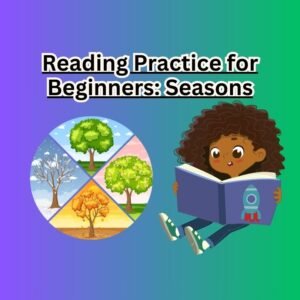
    There are four seasons in a year: spring, summer, autumn, and winter. Each season has different weather and activities.

    Spring is the season when flowers bloom and trees become green. The weather is warm, and people like to go for walks and enjoy the sunshine.

    Summer is the hottest season. It is a time for vacations and going to the beach. People like to swim and have picnics. The days are long and sunny.

    Autumn is when the leaves change color and fall from the trees. The weather becomes cooler. It is also known as fall. People like to go for hikes and enjoy the beautiful colors of the leaves.

    Winter is the coldest season. It often snows, and people wear warm clothes like coats and hats. Many people enjoy winter sports like skiing and snowboarding.

    Each season has its own beauty and special activities.

    List of Vocabulary Related to Seasons

    1. Seasons
      Seasons are the four different times of the year: spring, summer, autumn, winter; characterized by specific weather patterns and daylight hours.
    2. Spring
      Spring is the season between winter and summer characterized by blooming flowers and trees becoming green.
    3. Summer
      Summer is the hottest season of the year, associated with vacations and outdoor activities.
    4. Autumn
      Autumn is the season between summer and winter when leaves change color and fall from trees; also known as fall.
    5. Winter
      Winter is the coldest season of the year, often marked by snow and colder temperatures.
    6. Weather
      Weather is the atmospheric conditions, including temperature, precipitation, and wind, occurring in a particular place at a particular time.
    7. Bloom
      Bloom is the process of flowers opening and becoming visible.
    8. Sunshine
      Sunshine is direct sunlight; the light and warmth from the sun.
    9. Vacations
      Vacations are periods when people travel or relax away from their usual routine, often during the summer.
    10. Beach
      A beach is a sandy or pebbly shore by an ocean, sea, lake, or river, typically popular for recreation.
    11. Sunny
      Sunny describes weather with abundant sunshine and little or no clouds.
    12. Fall
      Fall is another name for autumn, the season when leaves change color and fall from trees.
    13. Leaves
      Leaves are the green, flat parts of a plant that grow on branches and fall off in autumn.
    14. Snow
      Snow is frozen precipitation in the form of white flakes that fall from clouds during winter.
    15. Coats
      Coats are outer garments worn for warmth, especially in cold weather.
    16. Hats
      Hats are items of clothing worn on the head, often for warmth in winter.
    17. Skiing
      Skiing is a sport or recreational activity involving gliding over snow on skis.
    18. Snowboarding
      Snowboarding is a sport or recreational activity involving descending a snow-covered slope on a snowboard.
    19. Beauty
      Beauty is the quality of being pleasing or attractive, often describing the visual characteristics of each season.

    Grammatical Aspects of the Text “Seasons”

    The text “Seasons” mainly uses two important grammar points: present simple tense and descriptive adjectives. Let’s see how these work in the text.

    Present Simple Tense

    The present simple tense talks about general truths and regular actions. This tense is perfect for beginners because it describes things that are always true or happen regularly.

    Examples:

    • “There are four seasons in a year.”
    • “Spring is the season when flowers bloom and trees become green.”
    • “People like to swim and have picnics.”

    Descriptive Adjectives

    Descriptive adjectives give more information about nouns. They help us imagine what each season is like by describing its features.

    Examples:

    • “Warm weather”
    • “Hottest season”
    • “Cooler weather”
    • “Coldest season”

    By using these two grammar points, the text “Seasons” clearly explains what each season is like and what people do during these times.

    Quiz

    Test your understanding on the text above by doing the following quiz!